

EigenPuzzle
EigenPuzzle
“I can puzzle!” - A collaborative physics game
“I can puzzle!” - A collaborative physics game
Summary
Quick 2-minute video project walkthrough
Learning science can be difficult...
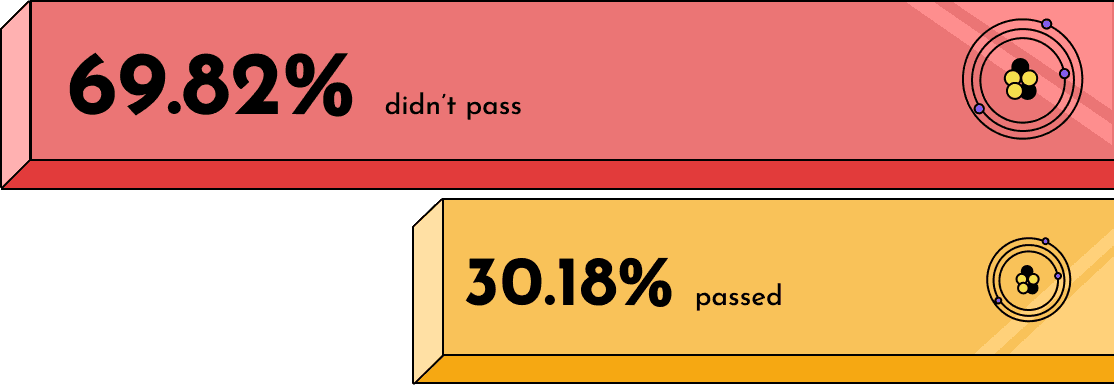
Just look at the California Science Test Results
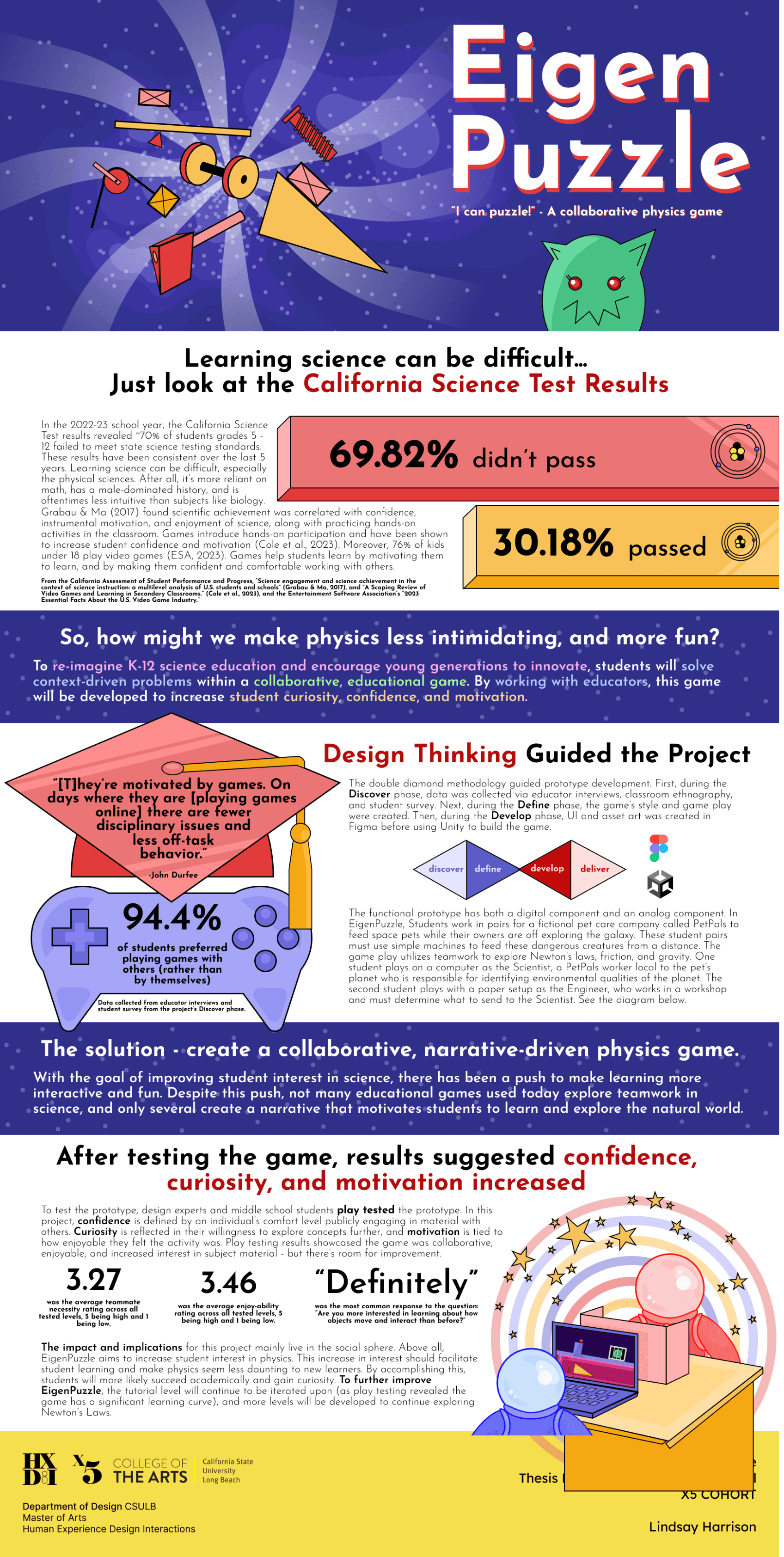
In the 2022-23 school year, the California Science Test results revealed ~70% of students grades 5 - 12 failed to meet state science testing standards. These results have been consistent over the last 5 years. Learning science can be difficult, especially the physical sciences. After all, it’s more reliant on math, has a male-dominated history, and is oftentimes less intuitive than subjects like biology.
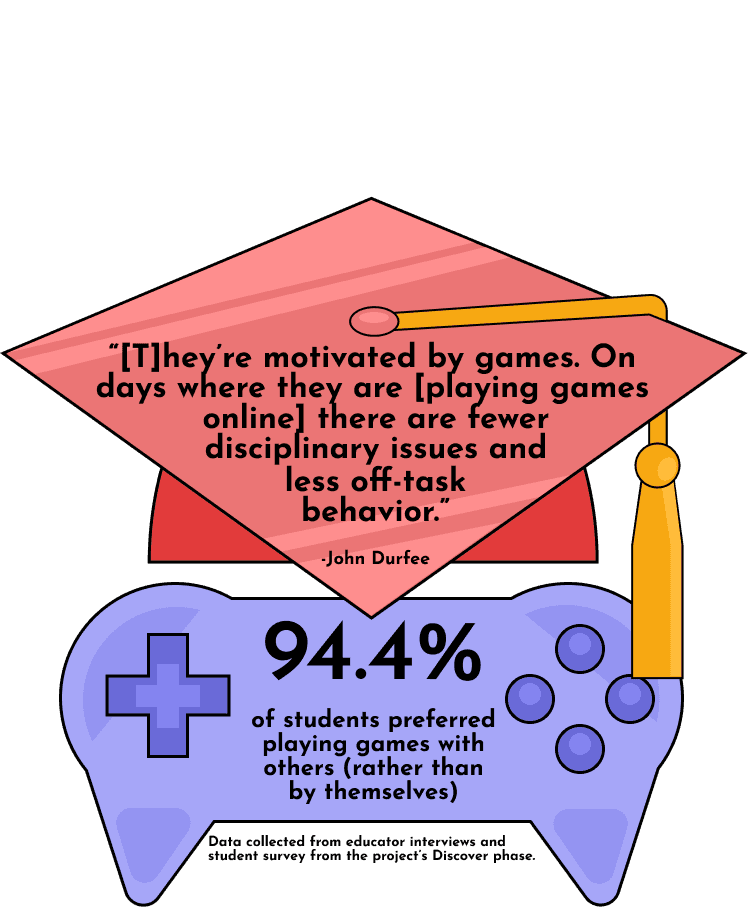
Grabau & Ma (2017) found scientific achievement was correlated with confidence, instrumental motivation, and enjoyment of science, along with practicing hands-on activities in the classroom. Games introduce hands-on participation and have been shown to increase student confidence and motivation (Cole et al., 2023). Moreover, 76% of kids under 18 play video games (ESA, 2023). Games help students learn by motivating them to learn, and by making them confident and comfortable working with others.
From the California Assessment of Student Performance and Progress, “Science engagement and science achievement in the context of science instruction: a multilevel analysis of U.S. students and schools” (Grabau & Ma, 2017), and “A Scoping Review of Video Games and Learning in Secondary Classrooms.” (Cole et al., 2023), and the Entertainment Software Association’s “2023 Essential Facts About the U.S. Video Game Industry.”

So, how might we make physics less intimidating, and more fun?
To re-imagine K-12 science education and encourage young generations to innovate, students will solve context-driven problems within a collaborative, educational game. By working with educators, this game will be developed to increase student curiosity, confidence, and motivation.
Design Thinking Guided the Project
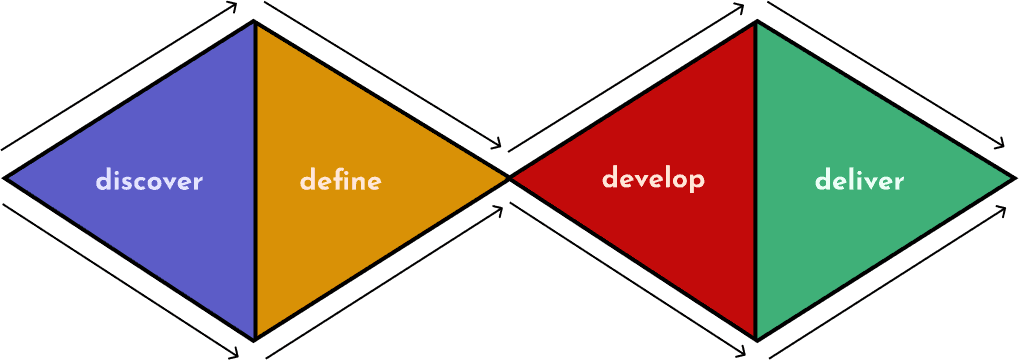
The double diamond methodology guided prototype development. First, during the Discover phase, data was collected via educator interviews, classroom ethnography, and student survey. Next, during the Define phase, the game’s style and game play were created. Then, during the Develop phase, UI and asset art was created in Figma before using Unity to build the game.
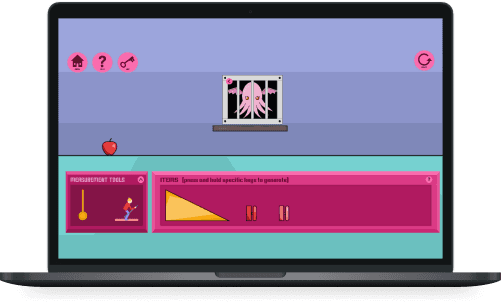
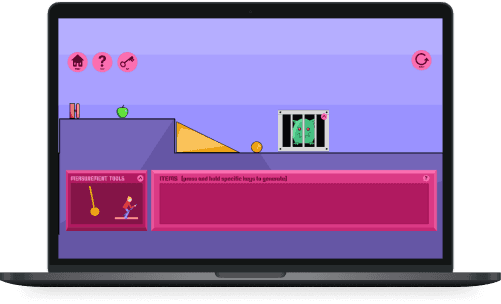
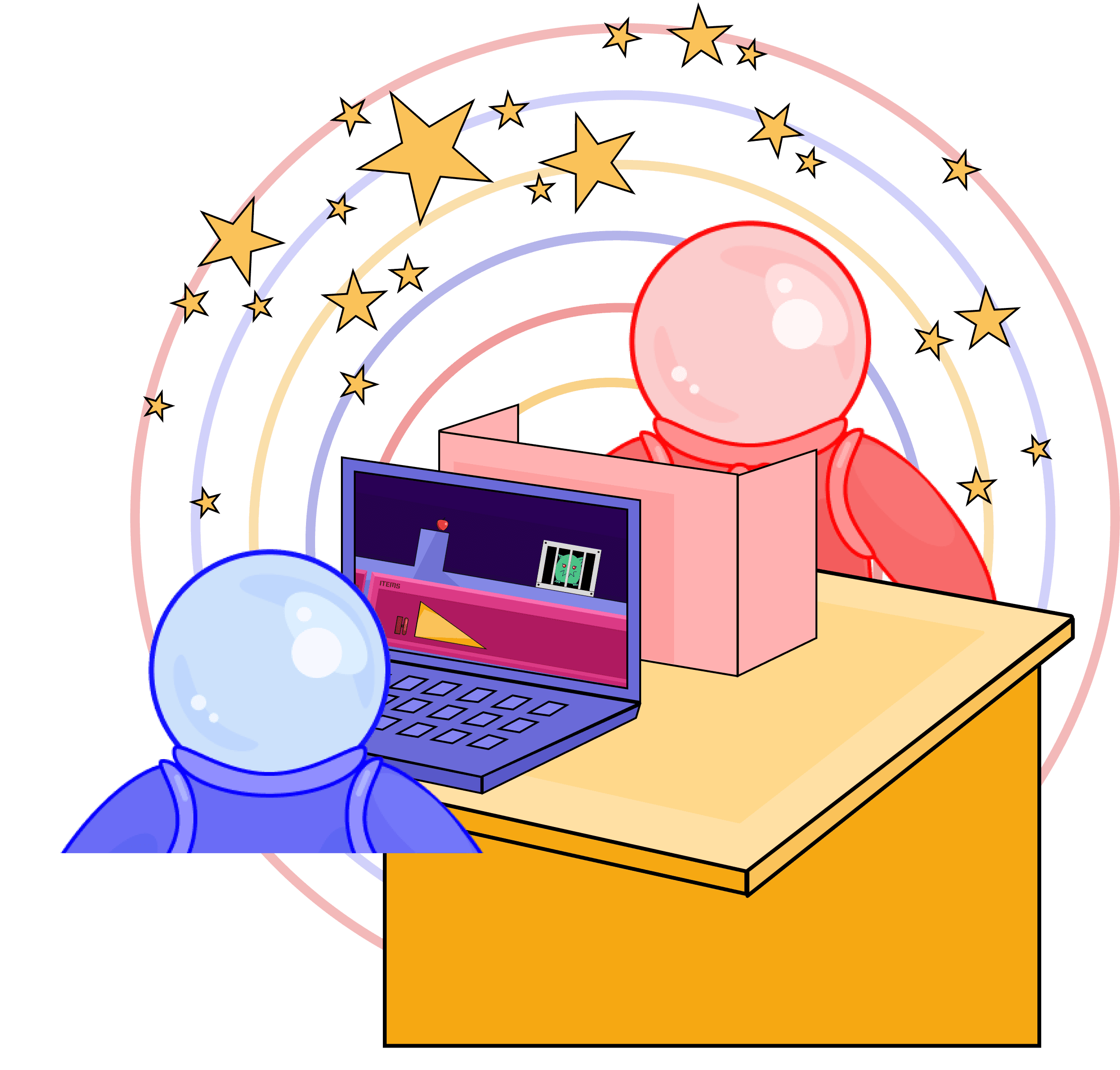
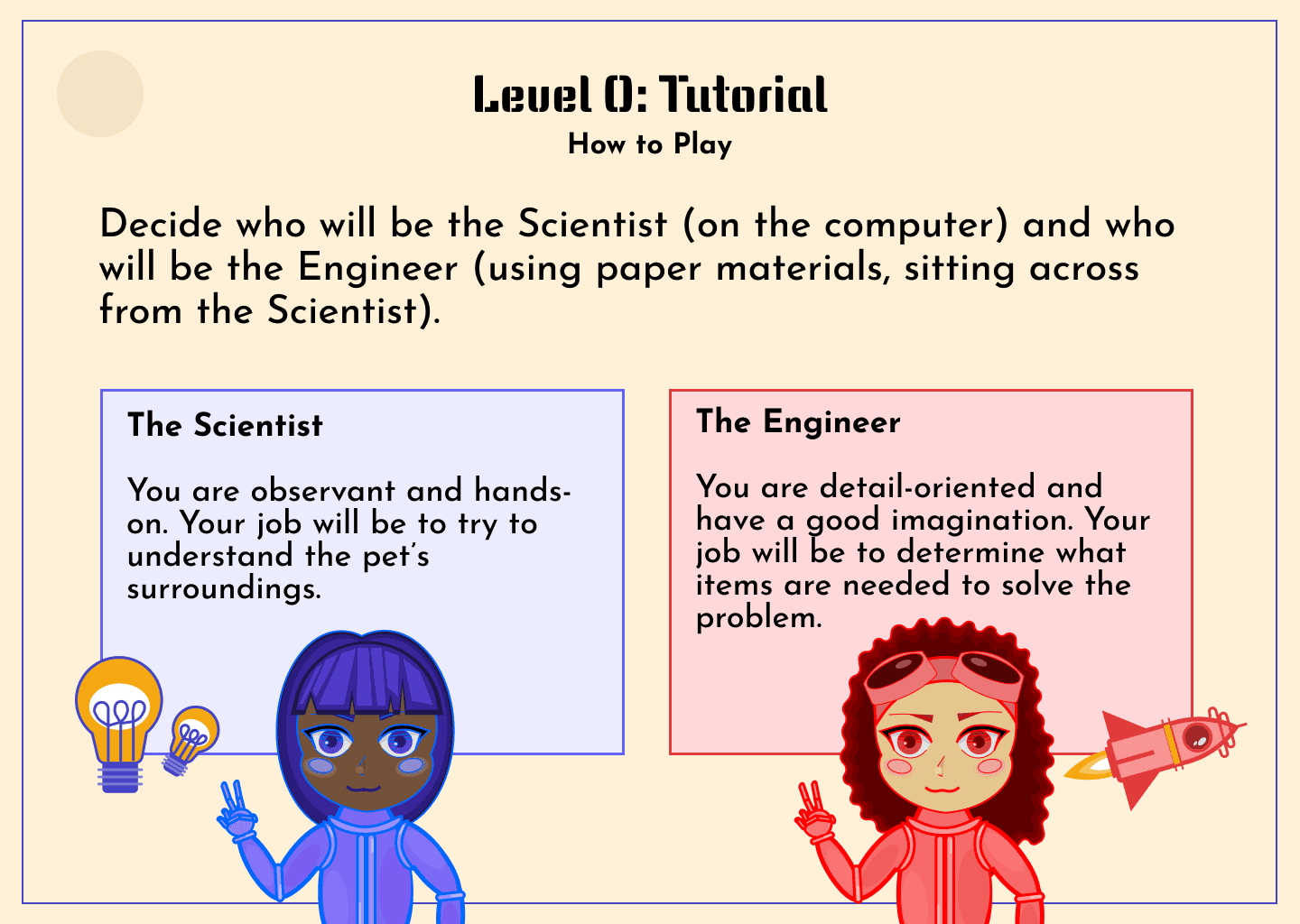
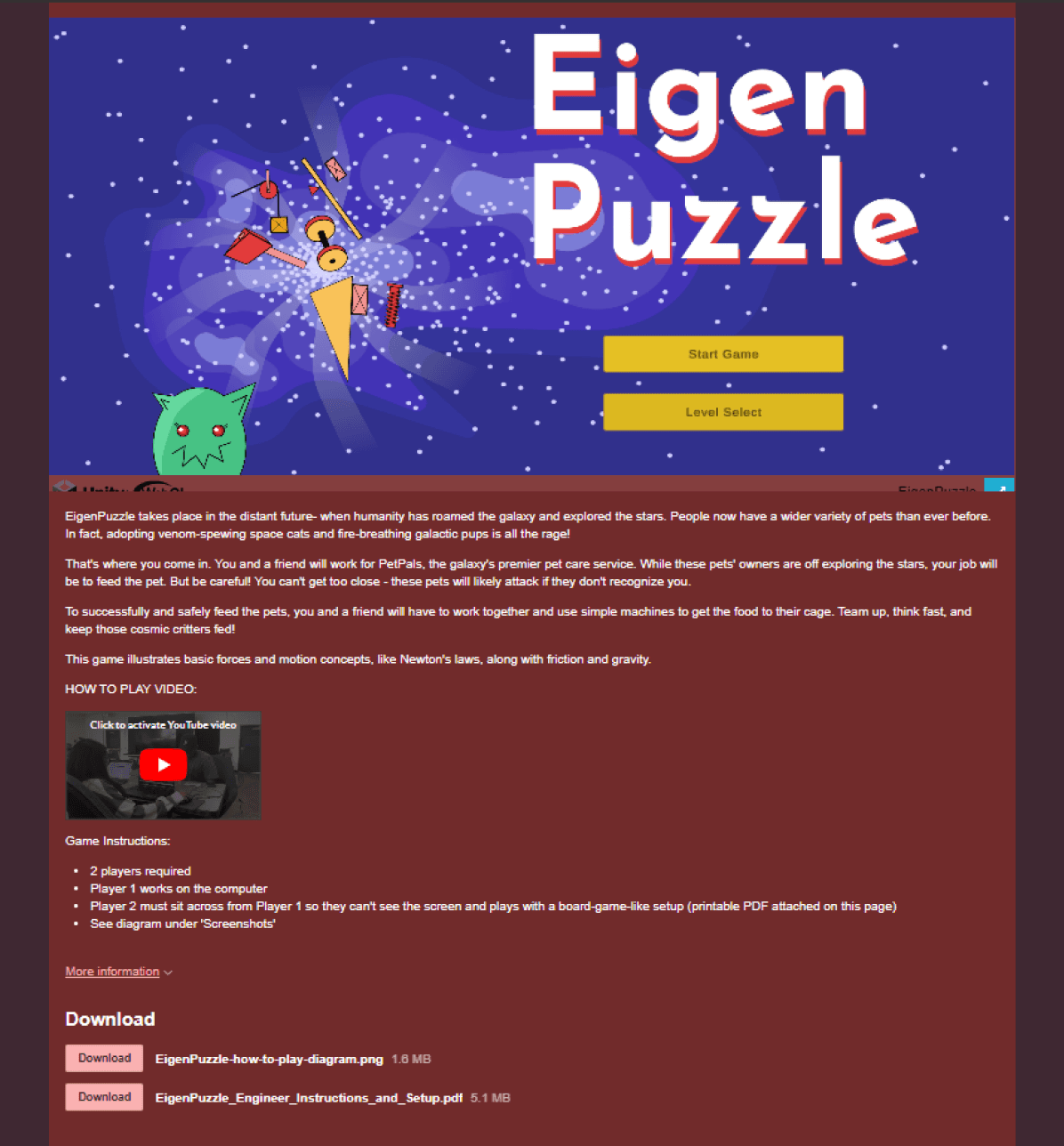
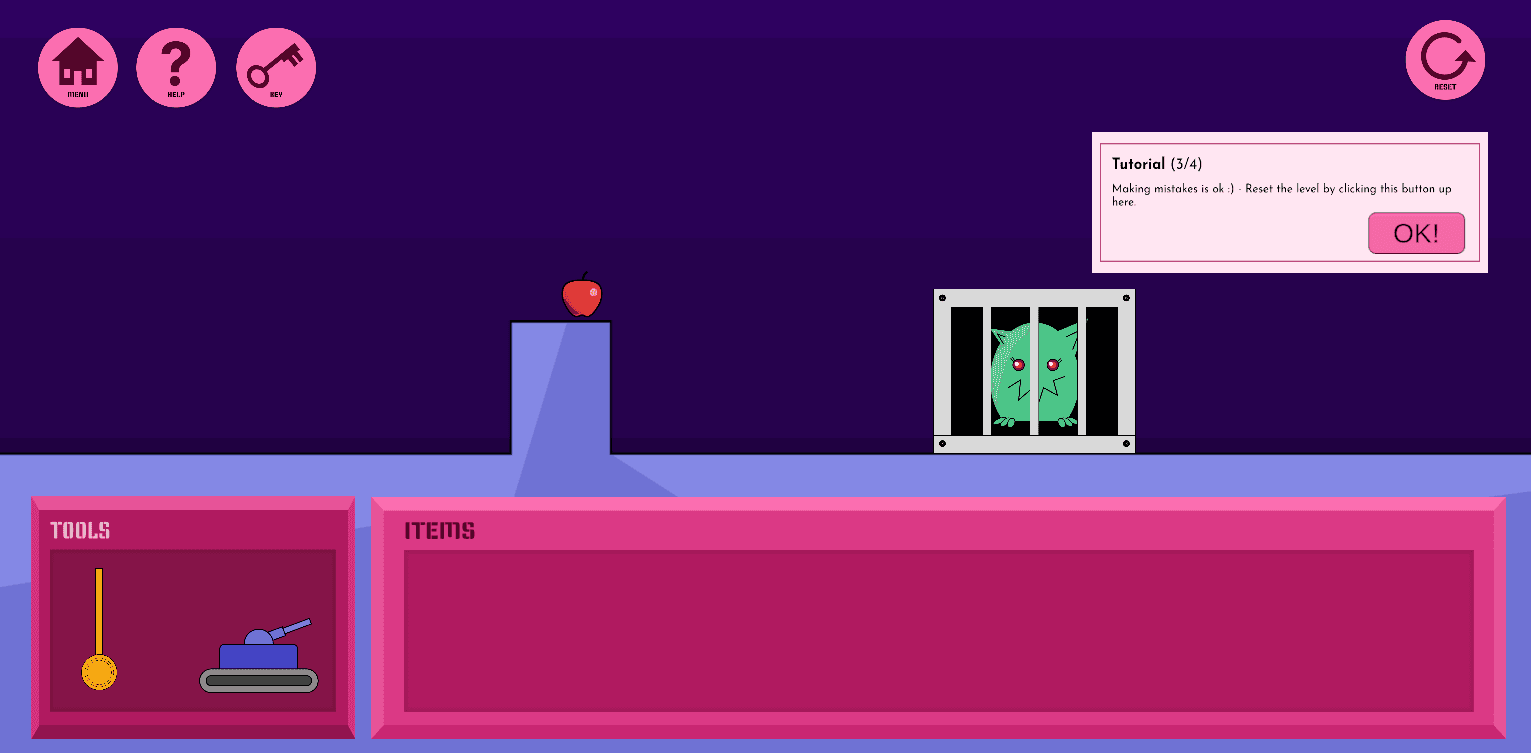
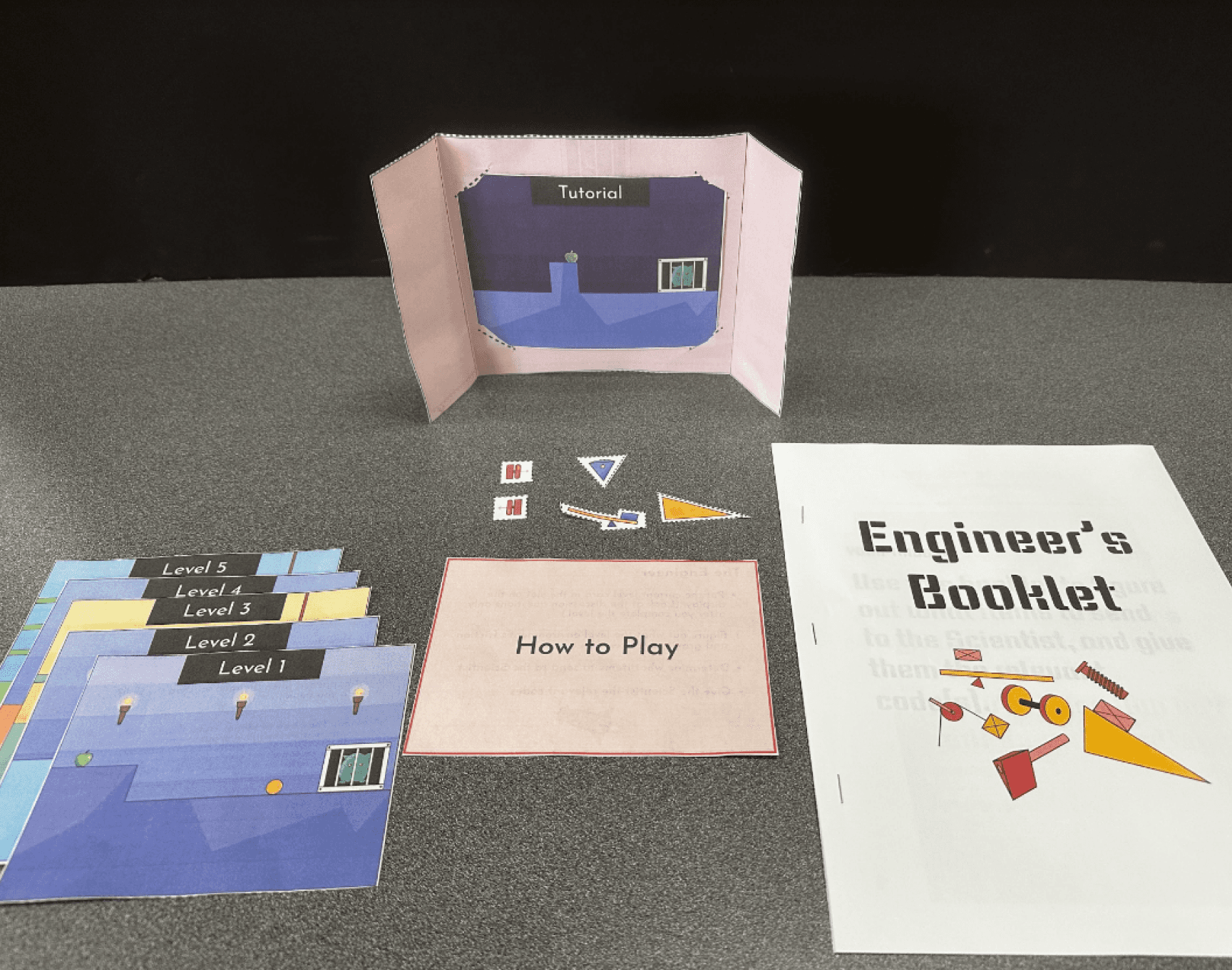
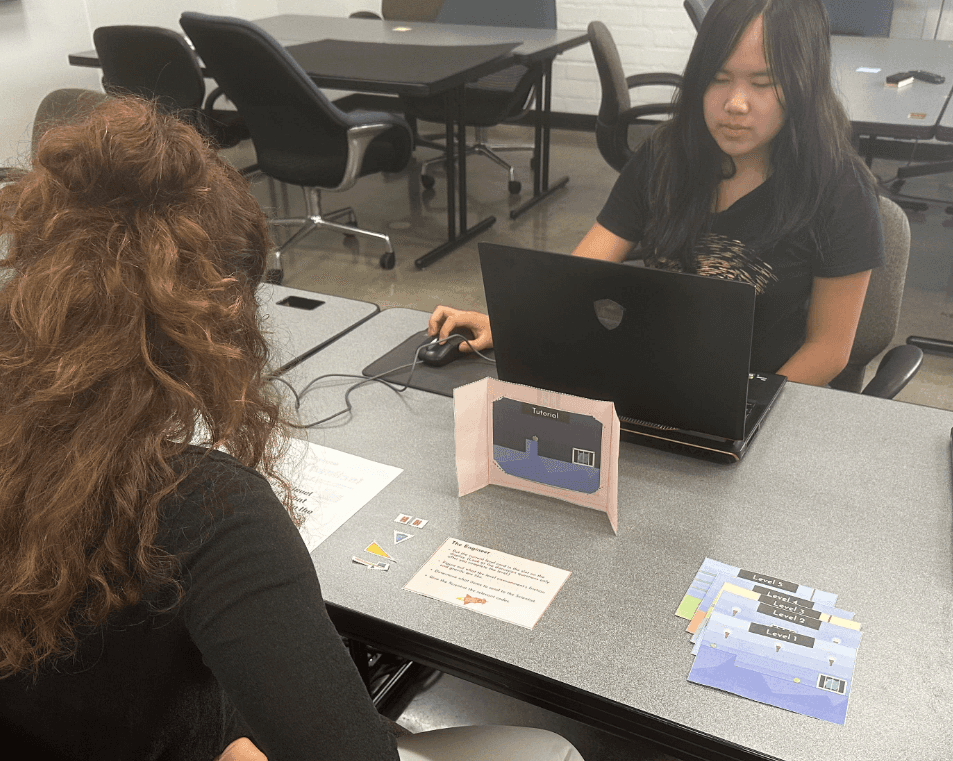
The functional prototype has both a digital component and an analog component. In EigenPuzzle, Students work in pairs for a fictional pet care company called PetPals to feed space pets while their owners are off exploring the galaxy. These student pairs must use simple machines to feed these dangerous creatures from a distance. The game play utilizes teamwork to explore Newton’s laws, friction, and gravity. One student plays on a computer as the Scientist, a PetPals worker local to the pet’s planet who is responsible for identifying environmental qualities of the planet. The second student plays with a paper setup as the Engineer, who works in a workshop and must determine what to send to the Scientist. See the diagram below.
Discover

Research Objectives
#1 : Student Attitudes
Investigate what makes students confident and motivated when learning.
#2 : Educational Games
Understand how educational games impact students, along with students’ game preferences.
#3 : Learning Physics
Determine student challenges when learning physics.
#4 : Teaching Physics
Explore best practices for teaching 8th grade physics concepts.
#5 : Game Design
Learn how to design a collaborative game to communicate physics concepts.
Research Goals
Research Question
How might we increase student confidence and motivation when learning physics?
Literature Review
March 18, 2024 - June 3, 2024
United States of America


what?
Literature Review refers to consulting previously published studies and works to assess current knowledge in a particular area. In the present context, I am reviewing educational studies and video game reports.
why?
The goal focuses on Research Objectives #1, #2, and #3. Through consulting previously published studies, I hope to understand the nature of student confidence and motivation, the impact of educational games on students, and common struggles students face when learning physics. Consulting literature allows me to observe conclusions drawn from larger sets of data than I will be able to generate.
how?
This research method will collect qualitative data as central conclusions from studies, along with quantitative data as information that supports such conclusions.
Case Studies
March 18, 2024 - June 3, 2024
United States of America
what?
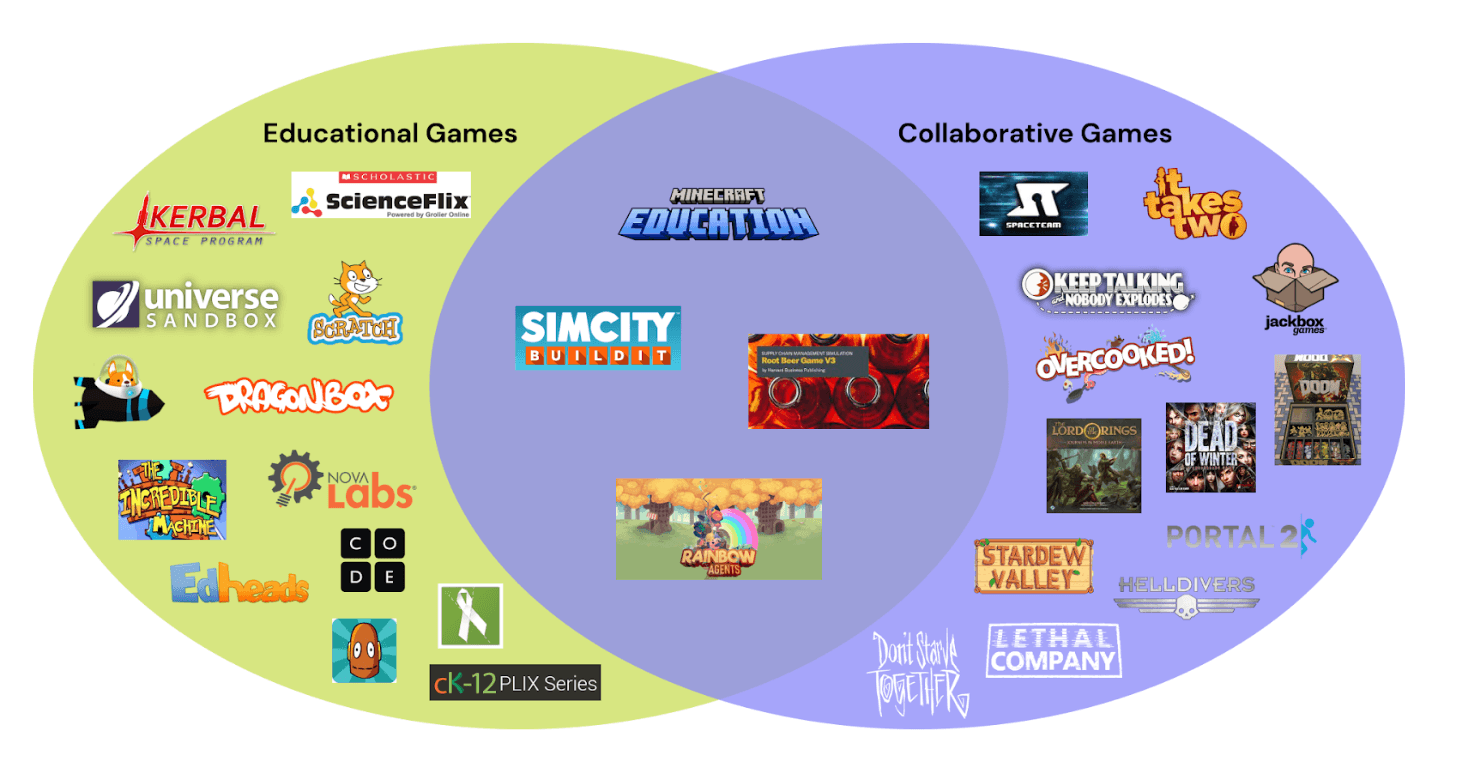
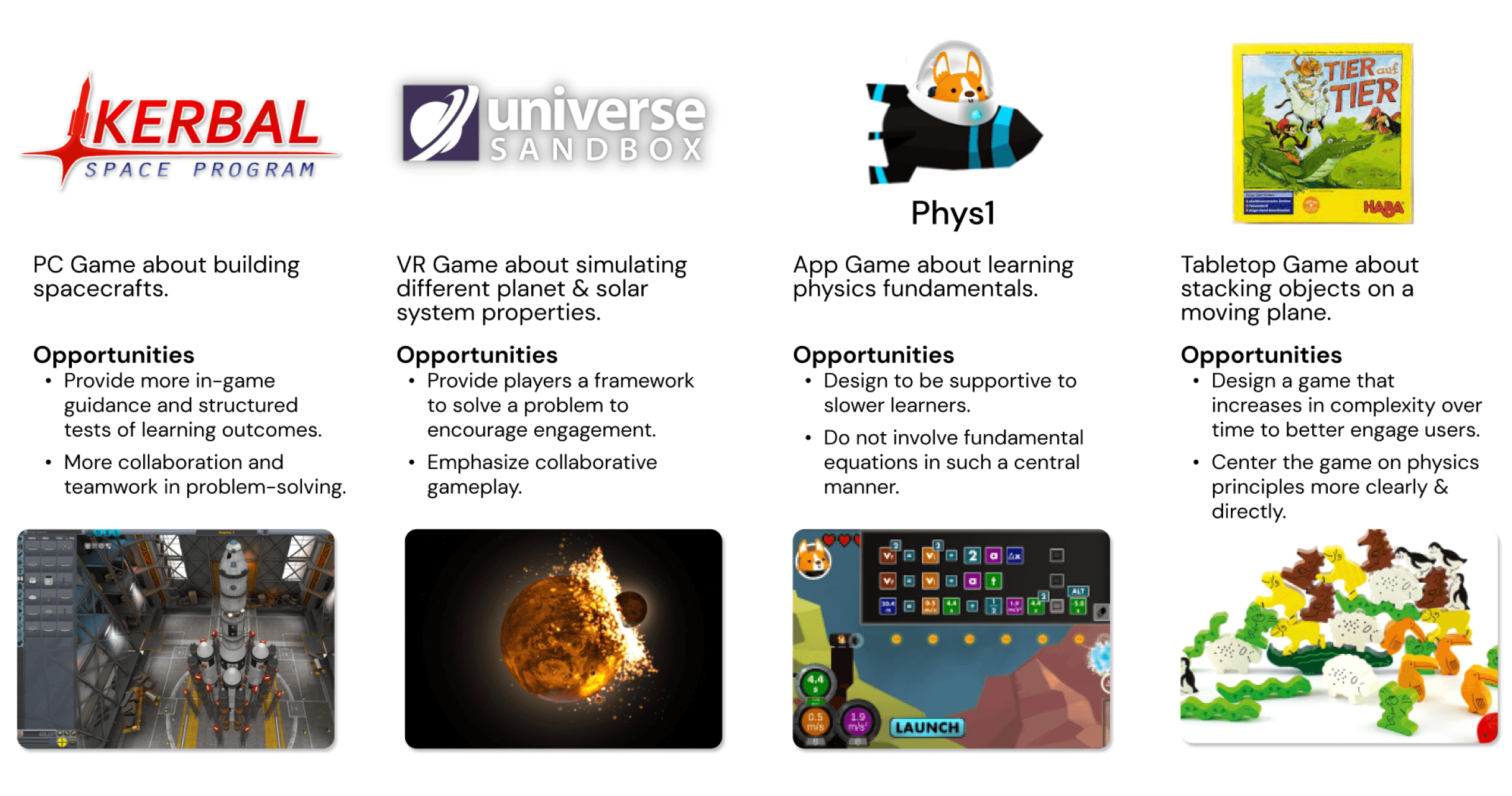
Case Studies focus on and analyze similar projects. For this project, I will look at numerous collaborative, educational, and/or physics games to understand strengths, weaknesses, and opportunities.
why?
The goal centers on Research Objective #5: to learn effective methods of game design involving collaboration and communicating physics concepts. By reviewing popular educational, collaborative, and/or physics games, an understanding of effective game design and genre standards may be obtained.
how?
This research method will mainly collect qualitative data as recorded observations, along with the feelings experienced while playing certain games.
Educator Interviews
May 22, 2024 - August 1, 2024
California
what?
Interview describes asking subjects a series of questions about their experiences and thoughts. In the present context, semi-structured interviews are conducted with middle school science teachers in North California.
why?
The goal centers on Research Objectives #1, #2, #3, and #4. The goal is to to understand, according to educators, what they perceive as challenges to students, what students are more likely to engage with, and to understand their teaching challenges. The interviews will allow me to investigate broad patterns about these topics and to better understand problems from the user’s perspective.
how?
This research method will mainly collect qualitative data as teacher testimonies. Additionally, this data will be novel in that it will investigate students and teachers from rural North California, of which data is mostly collected for state-driven educational contexts.
Classroom Ethnography
May 22, 2024 - May 24, 2024
Red Bluff, California
what?
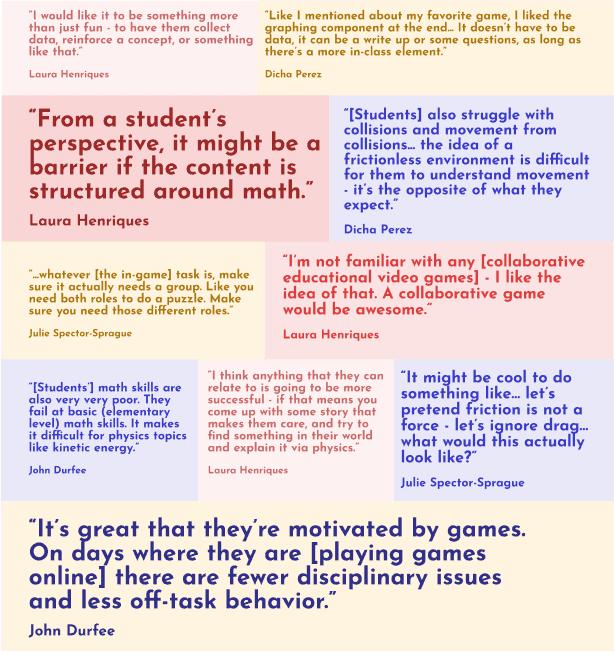
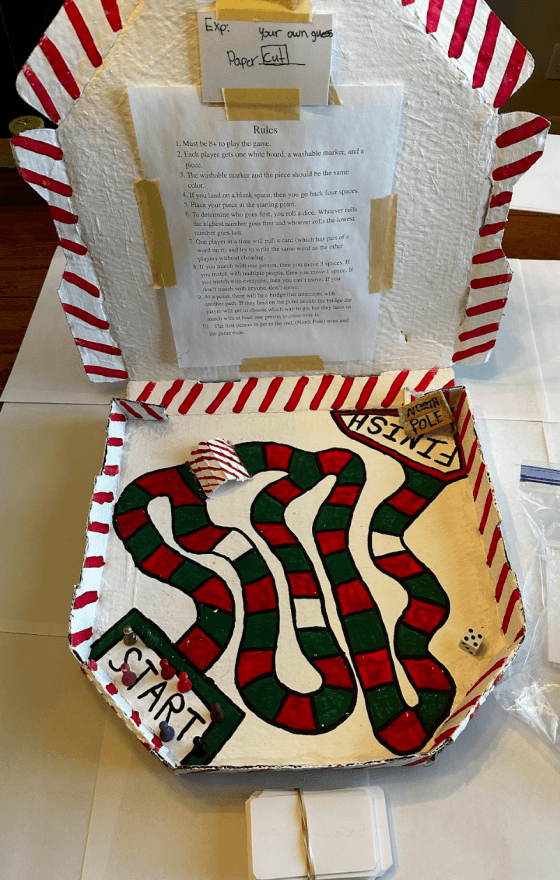
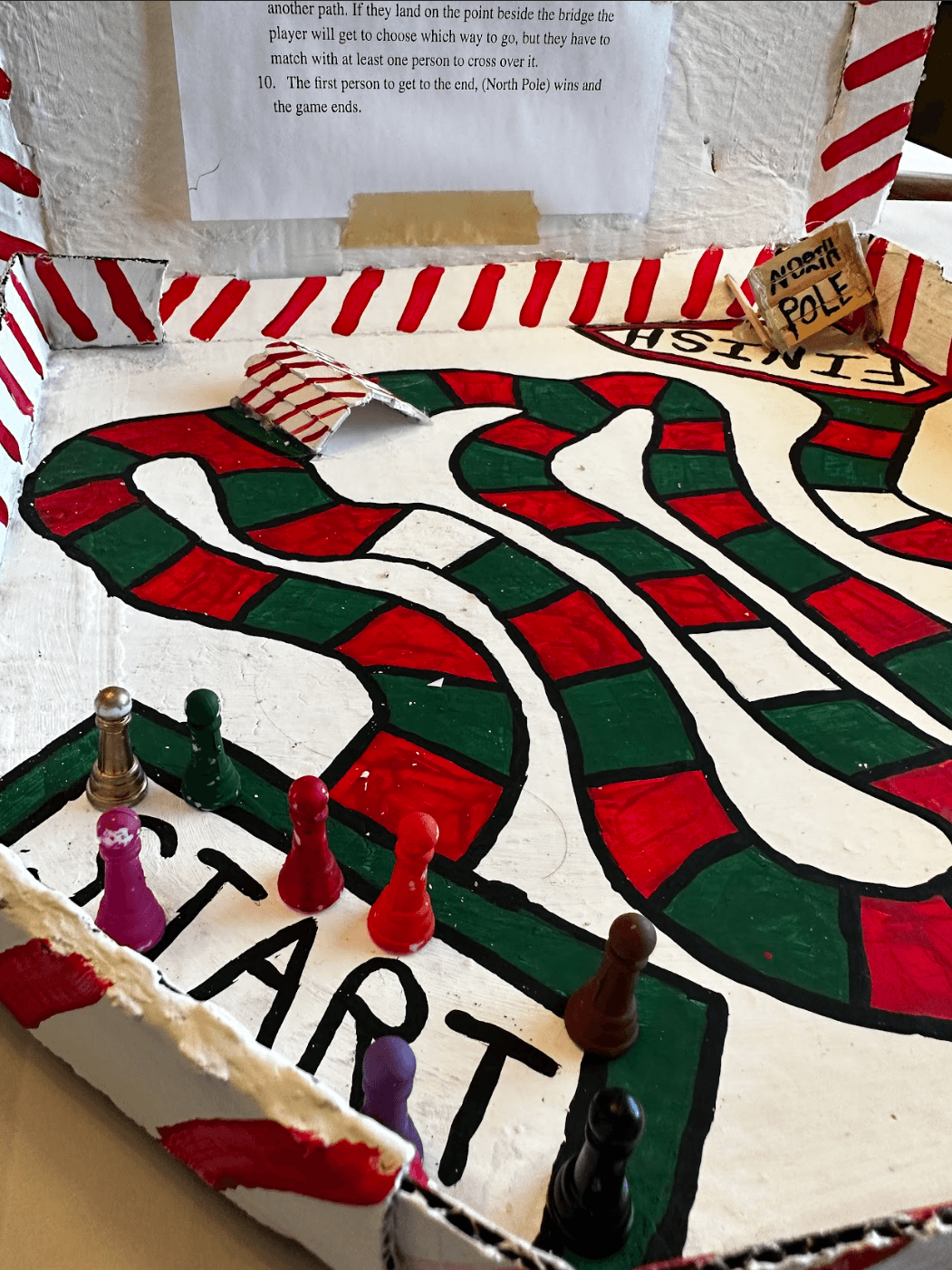
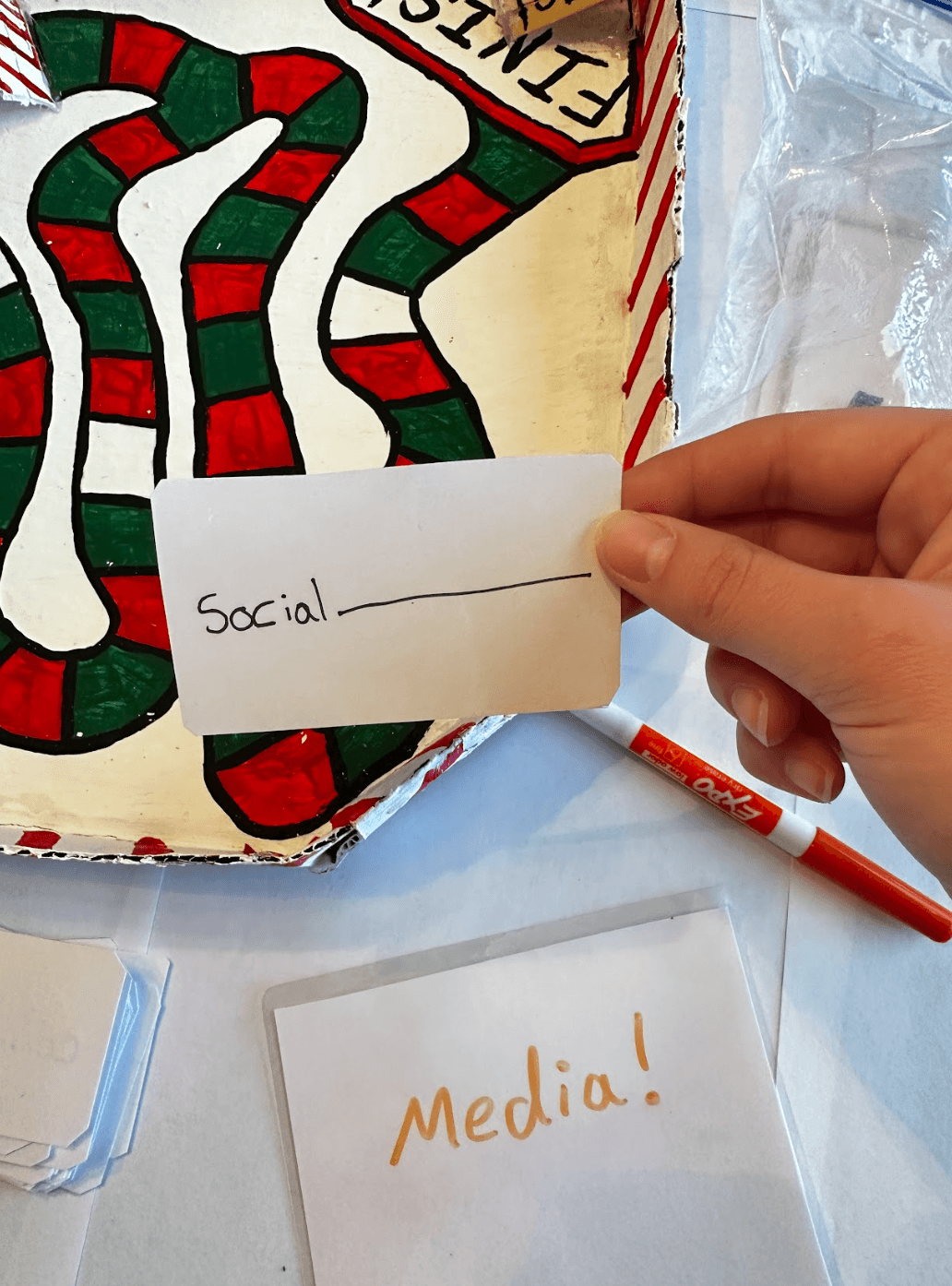
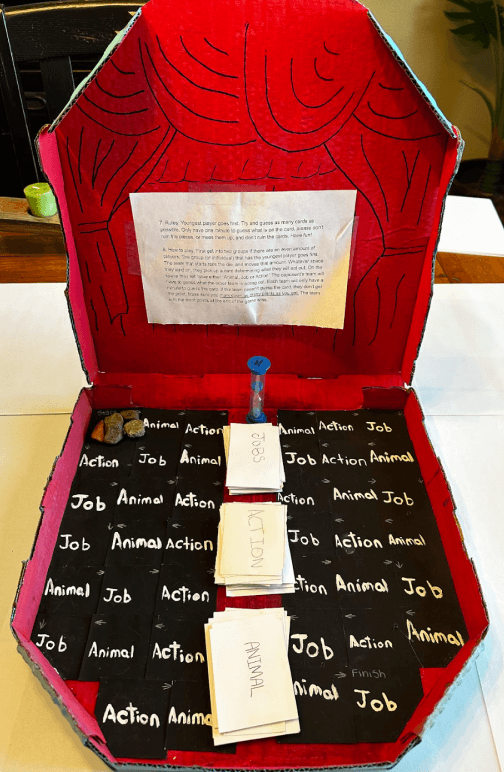
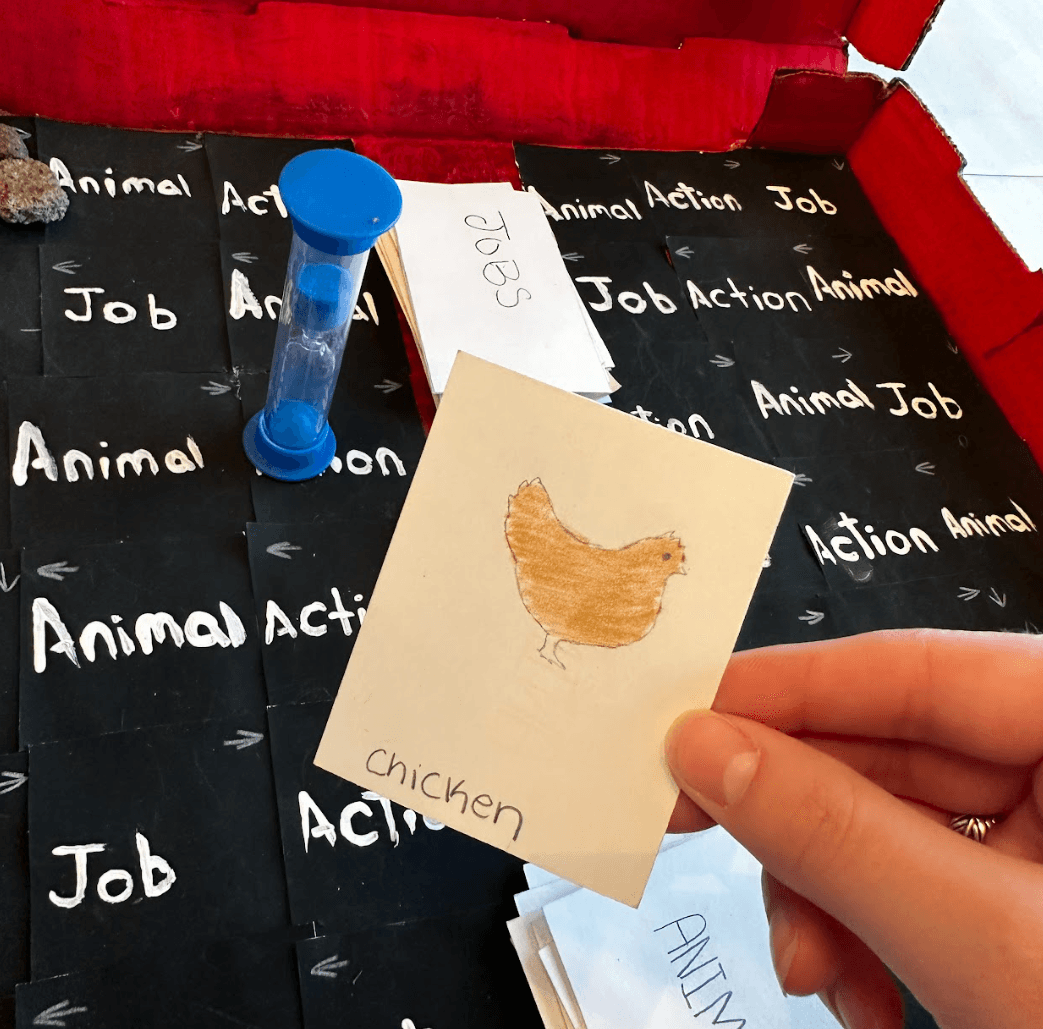
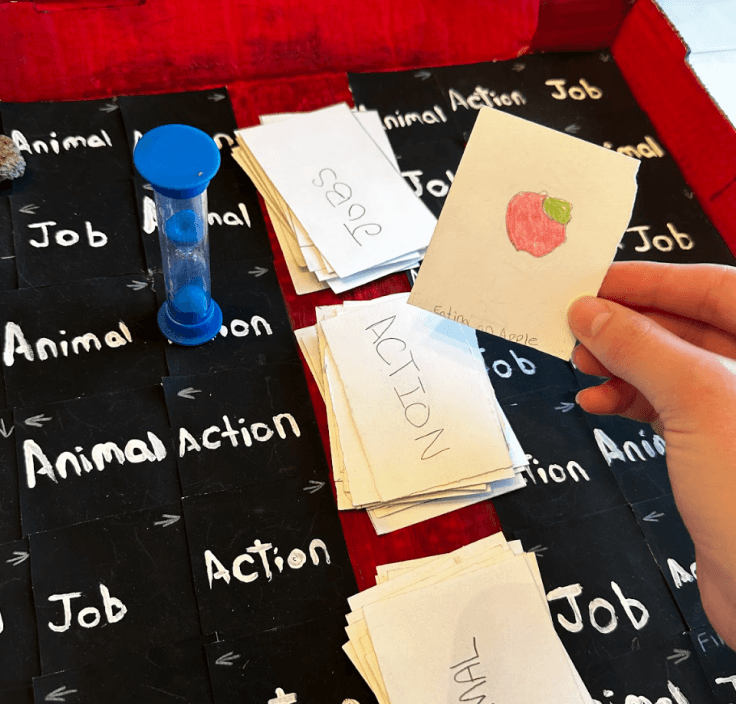
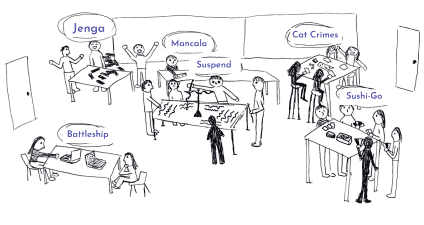
Ethnography describes embedding oneself in a particular group one wishes to study and taking notes on such group, along with its environment. In the present context, I am observing middle school students play and make games in their S.T.E.M. elective class.
why?
The goal centers on Research Objective #2: to understand how educational games impact students and to understand student game preferences. Conducting an ethnography allows me to observe behavioral characteristics of users in addition to their self-reported data in interviews and survey.
how?
This research method will mainly collect qualitative data as recorded observations. In addition, this data will be novel in that it will detail student-made board games from students in the rural Red Bluff area, a location where student data is only ever collected purely for state-driven educational purposes.
Student Survey
May 30, 2024 - July 17, 2024
Northern California
what?
This survey will focus on collecting response data from California K-12 students.
why?
The goal focuses on Research Objectives #1, #2, and #3. By asking students about their preferences, I hope to understand more about student confidence and motivation in science classes, how students feel about educational games, and which subjects students struggle with. This research will hopefully unveil the experiences and preferences of young physics learners.
how?
This research method will collect both qualitative and quantitative data. Since this data will mostly focus on students living in rural areas with less research and funding, this data could be considered novel.
Results
Central Takeaways
#1 : Student Attitudes
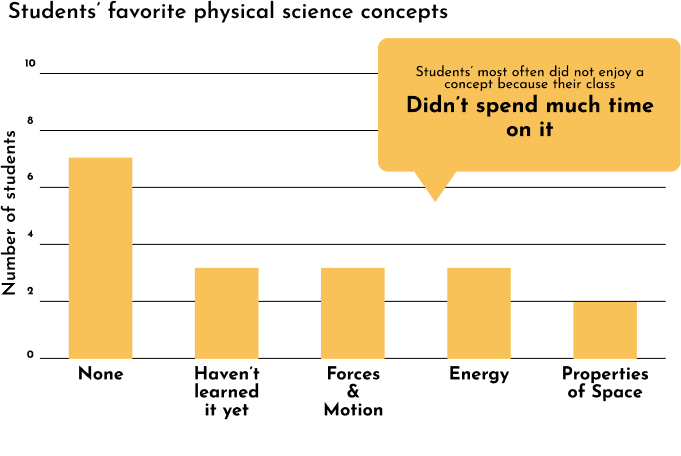
Student confidence and motivation are complex issues that are difficult to measure. However, many students can struggle to find interest in science if they cannot connect to it, and many have a fear of being perceived in a certain way by their peers.
#2 : Educational Games
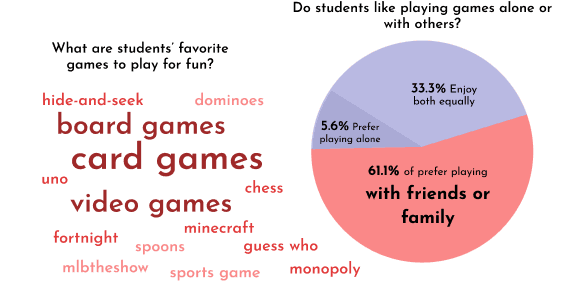
Educational games seem to engage students in classroom settings and help students find interest in science. Currently, there are not many collaborative physics games out there.
#3 : Learning Physics
Students’ biggest challenges are often associated with their math competency. Additionally, students can struggle to understand physics concepts if teachers do not use real-world examples and use what students are familiar with to their advantage.
#4 : Teaching Physics
Teaching physics begins by using what students are familiar with. Using real-world examples is extremely helpful, as is connecting with students by using what students are personally interested in. Additionally, physics should be first communicated without math to better include all students.
#5 : Game Design
Each player needs to have a distinct role to make the game truly collaborative. Use game standards and familiar patterns as well.
Define

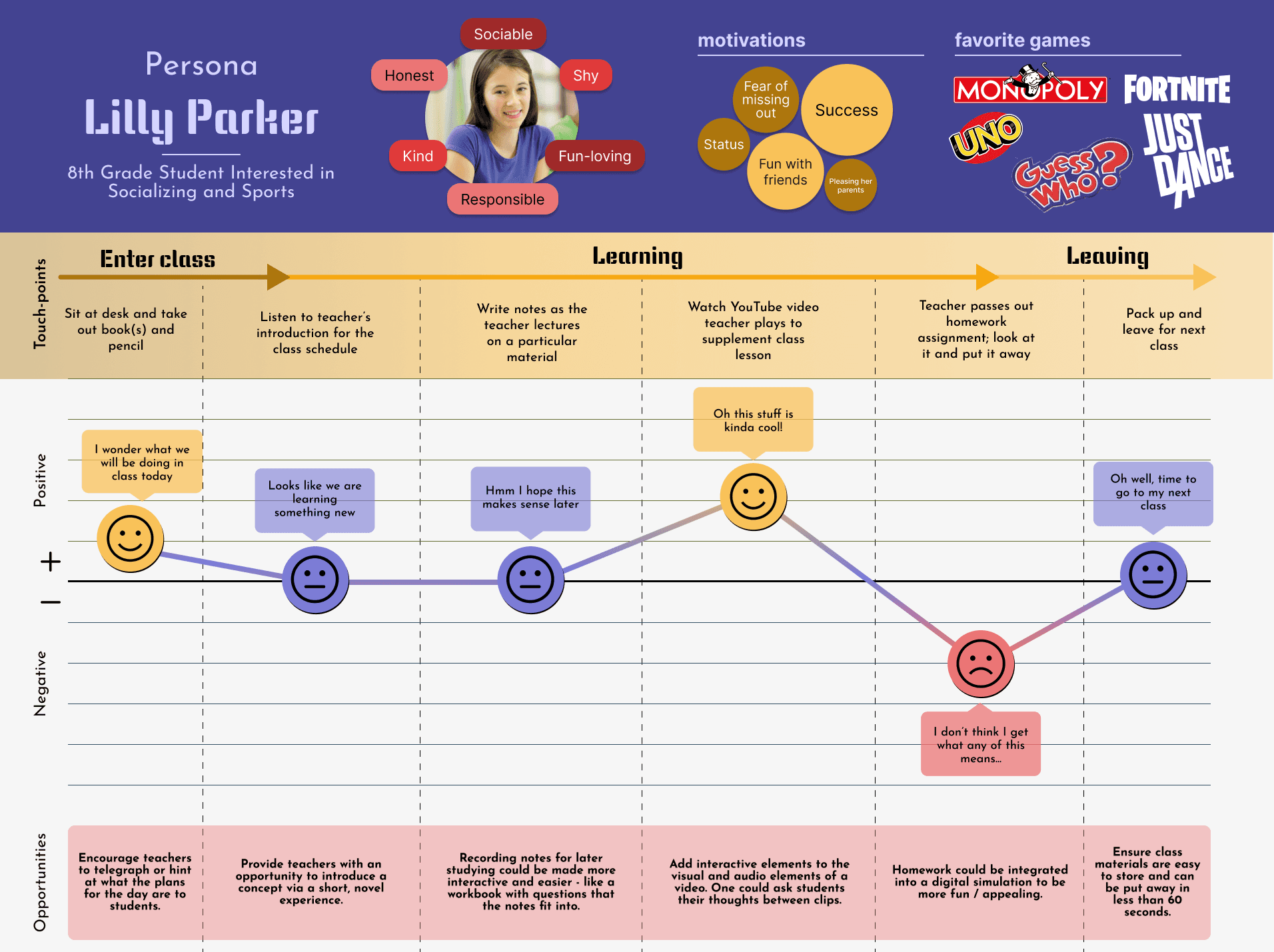
Persona
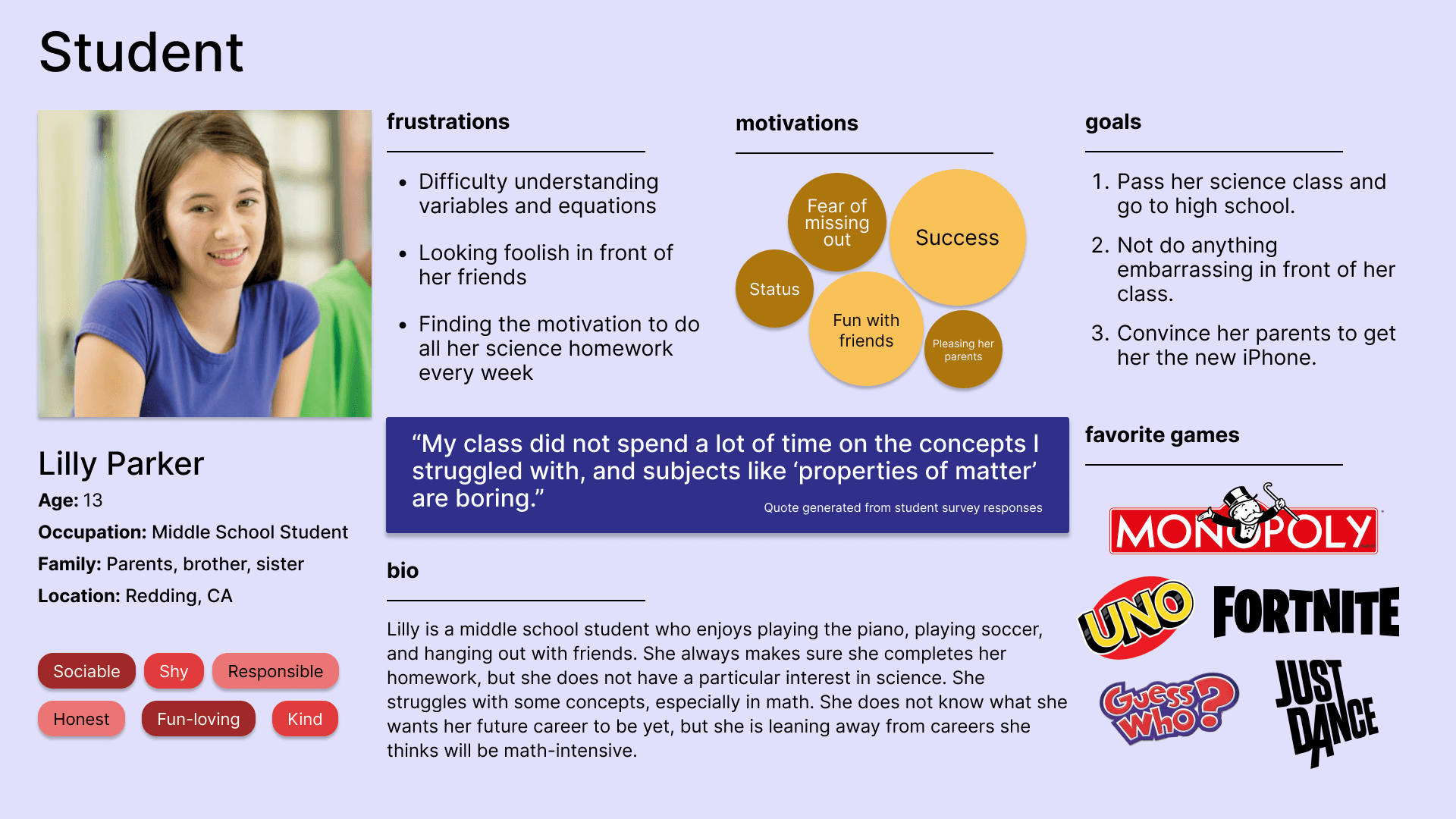
A persona was developed using data from the student survey, the classroom ethnography, and the literature review. Specifically, the quote and favorite games were pulled from the student survey, the frustrations and motivations were written based on insights from the literature review, and the rest of the information was generated by reflecting on observations from the classroom ethnography. The following persona will act as a guide for the design and development of the game.
User Journey Map
!
!
!
!
!
Student Pain Points
Finding Interest: Students can struggle to feel like science is enjoyable. Sometimes students struggle to see themselves in science due to stereotypes.
Looking Foolish: Some students do not participate in class or ask for help for fear of looking foolish or “stupid.”
Understanding Math: Many students struggle with physical sciences because it relies on their math skills, so using math to explain concepts can act as a barrier.
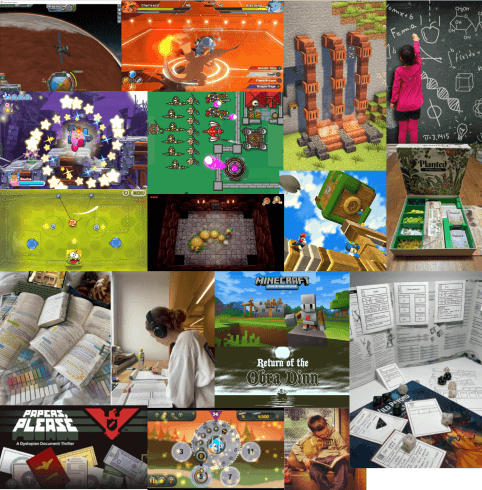
To summarize the vision board, the game will feature paper elements and digital elements, will inspire students to learn, and will emphasize dynamically moving objects. Additionally, the game’s overall style will be playful and bold with clean lines and bright colors.
Design Vision Board
Gameplay Structure
Idea Summary
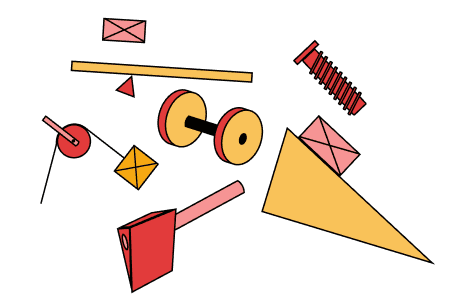
A game where players use simple machines to work together to build Rube Goldberg machines that feed dangerous space monsters. It would be centered around levels in which players try to feed the monster using different types of simple machines, and with different physical constraints.
Collaborative Element
One player acts as “the scientist” who is in the puzzle environment. They can use tools and/or run simple tests to determine environmental properties. The second player is “the engineer” who selects which simple machines the first player will use to solve the puzzle, along with the features of that puzzle.
Problem-Solving & Embracing Failure
Puzzles will encourage players to try new things and explore the in-game environment. Puzzles will revolve around trying to transform forces in a specific way by placing simple machines in different places.
NGSS
PS2.A: Forces and Motion, PS2.B: Types of Interactions
Math Consideration
Incorporate equations like F=MA and measure of gravity into level design, without ever actually having to tell the students the formula. After completing the level, the game could show them the formula.
Analog To Digital Scale
Balanced: one player will play on the computer, and the other will play using an analog setup.
Narrative
You and your friend work for Intergalactic PetPals, an organization that will take care of pets when their owners are on vacation. The galaxy is a wide and diverse place, and many people own pets that are extremely dangerous to get too close to. Part of Intergalactic PetPals’ job is to safely feed these pets. And that’s just the task you and your friend are up to. Each PetPals team consists of a Scientist and an Engineer. The Engineer works for PetPals Corporate and sends the Scientist the necessary materials to get the job done. The Scientist is local to the owner’s system and creates a Rube Goldberg machine to automate pet feeding, using the materials sent by the Engineer.
level introduction
level end
take environmental
measurements
look at puzzle
map
look at puzzle
in the world
select items to send
& adjust their
attributes
send items to the
scientist
communicate &
listen to other
player
receive & place
items in the world
release the food
(check if contraption works)
in-game event
key
player 1
action
player 2
action
Develop
MVP Map & Technologies
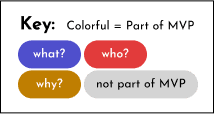
The Minimum Viable Product (MVP) for the project will focus on the following:
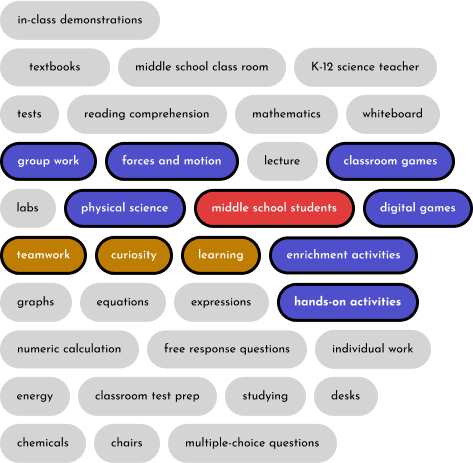

Phase 1: Sketching Designs & Generating Assets
Figma was used to create level design sketches and develop wireframes for the User Interface (UI). Figma was chosen due to its simplicity and flexibility.
Then, Figma was used to develop the UI, environment, and object assets that would be used when building the game itself.
Phase 2: Building Game Scenes
Unity 2D was used to build the levels and all objects, environment properties, and UI within them. Unity was chosen as it is one of the most popular game engines with online support.
Later, when the game was ready for export, the game would be exported with WebGL settings, so it could be uploaded to itch.io and be made publicly available.

Phase 3: Specifying Object Behavior and Scene Navigation
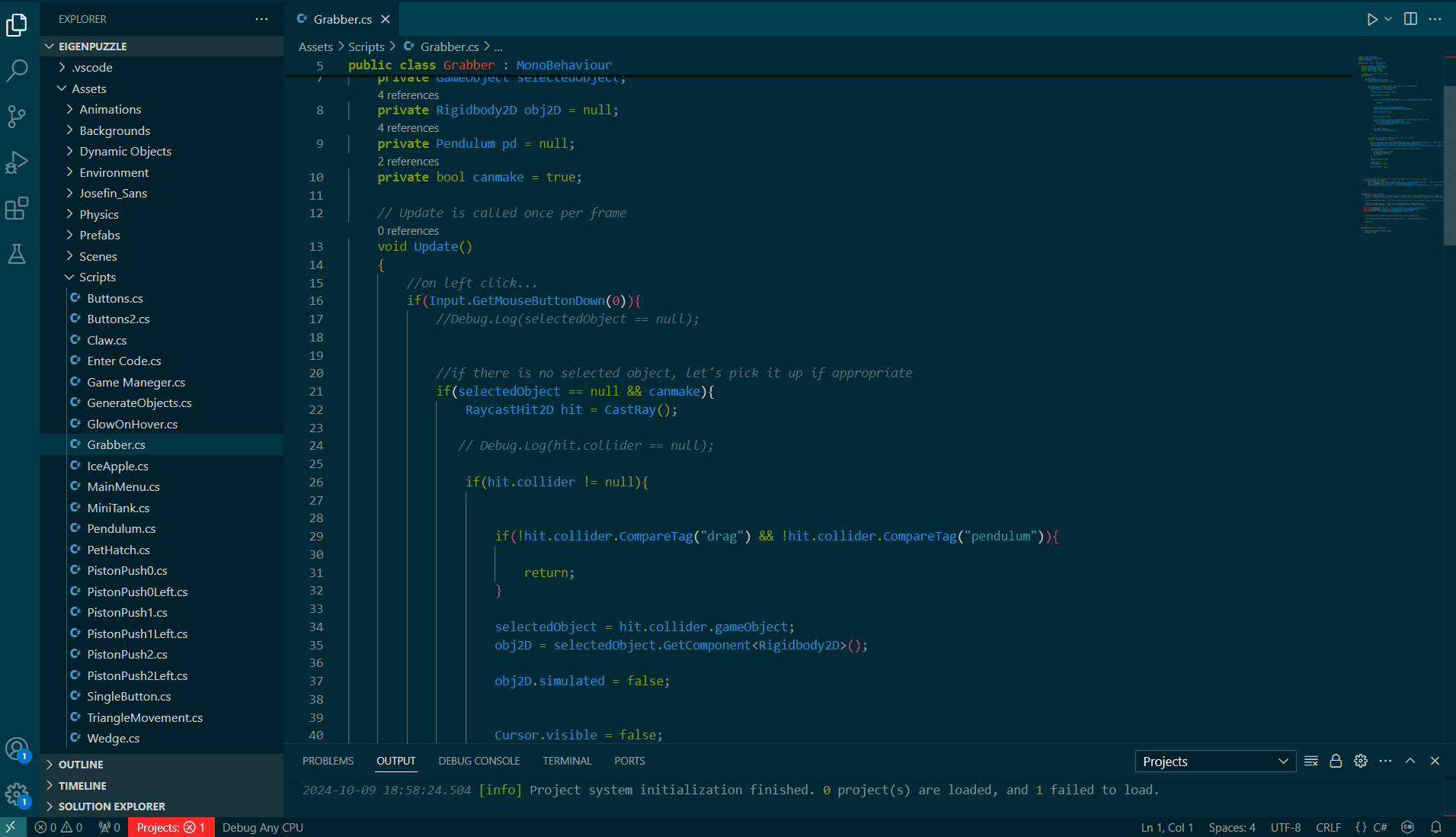
Visual Studio Code was used to write specific coding scripts to implement with objects in Unity. Coding became necessary to write specific object behavior and navigate between in-game levels to fulfill the requirements for the level designs.

9F2929
7E1A1A
E23B3B
EB7575
FFB1B1
30308A
16166A
4444C4
7C7CD6
C9C9E9
E29603
AD760D
F6A812
F9C259
FFE0A4
Josefin Sans Light
Josefin Sans Regular
Josefin Sans Medium
Josefin Sans SemiBold
Josefin Sans Bold
Keania One Regular

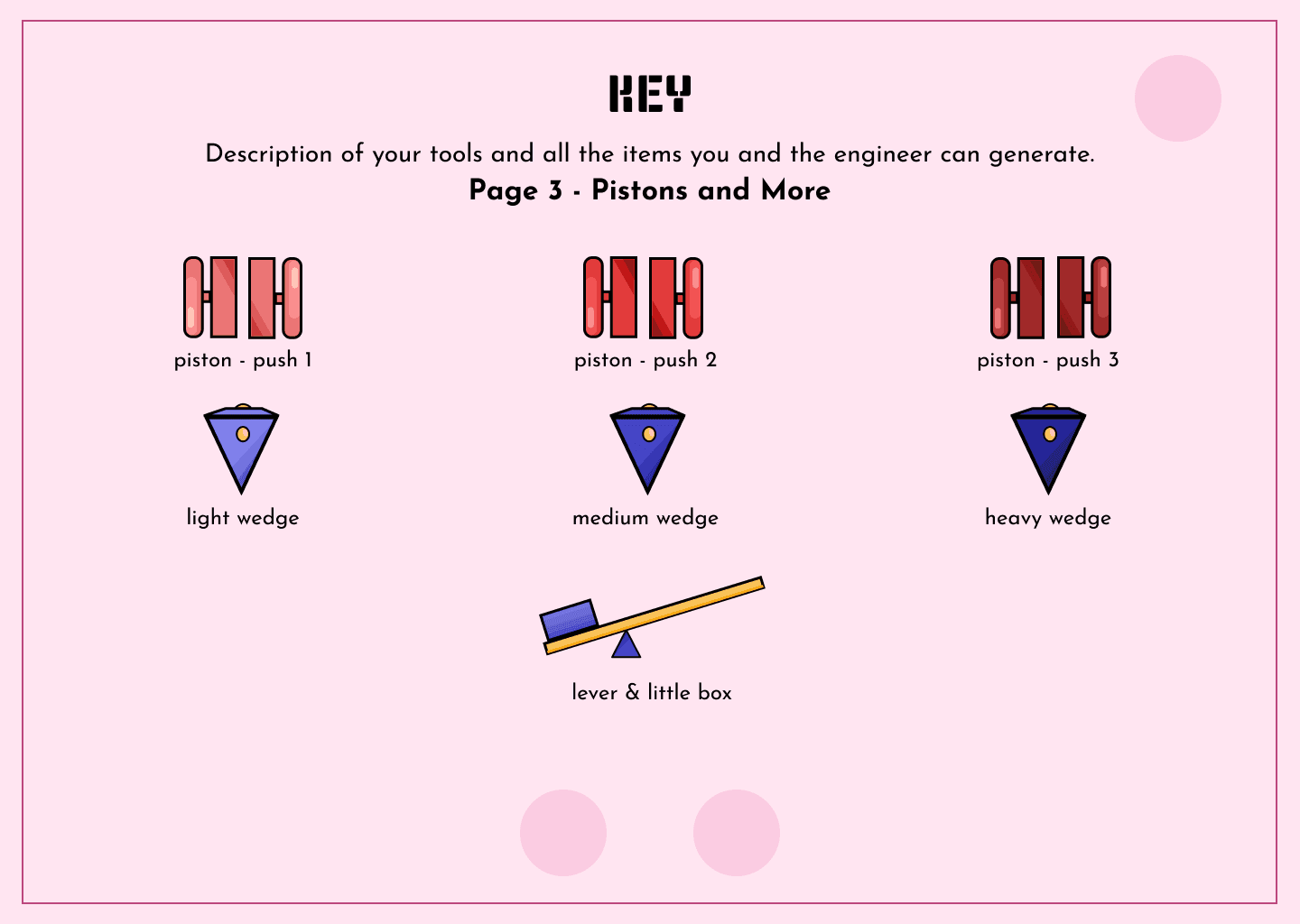
Branding Board
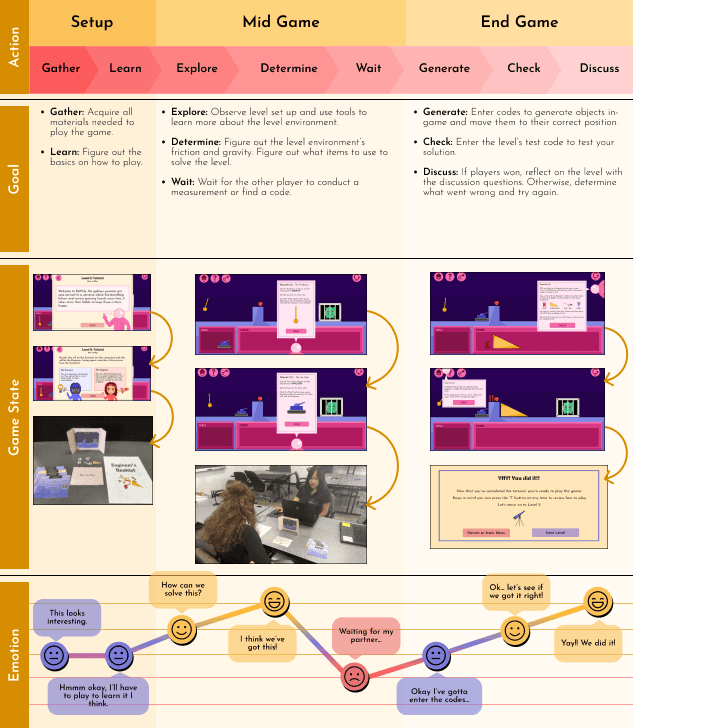
Experience Map
The following experience map highlights the intended user experience of EigenPuzzle.
Level Design
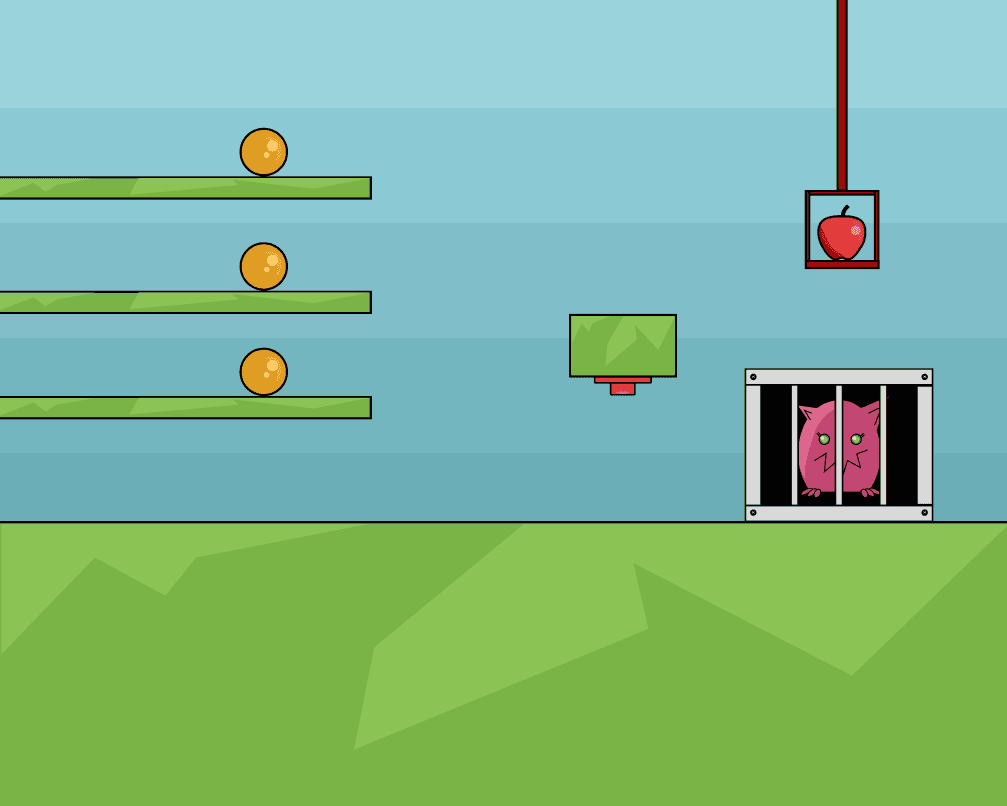
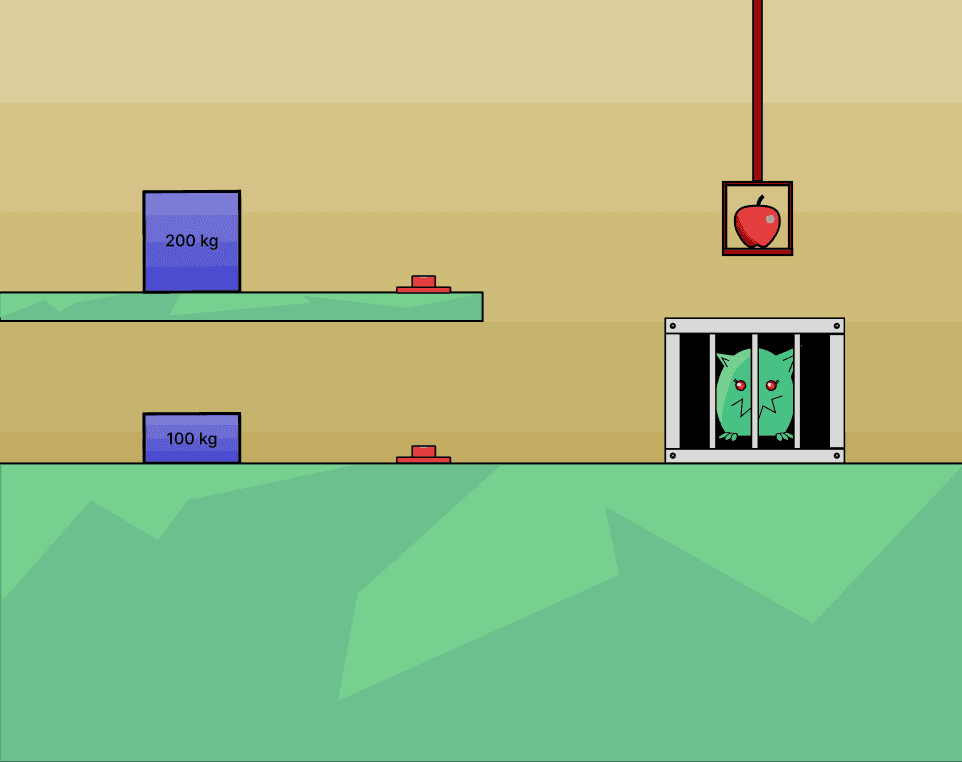
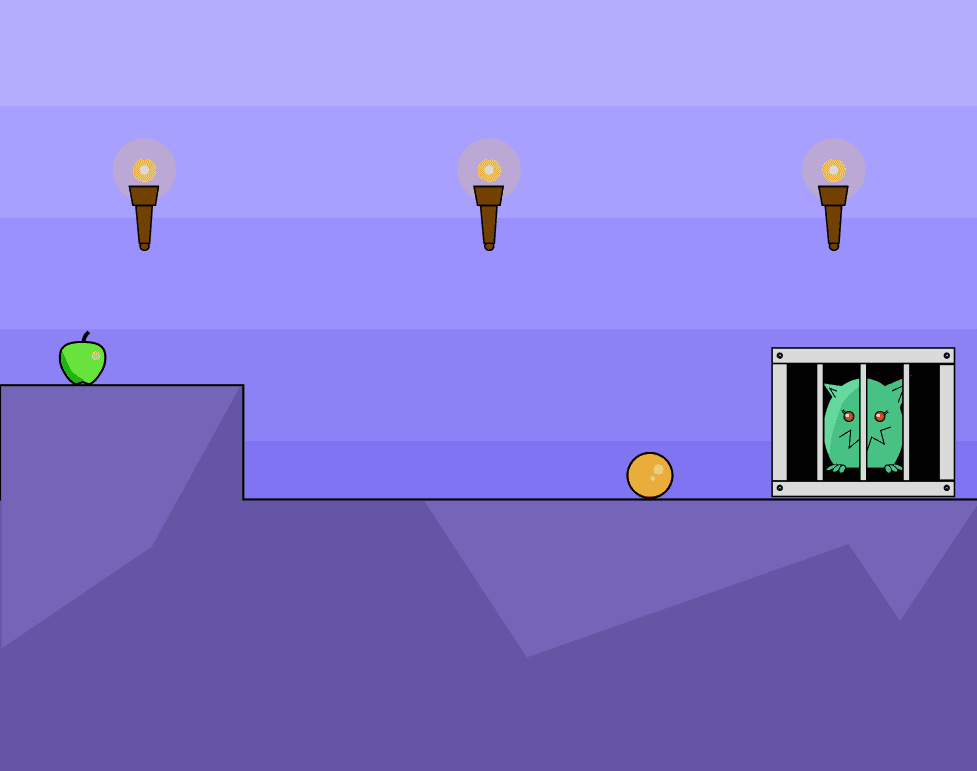
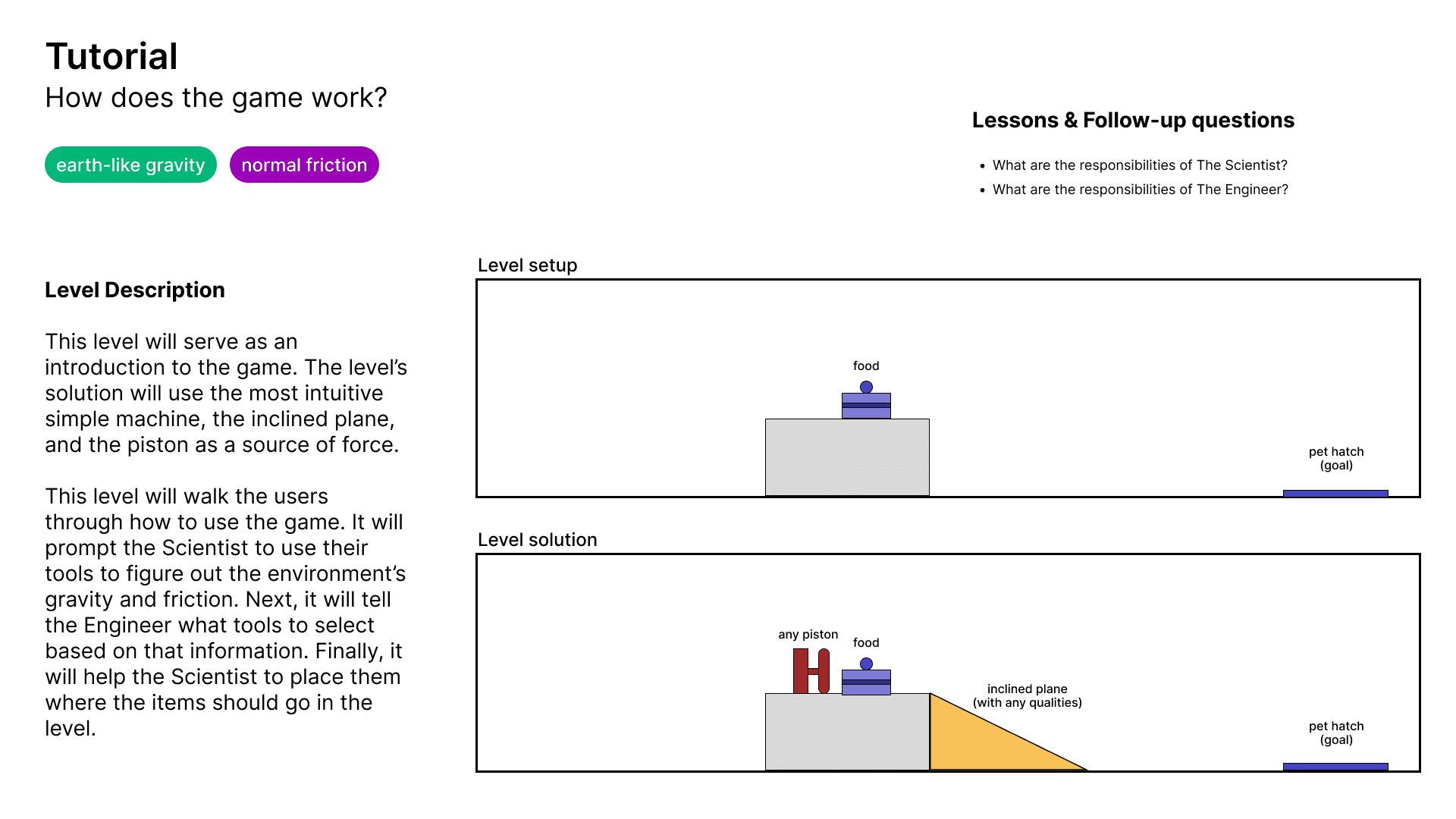
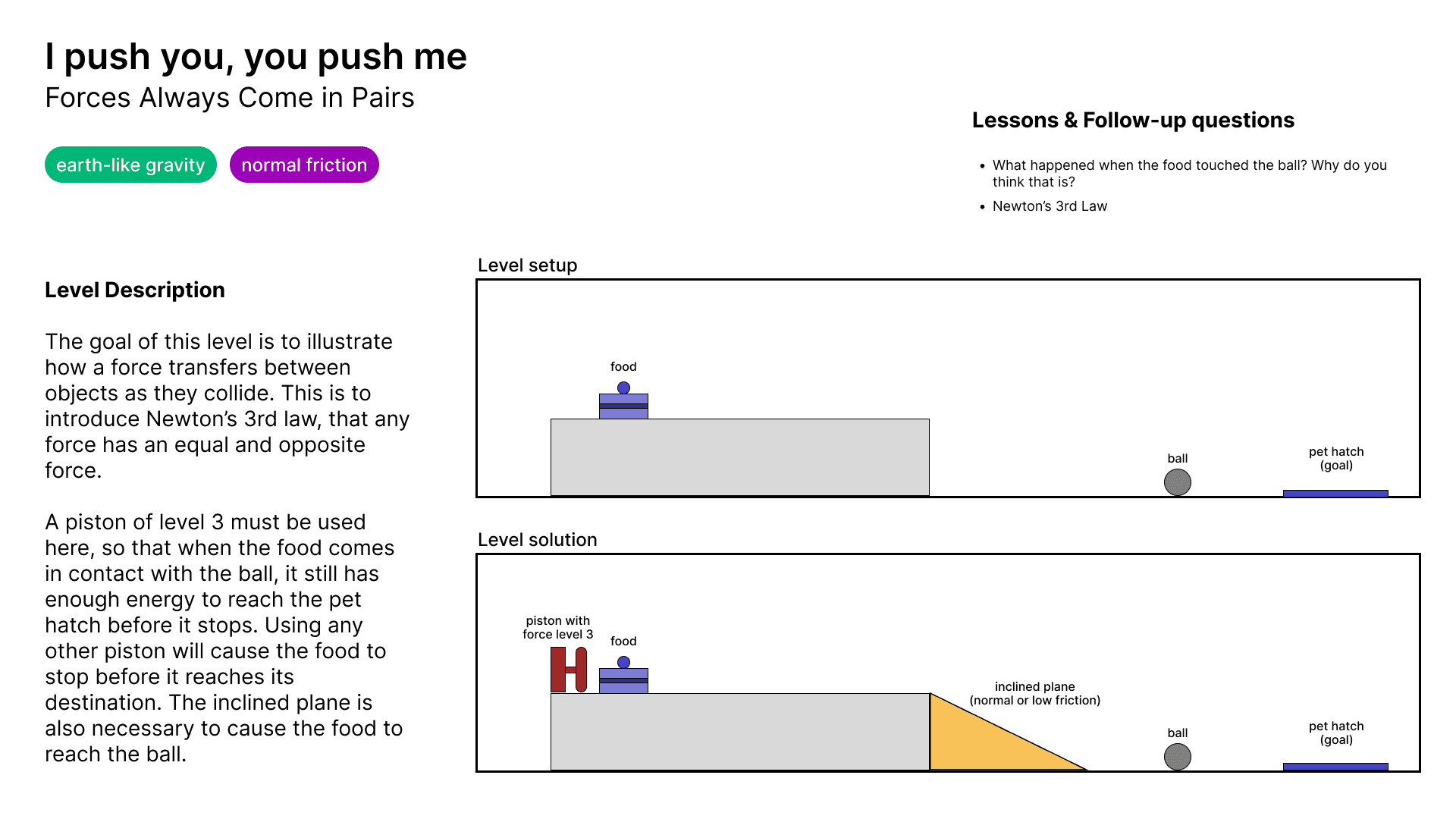
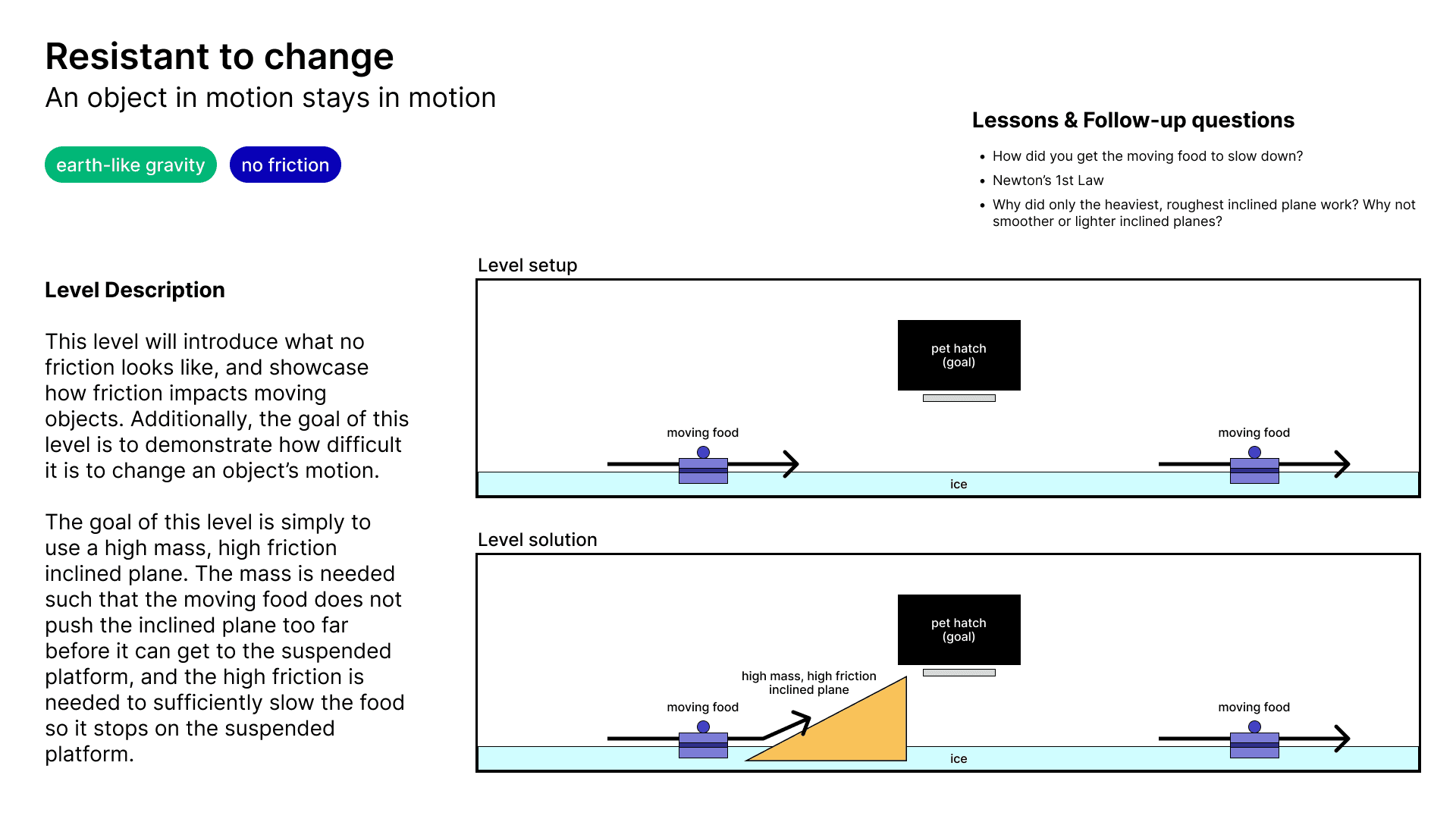
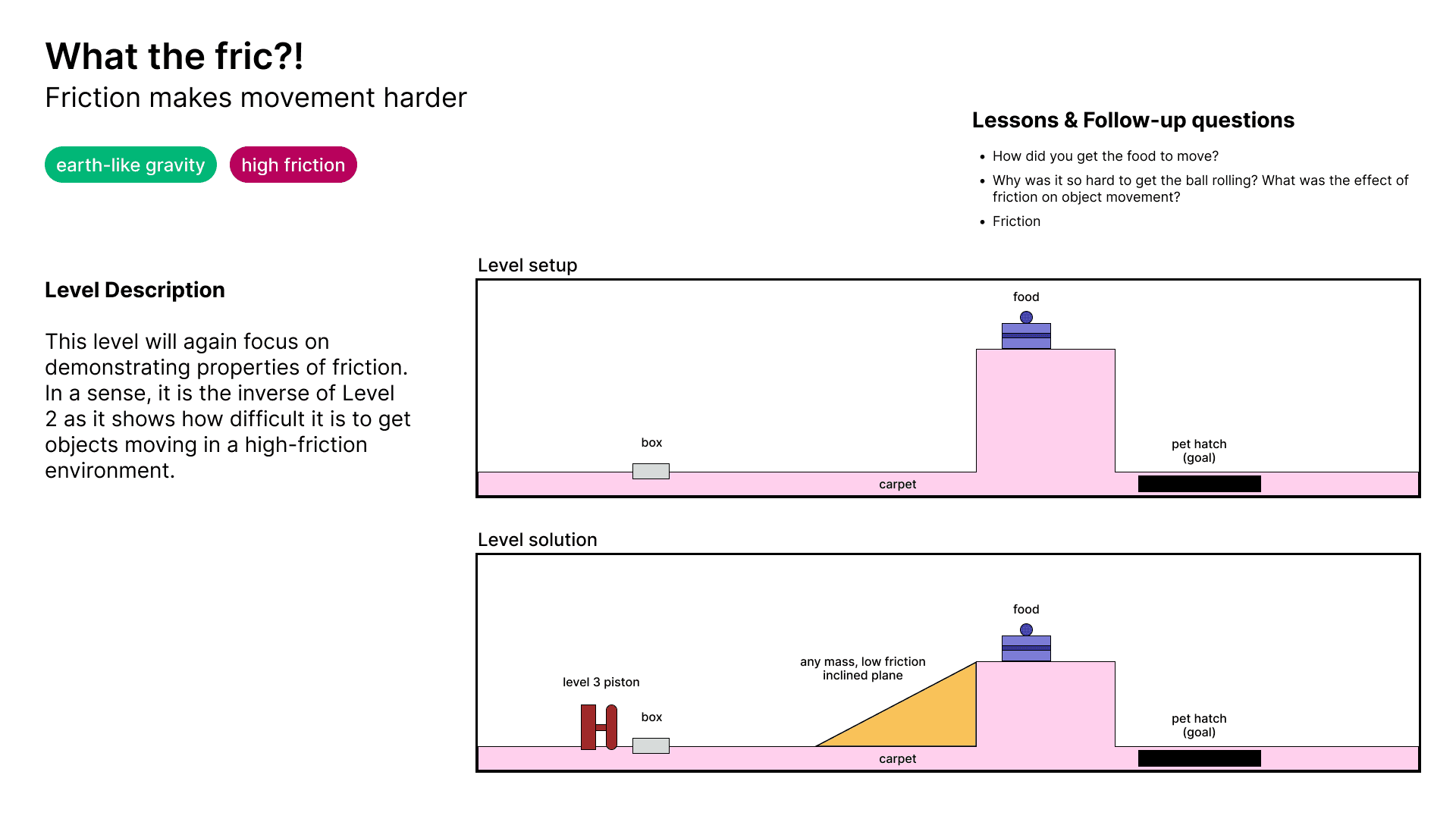
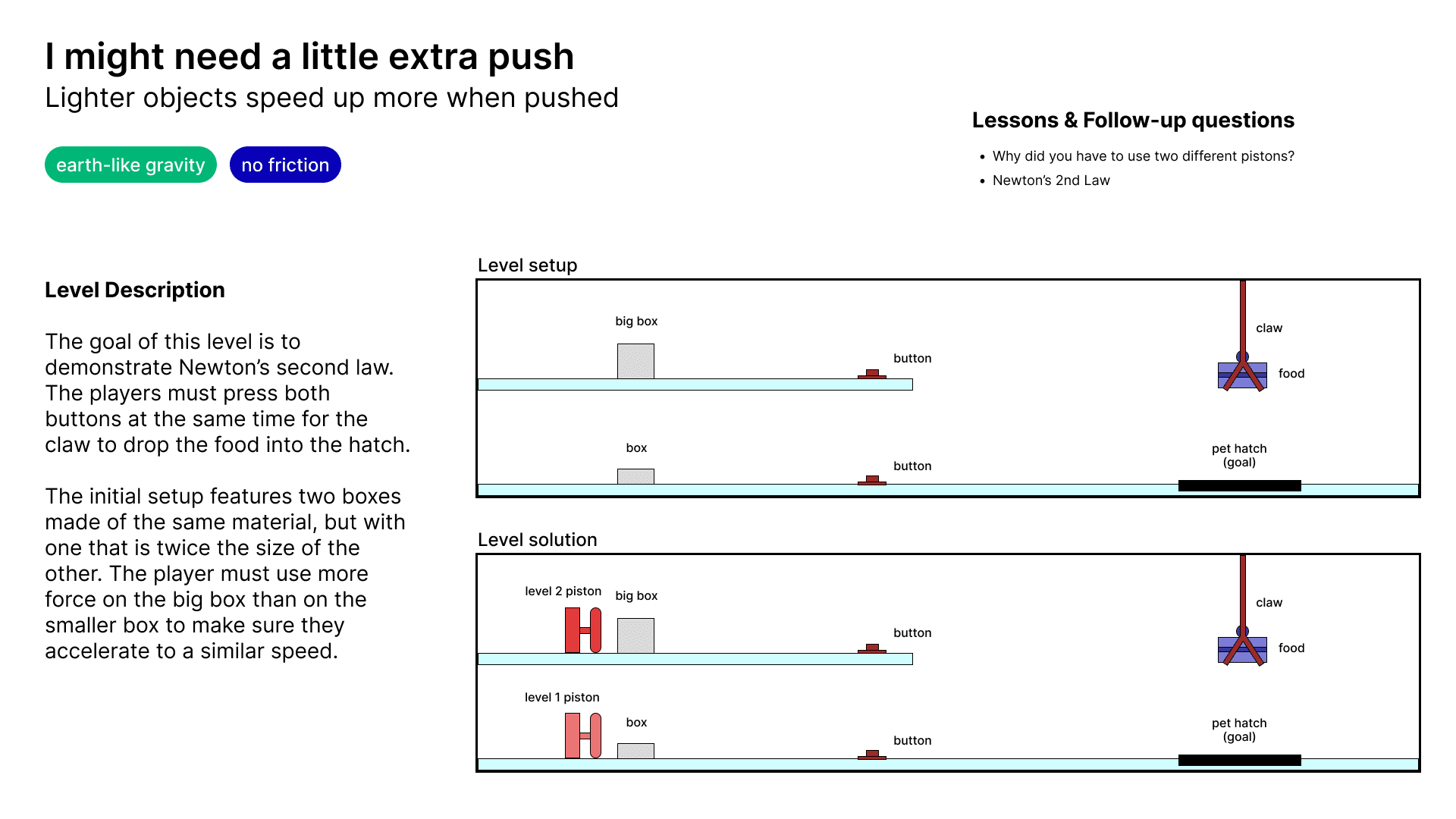
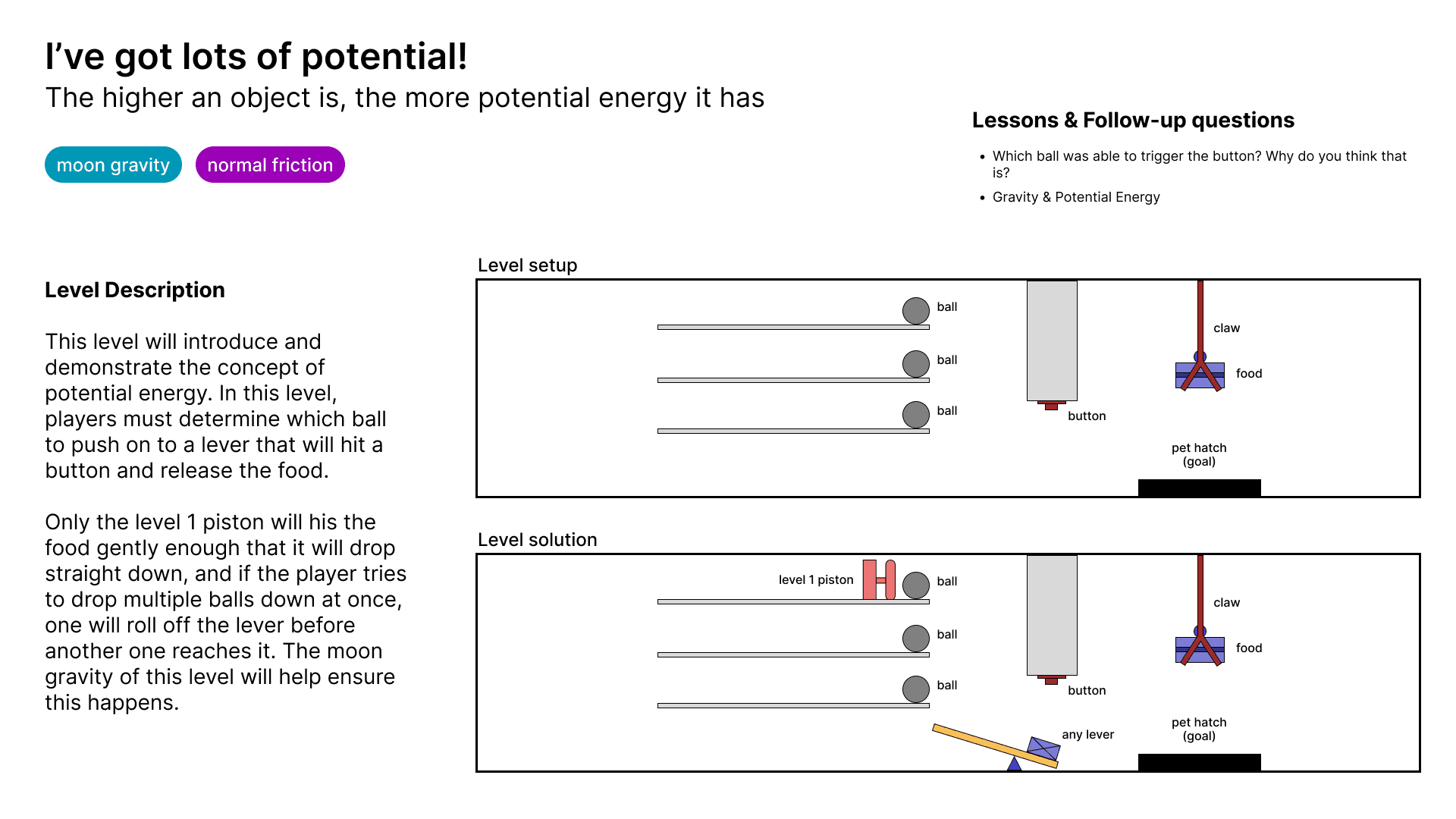
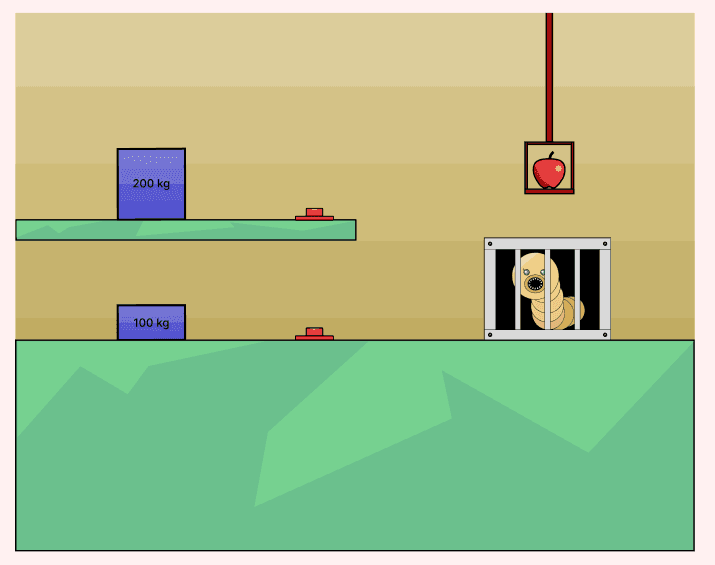
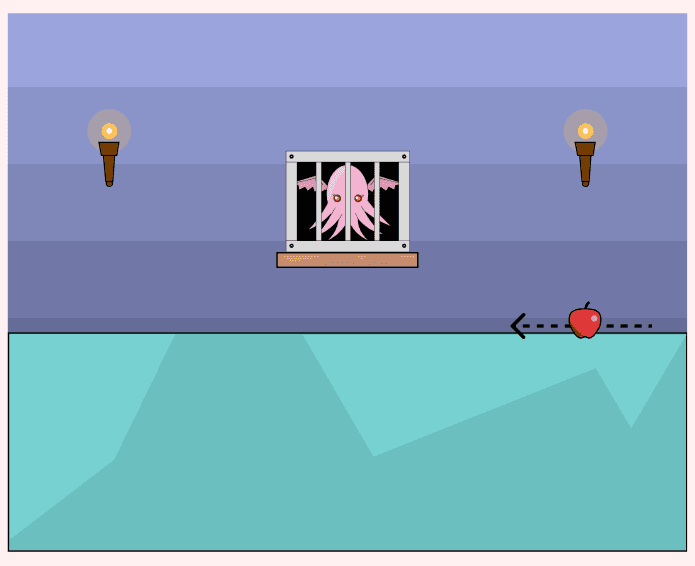
To begin game development, level setup and solutions were sketched out, along with potential science questions that could tie in to in-class lessons. Here are the level sketches that would be built in EigenPuzzle.
User Interface Design
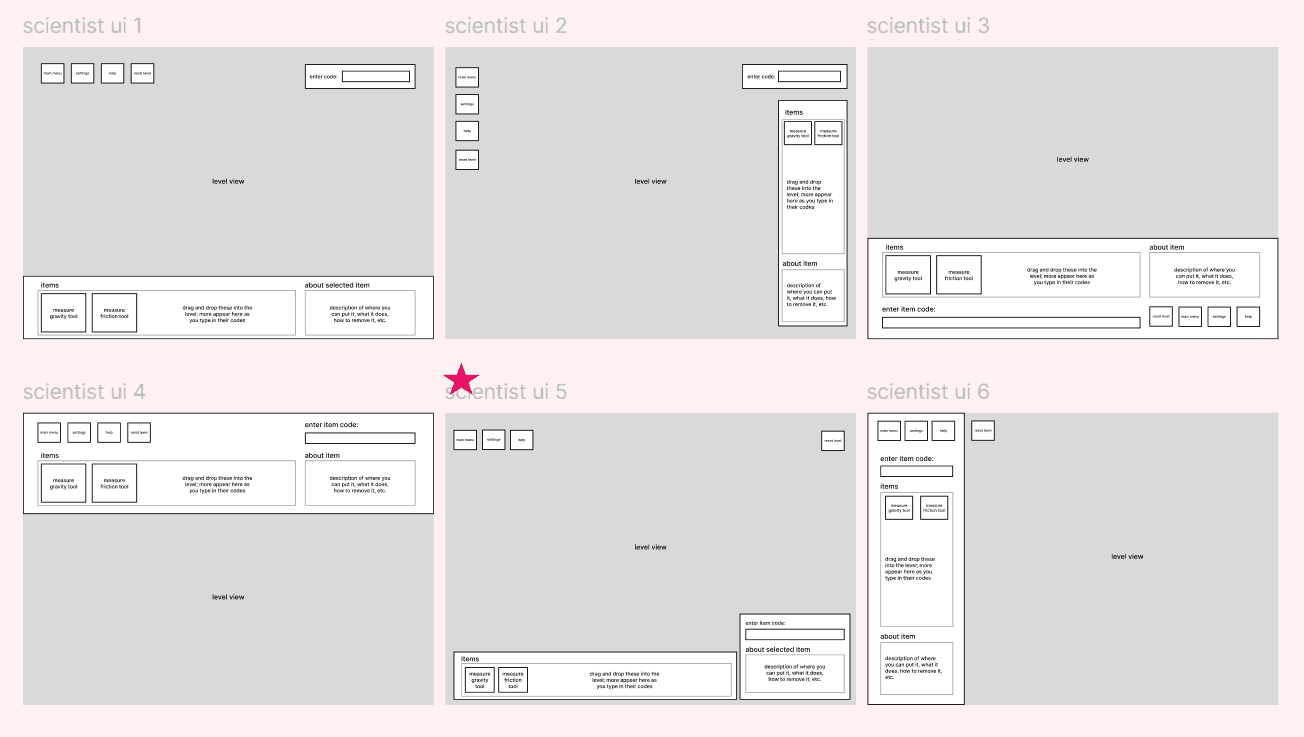
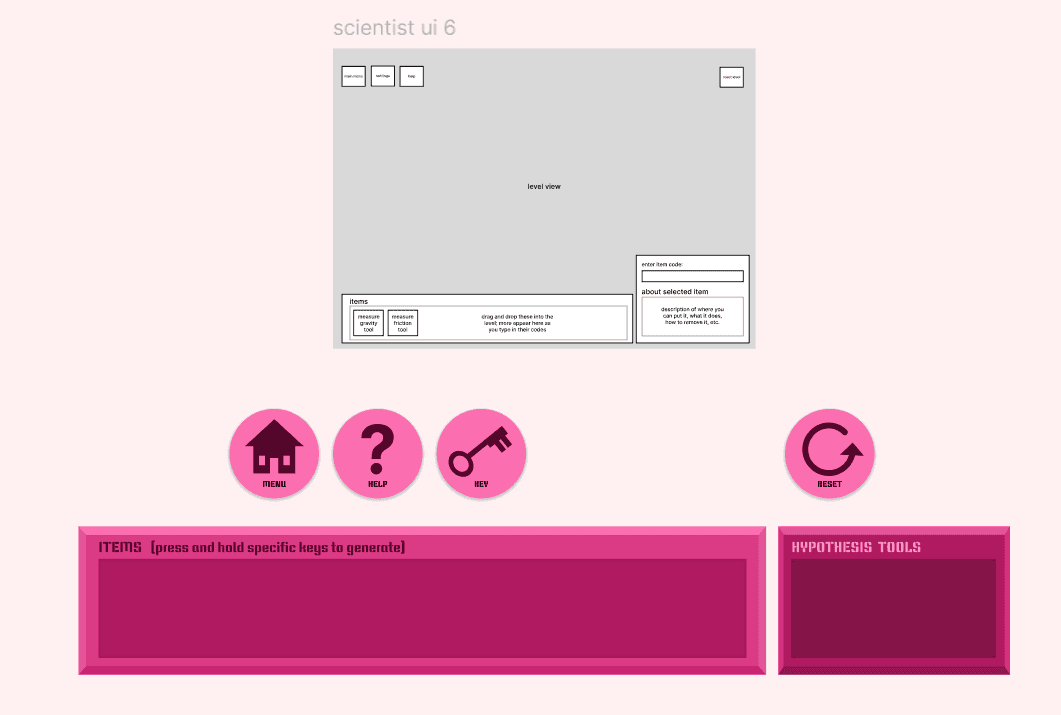
After outlining the gameplay via level sketches, the digital User Interface (UI) was sketched out using Figma wire-framing tools. From the gameplay, a list of requirements were made for user control. The wireframes were made based on those requirements. The following ideas were shown to fellow design students, and the 5th sketch was chosen as the most visually appealing:
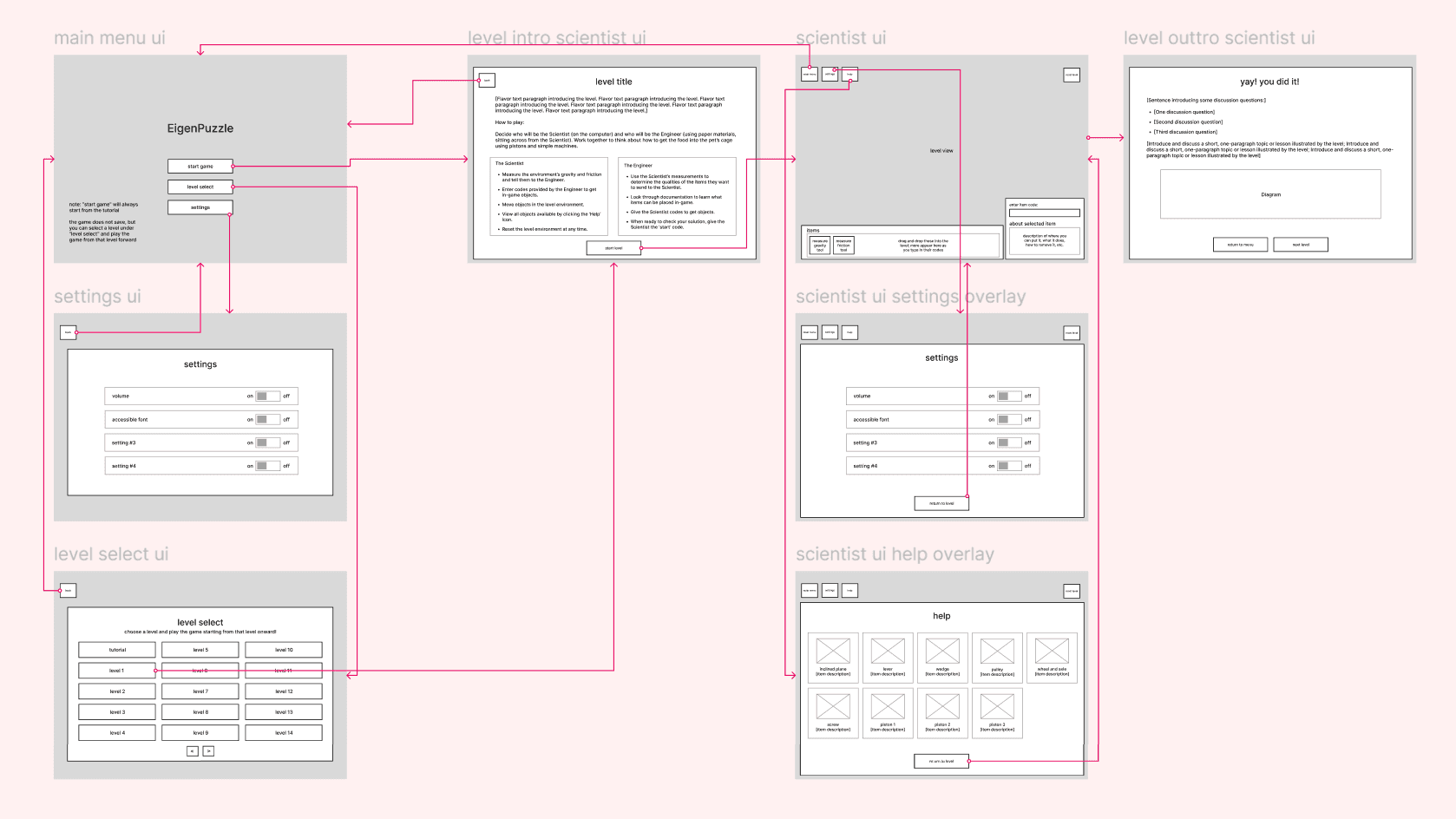
Using the 5th sketch, the entirety of the game’s UI was mapped out using Figma. The following user flow diagram shows how users can navigate to different screens using the system’s UI.
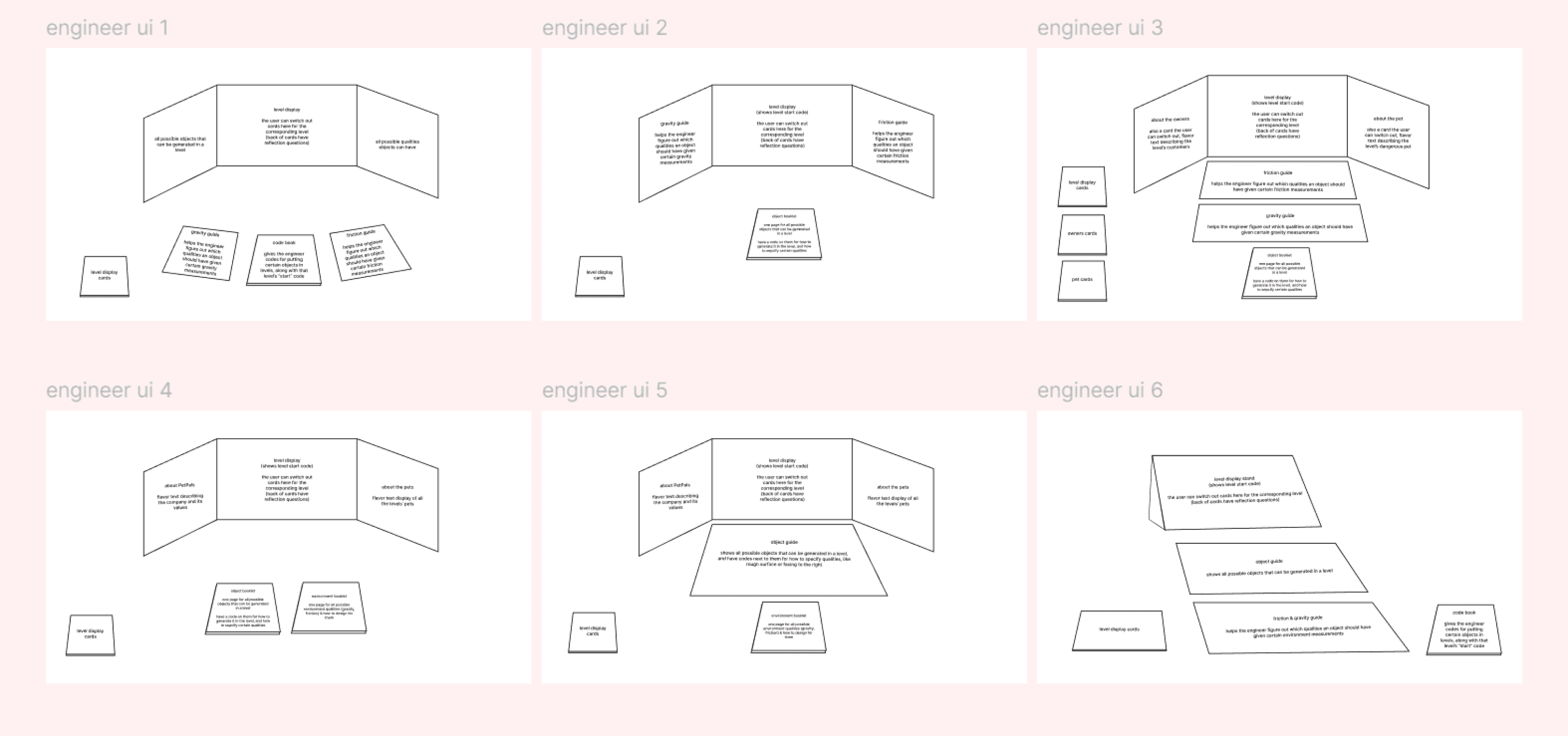
Following the creation of the digital UI for the Scientist was the ideation and construction of the physical UI, for the Engineer. To make these materials accessible and easy to use, it was determined these materials should be able to be printed from an online PDF file. Thus, the materials would need to be able to be made solely from paper.
Six steches were made using Figma, and the first design chosen to be developed was the second sketch, though the final version followed the fourth sketch more closely.
Asset Creation & Unity Development
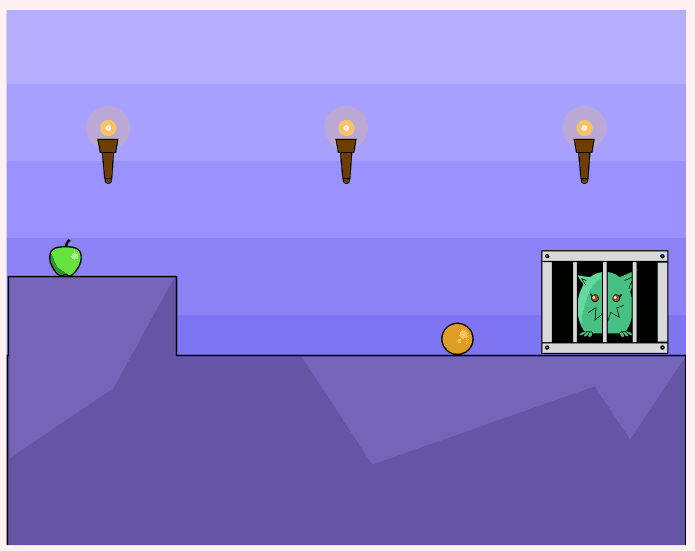
Once the levels were outlined and the UI was determined, in-game assets for all game elements needed to be created. With Figma, pets, characters, menus, buttons, backgrounds, environment obstacles, platforms, simple machines, apples, and other objects were illustrated both for Unity and for the PDF for the analog materials.
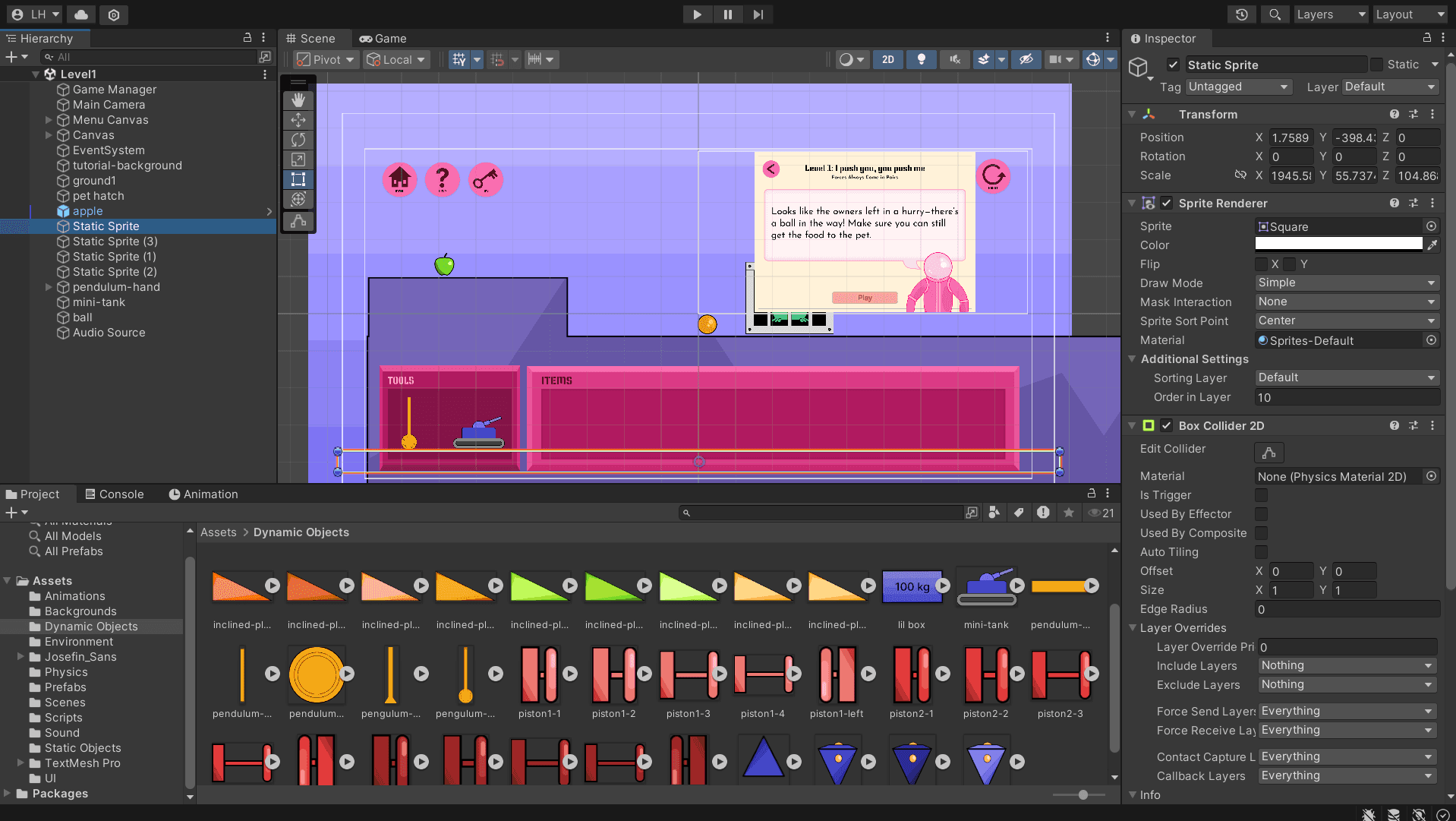
Next, assets were imported into Unity. In Unity, game objects were built around these sprites, and scripts were written with Visual Studio Code to define specific object behavior and scene changes. Once of the most difficult coding challenges during this phase was to determine when objects would interact with the apple and when they would not. In future iterations, the current code solution could be iterated on to make both code and gameplay cleaner.
First Prototype

Play Testing I
October 1, 2024 - October 16, 2024
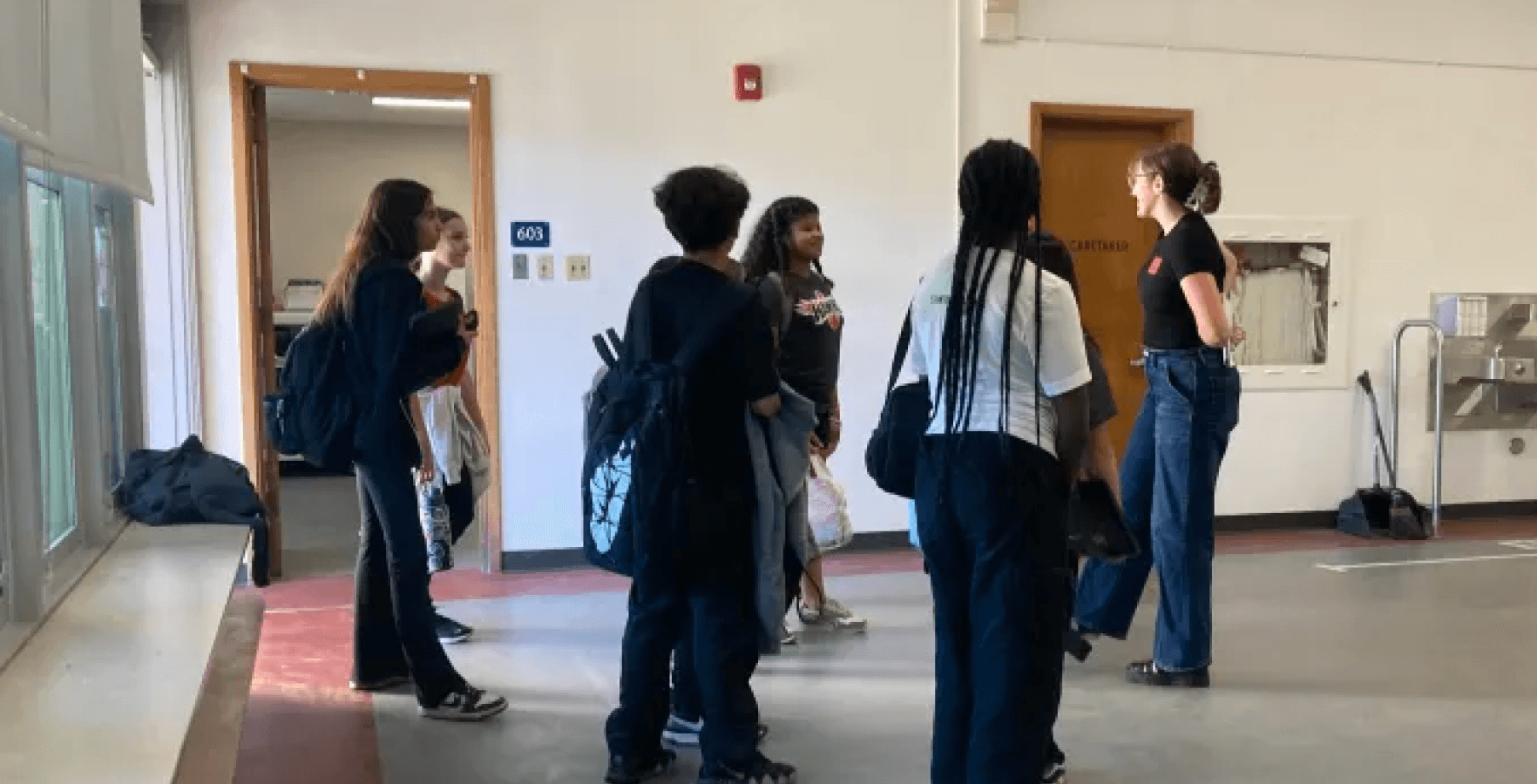
Berrendos Middle School, Stanford Middle School, Red Bluff High, & CSULB’s Design Department
what?
Typically, usability testing is used to evaluate how easily and effectively users can take actions, navigate, and otherwise interact with a system in UX design. Play testing is used in game design to understand how players interact with a game, find bugs, and refine the game’s balance. For this project, both system usability and game experience were tested together.
why?
By assessing the system’s usability and the player’s experience, both the UI and gameplay can be improved.
how?
This research method will collect qualitative data as player insights, feelings, and opinions. Quantitative data will also be collected in the form of recorded play time, which buttons were clicked, and likert-scale survey questions regarding player experience.
Issues Identified
Learning how to play is difficult: students’ average difficulty rating and the observations made about player dynamics supported this conclusion.
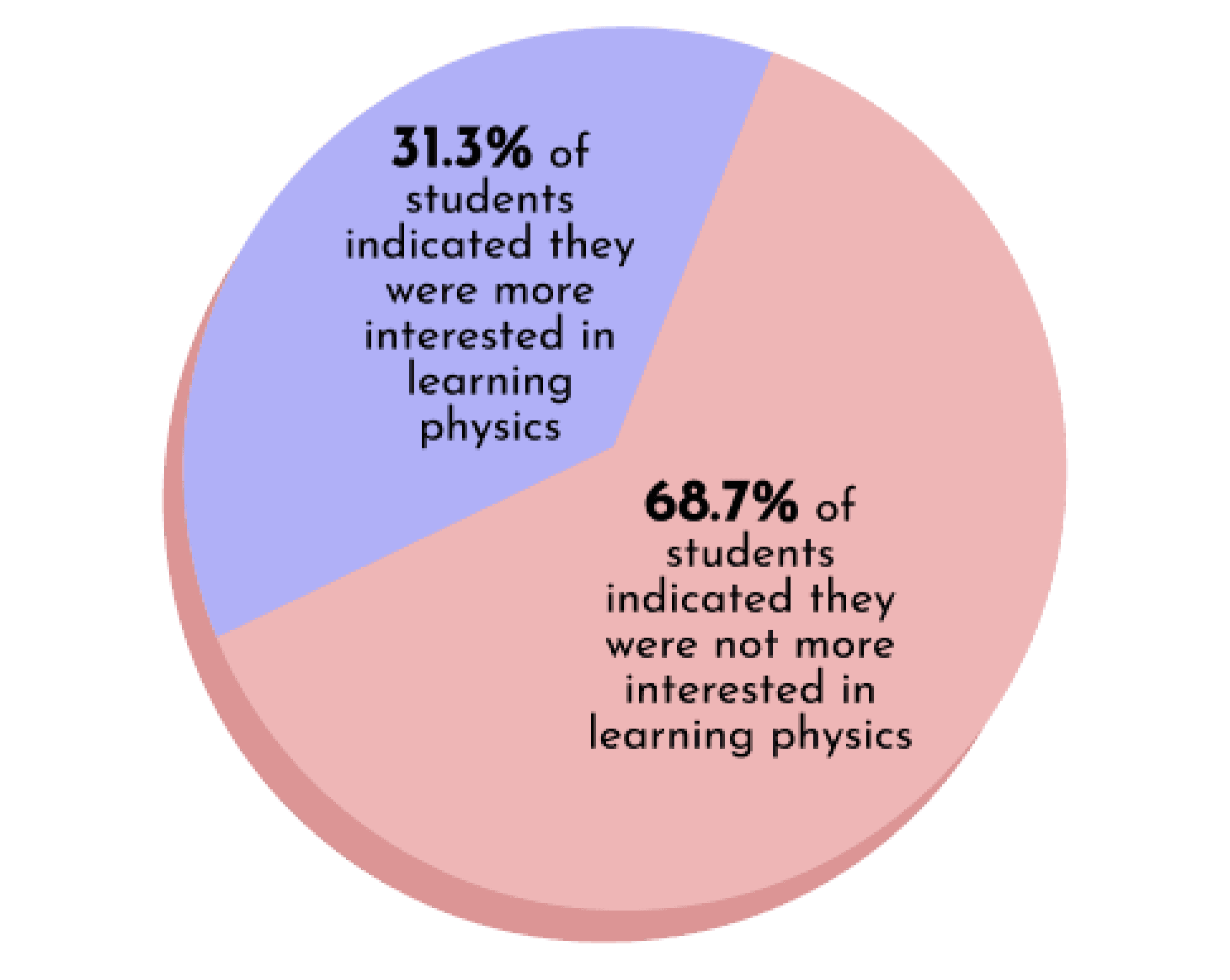
Students did not feel the activity was fun: this was reflected by the average enjoy-ability rating and that less than half of the students were motivated to learn more about physics.
Students did not want to read to engage with the Engineer’s Booklet: observations on student behavior revealed this.
Students struggled to understand what on-screen elements did: this was evidenced by both the average difficulty rating and observations made.
Proposed Solutions
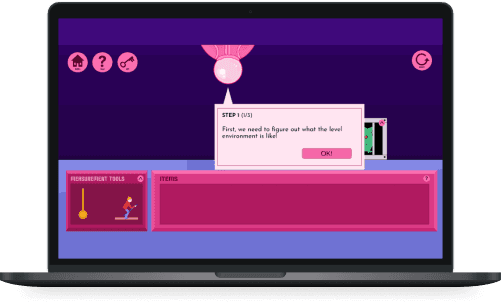
(Digital) Create a cut scene to explain the basics of the game: to help players learn how to play and to catch their interest.
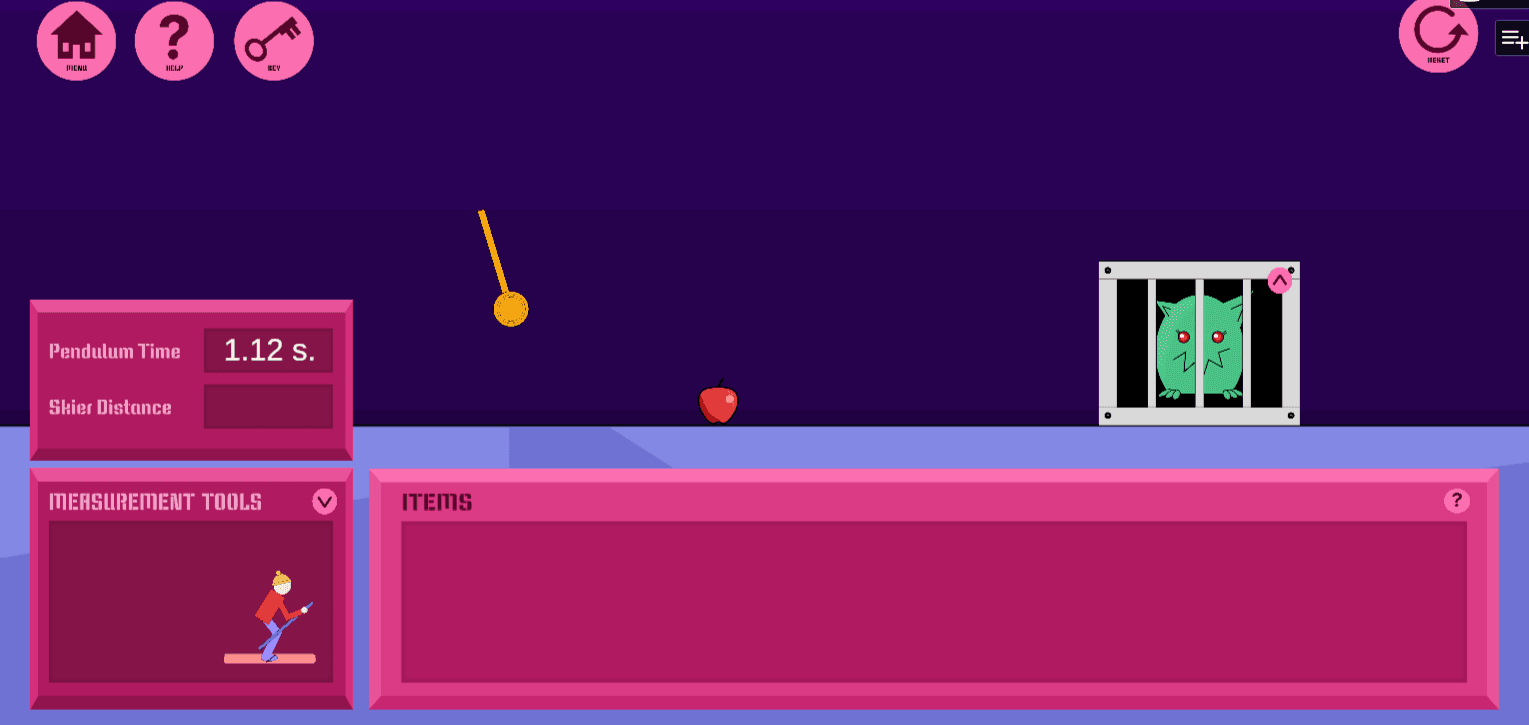
(Digital) Change the “toy tank” measurement tool to a “skier toy”: ensure the Scientist does not think they need to shoot something with the tank.
(Digital) Add an expandable window showing numeric measurements to correspond to the measurement tools: although the game’s design wanted to communicate math with no numbers, adding different numbers will help them connect what’s on-screen to what needs to be done.
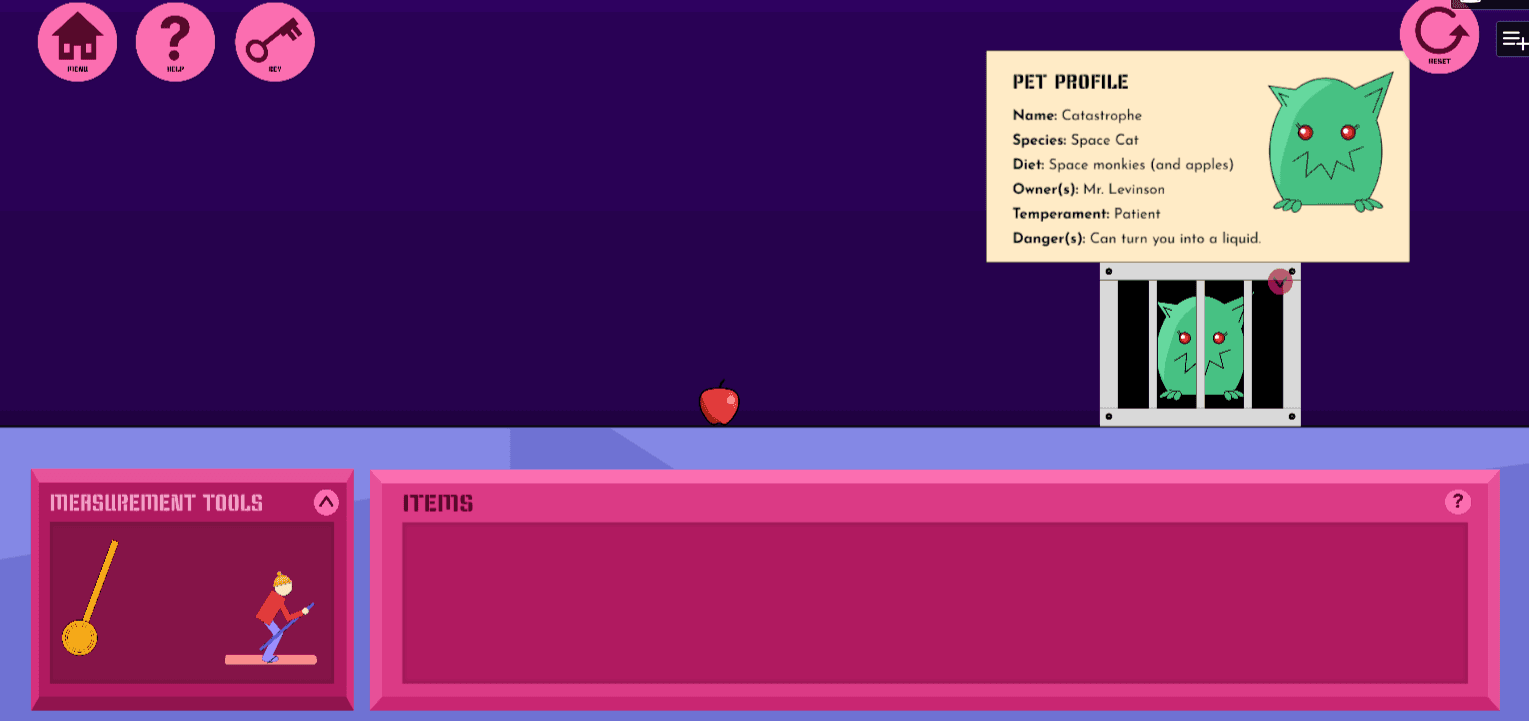
(Digital) Add extra buttons to UI elements to give extra information: help users learn how to play and understand what on-screen elements do.
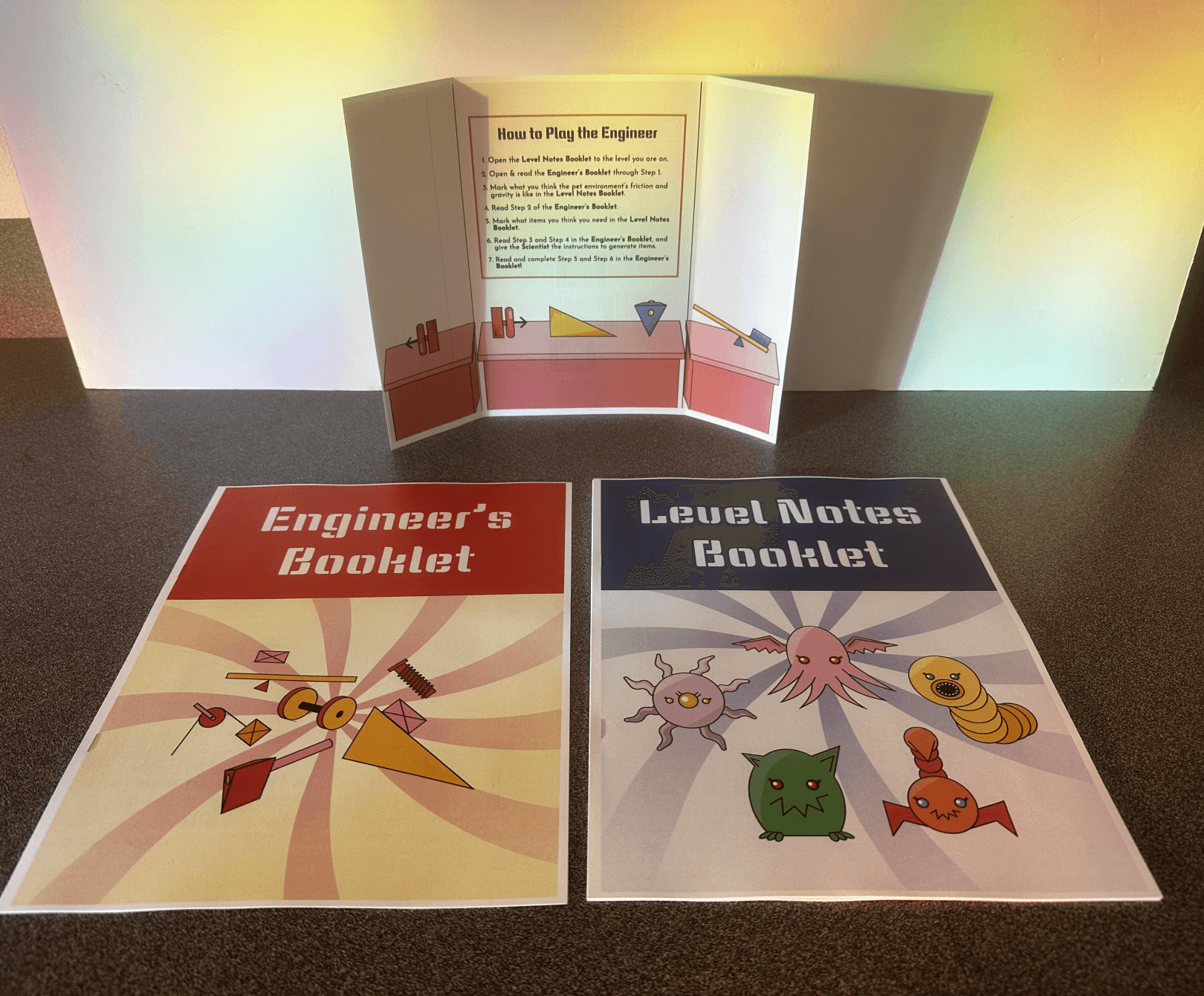
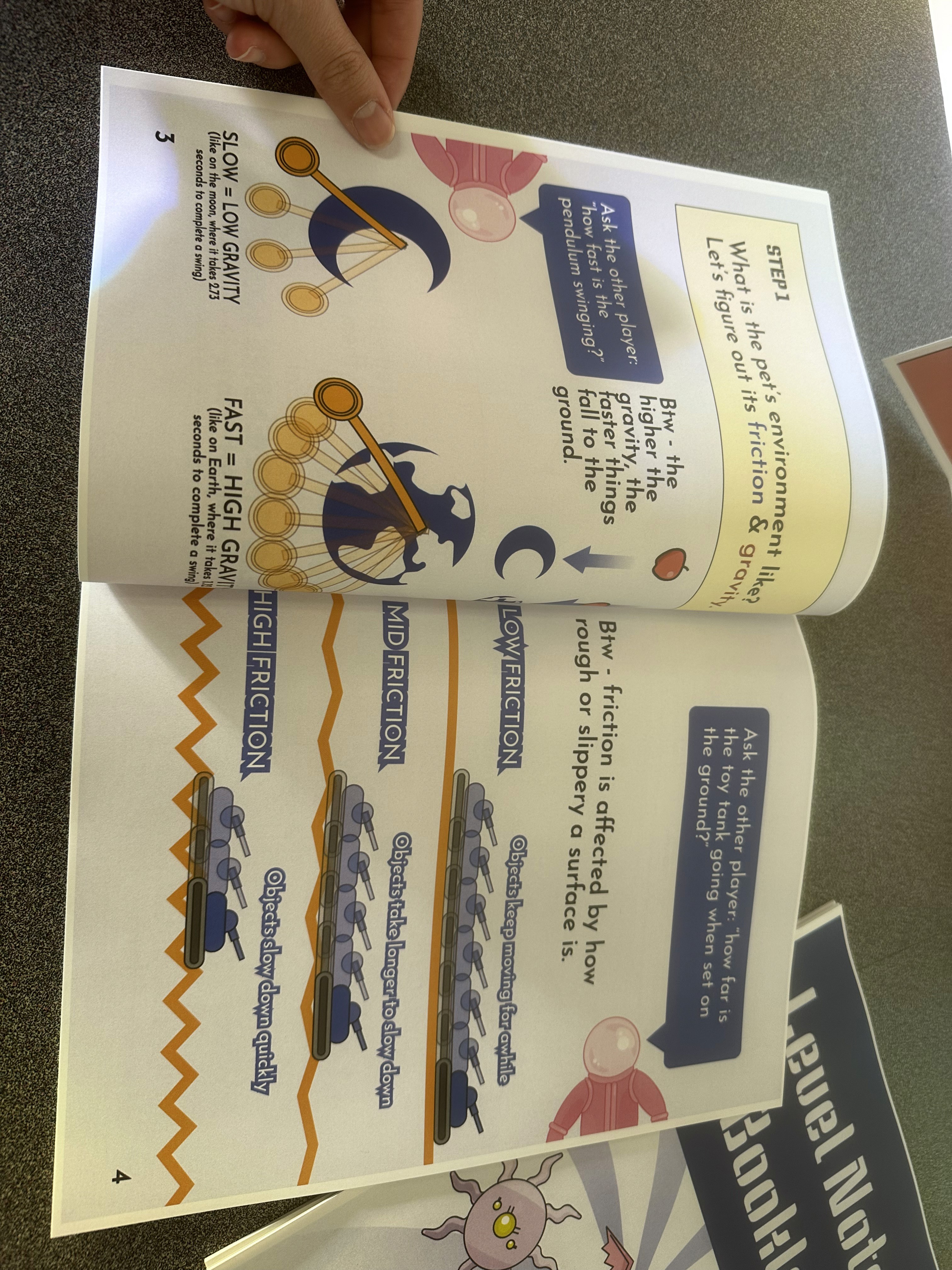
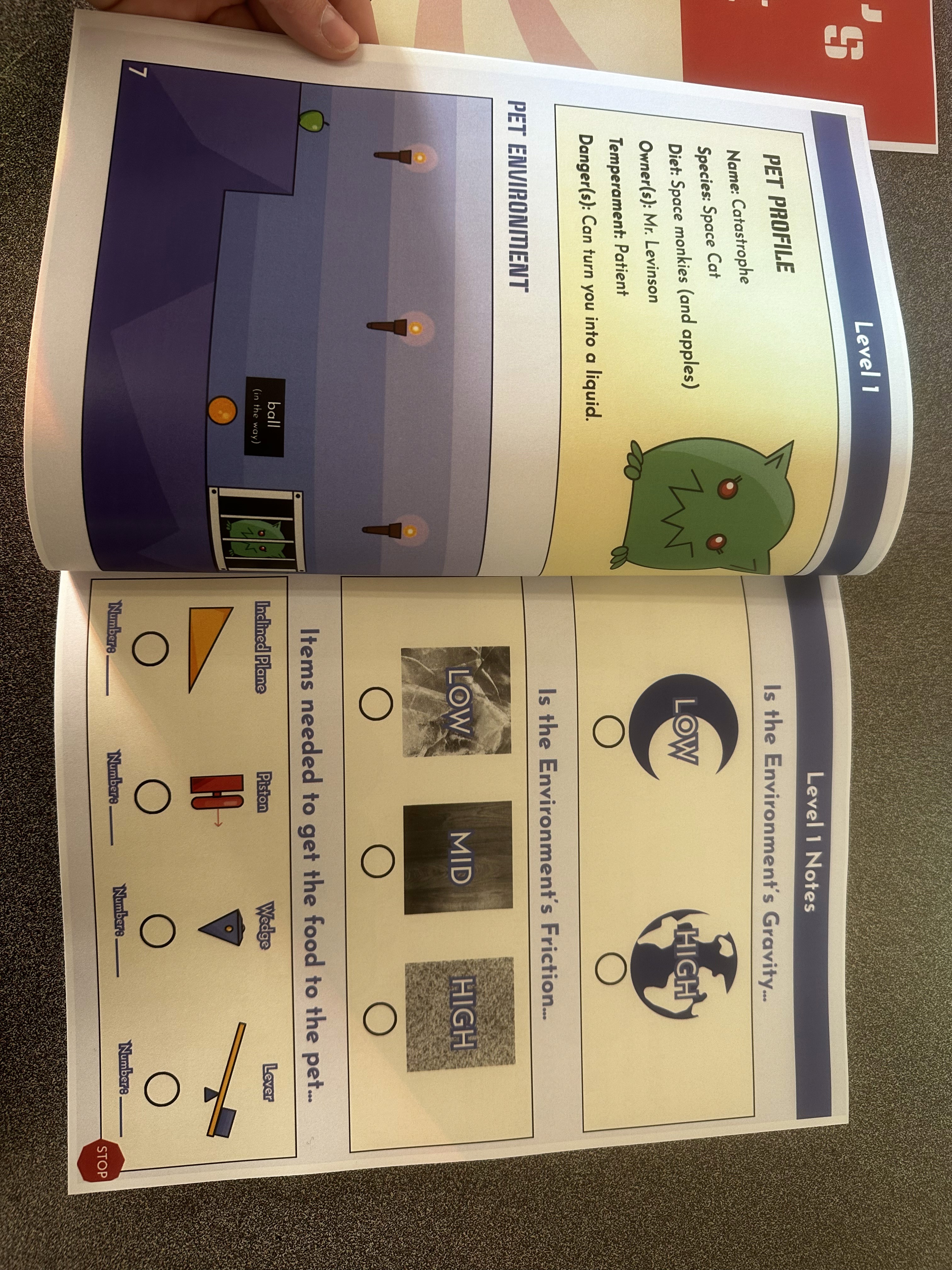
(Analog) Make the Engineer’s Booklet more like a comic book: to encourage users to read through it and keep them engaged.
(Analog) Create a second “Level Notes” booklet for players to take notes and learn more about pets: to better engage the Engineer.
(Analog) Consolidate Level Cards, Item Cutouts, and the “How to Play” Card with the display screen and the Level Notes booklet: make it easier for teachers to print out and implement.
Second Prototype


Successful Aspects
Students who spent time learning the game reported they had fun: numerous students gave positive feedback regarding their experience.
Issues Identified
Learning how to play is still difficult: students’ average difficulty rating and the written feedback supported this conclusion.
Game Bugs: some students indicated when they tried to press and hold code certain keys, the game did not work. The game should be more carefully debugged to search for these issues.
Future Ideas
(Overall) Simplify interpretation of data: play with different methods of representing friction and gravity to the players. In the booklet, a data table could be an effective tool for the Engineer, and the Scientist could use other methods to determine the friction and gravity of their environment.
(Digital) Re-Design the Gravity and Friction Measurement Tools: turn it into an expandable display that they read. The interaction element will become interpreting measurement data rather than manually dragging and placing the tools in the environment. This solutions should simplify the gameplay for the Scientist.
(Analog) Combine the two booklets: combine the Level Notes Booklet and the Engineer’s Booklet into one work-book that they can work through to make the experience more streamlined.
Do you have any feedback for the game?
“Yes the ice sort of broke physics and would sending the objects flying in random directions it was extremely annoying but also insanely funny.”
“Honestly, I love the concept but if the instructions and directions were a little more easy, it would be great!!”
“The instructions are harder than the levels and level 5 was the easiest level.”
“I couldn't figure out how to use the pistons, w2r4 didn't work in the tutorial.”
“Make tutorial easy but the game is better now.”
Play Testing II
November 18, 2024 - December 6, 2024
Berrendos Middle School
what?
This second round of usability testing will follow the same structure as aforementioned in the “Usability Testing 1” section.
why?
Assessing the system’s usability and the player’s experience for a second time will help verify if the solutions implemented after the first round of usability testing made a difference and will illuminate further steps for improvement.
how?
This research method will collect both qualitative data and quantitative data in the same manner as “Usability Testing 1.”
Deliver
Feedback Collection
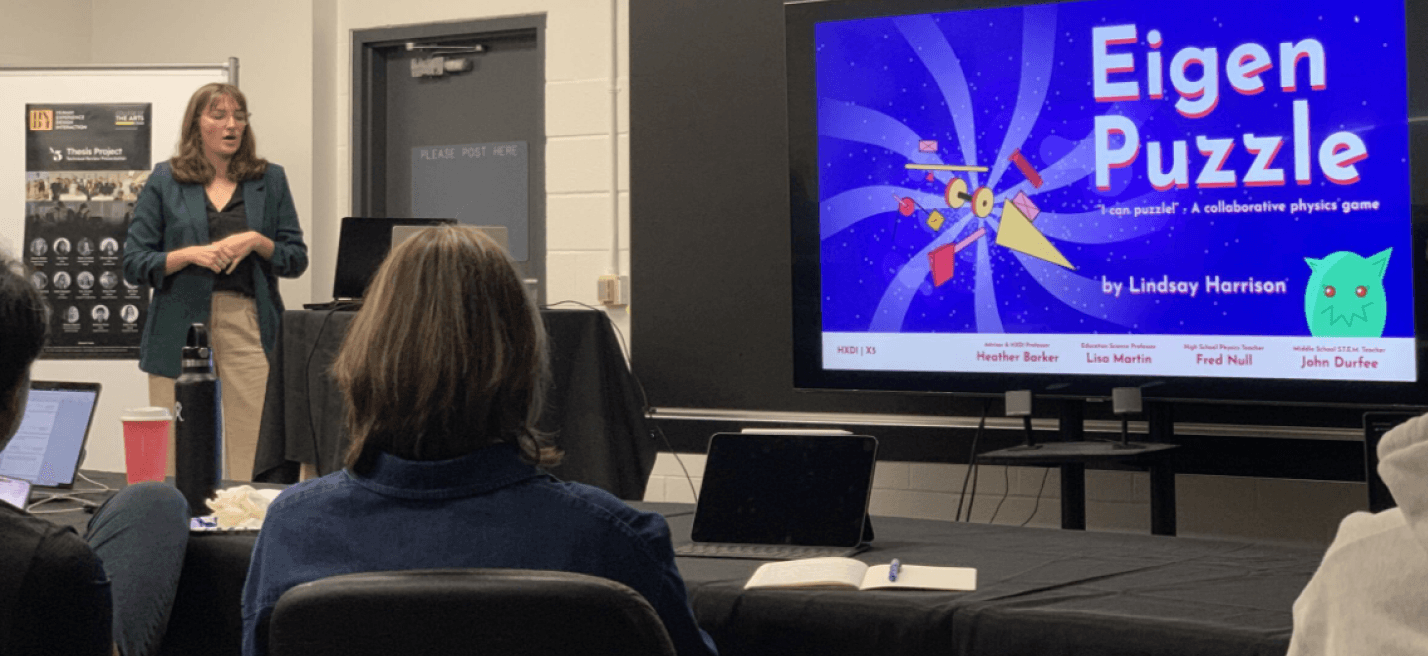
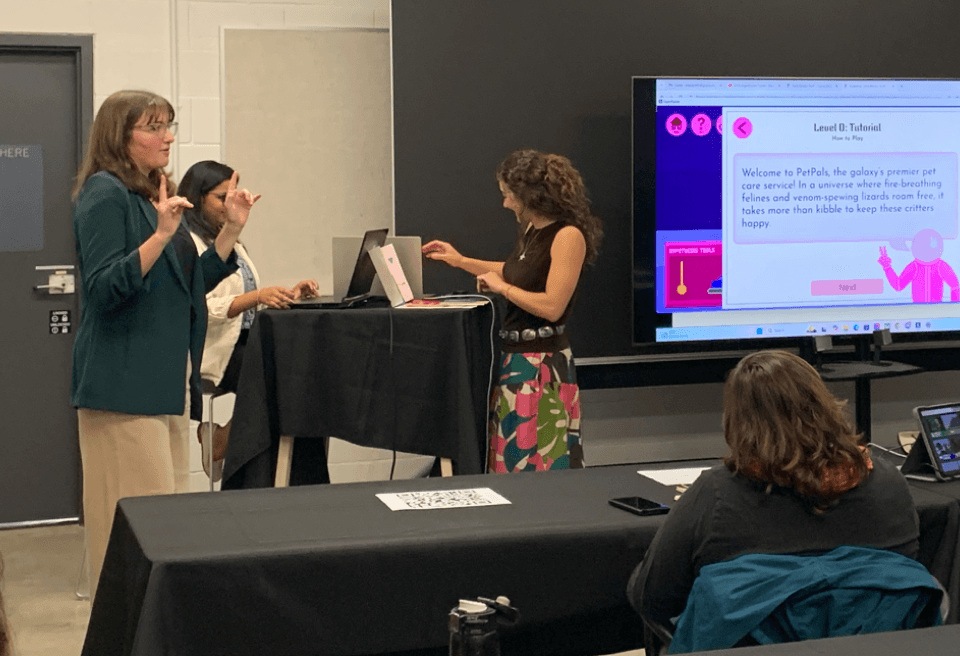
On October 17th, 2024, the HXDI program hosted its annual Technical Review, serving as an opportunity to gain feedback from design professionals and the members of my committee. Overall, the reviewers gave the project positive feedback, though they highlighted areas of improvement. Their anonymous comments are summarized here.
“I don’t understand the name. Can you name it something physics-y?”
“Nice presentation!”
“The collaborative element is strong. Especially because so much digital engagement is solo.”
“Very practical yet innovative project with a good amount of user testing and iteration.”
“The execution of this project is excellent. A little more refinement in some of the animation would be useful to make winning more satisfying. Maybe some refinement of how the engineer passes information to Scientist might be useful too - but these are icings on a very impressive cake so far.”
“The analog and digital combination is interesting and assists with educational costs.”
“It’s a really terrific project Lindsay. The way that the game developed and the digital-analog collaborative gameplay is very intriguing. There are a lot of ways that this can evolve in the years ahead.”
“What are the inadequacies of the Subject Kits for Minecraft Education? How does your game-play improve on that? Is it possibly more effective to insert your improvements into that existing framework? Core5 or Jiji, existing platforms, Khan Academy Kids, etc... Love the physical and digital and partnership/collaboration engagement.”
“Lindsay has been very good at communicating the steps to her process to me. I had my 12th grade physics class run her program and fill out the survey. Lindsay was receptive to the physics students’ responses. It was also a good demonstration to show the physics students a possible project at the college level as well. I’m thankful that Lindsay asked me to be part of her program.”
“Consider alternating roles between students. Add incentives like unlocking achievements, engineering tools, or badges/sign in levels. A question would be what is the incentive for the engineer as they are not facing the screen to see the animation. Consider also assessment in what they’re learned by doing this. Consider simplifying the first challenge and gamifying the tutorial for incentive.”
“Your project will enable students to understand physics easier. It will be more accessible to those cannot afford a physics lab set.”
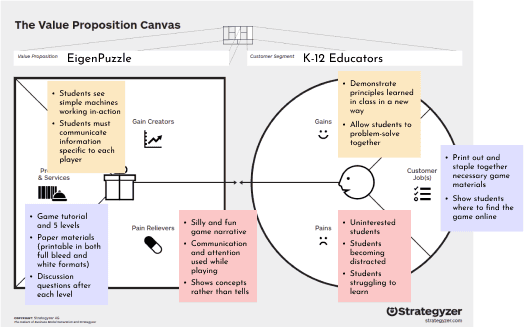
Value Statement
EigenPuzzle allows students to have fun with physics, together.
Customer
Middle school teachers and/or educators at the middle school level.
Problem
Teachers need to gain student interest and enrich their science class content.
Solution
A game where students work together to solve problems requiring them to think about forces and motion.
Statement of Value
This project holds value both from the student and educator perspective. For students, this project will support them academically by helping them learn, motivating them to learn, and by making them comfortable and confident working with others. For educators, this project will help integrate technology into the learning environment, build community among students, and will allow for differentiated instruction while reinforcing class content. Additionally, this project is a free and relatively simple way to enrich in-class lessons.
Degree Show
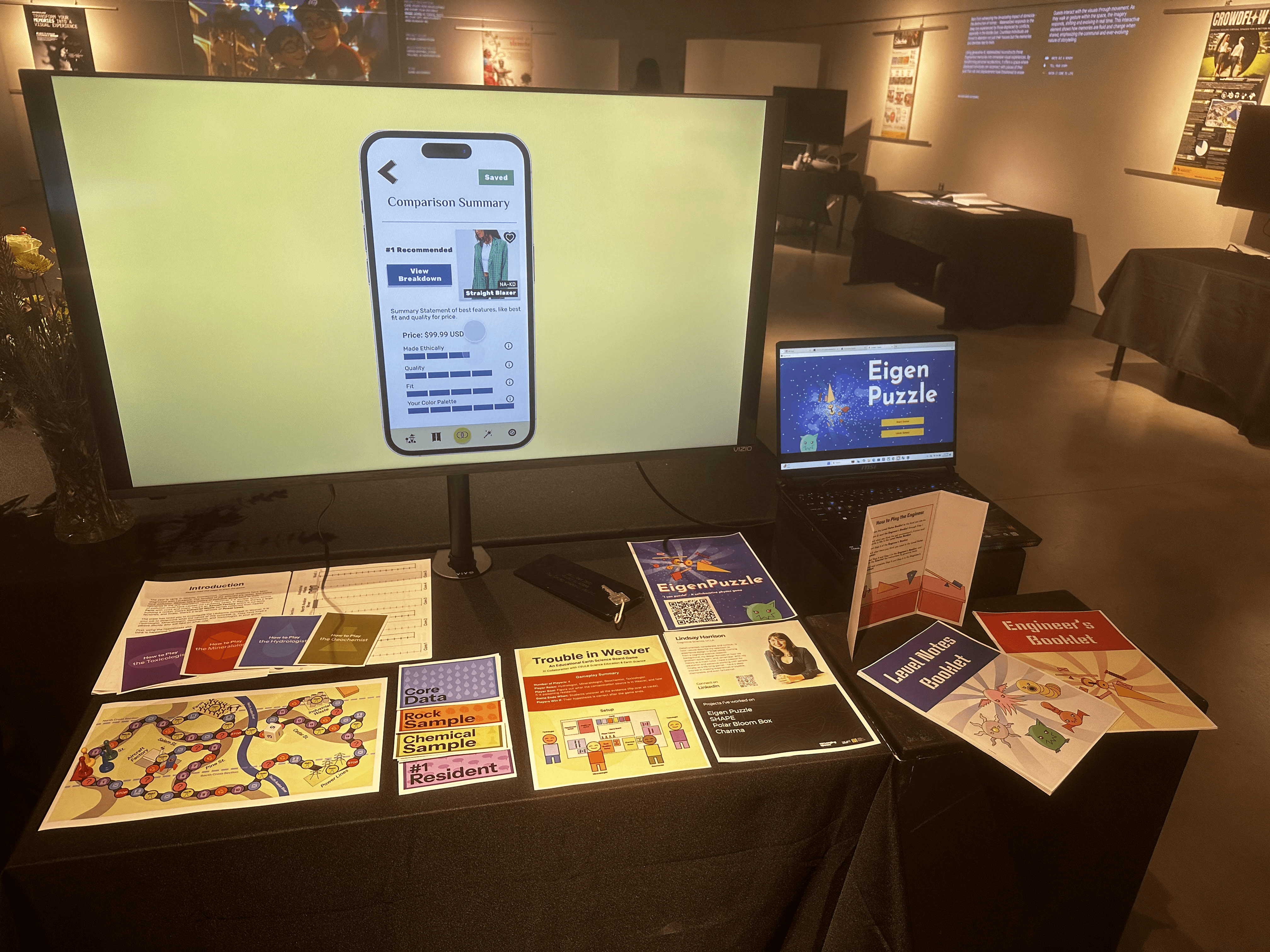
During the 2024 HXDI Degree Show, attendees could learn more about and even play EigenPuzzle. The Degree Show gave EigenPuzzle the opportunity to reach a wider audience and teach the public how it works. The following photo displays EigenPuzzle at the 2024 HXDI Degree Show.
The Future
Developing More Levels
As of now, EigenPuzzle consists of five levels and a tutorial. These levels make use of two of the six simple machines. Ideally, EigenPuzzle’s levels would progress in difficulty, requiring the use of more of these simple machines while teaching students little physics lessons. In the future, as many as ten to fifteen additional levels would be developed and added to the game.
More Play Testing
With these additional levels would be multiple rounds of usability testing, play testing, and quality assurance testing to ensure the players’ experience is as intended. Further testing should also explore the communication method between Scientist and Engineer and how that may be improved.
Marketing Push
To ensure EigenPuzzle delivers the value it promised, a bigger marketing push would need to take effect. As mentioned in the MVP Business Plan, targeted ads and email campaigns to get the word out about EigenPuzzle would benefit the project.
Further Collaborators
As EigenPuzzle grows, educational resource companies like Scholastic or Legends of Learning should be contacted to distribute the game more widely to educators. EigenPuzzle would best reach audiences if it were accessible via an online educational game website like Legends of Learning. These companies would also better market the experience. On a smaller note, a professional game developer could be consulted with to ensure the game’s programming and Unity build are clean.
lindsay
HArrison
(C) 2024 by Lindsay Harrison. Created with Figma & Framer.