
Trouble in Weaver
A K-12 Earth Science Board Game

Lindsay Harrison in collaboration with Dr. Lisa Martin, Dr. Matt Becker, and Dr. Alyssa Abbey



About the Project
Following a geology and earth sciences conference, I was approached by education science professor Dr. Lisa Martin to help with the development of a K-12 earth science board game. Two geology professors, Dr. Matt Becker and Dr. Alyssa Abbey supervised and provided guidance for the project.
Project Goal: Craft a collaborative board game to introduce students to different earth science careers.
My Role: Game Designer
Duration: October 2024 - January 2025
Project Overview
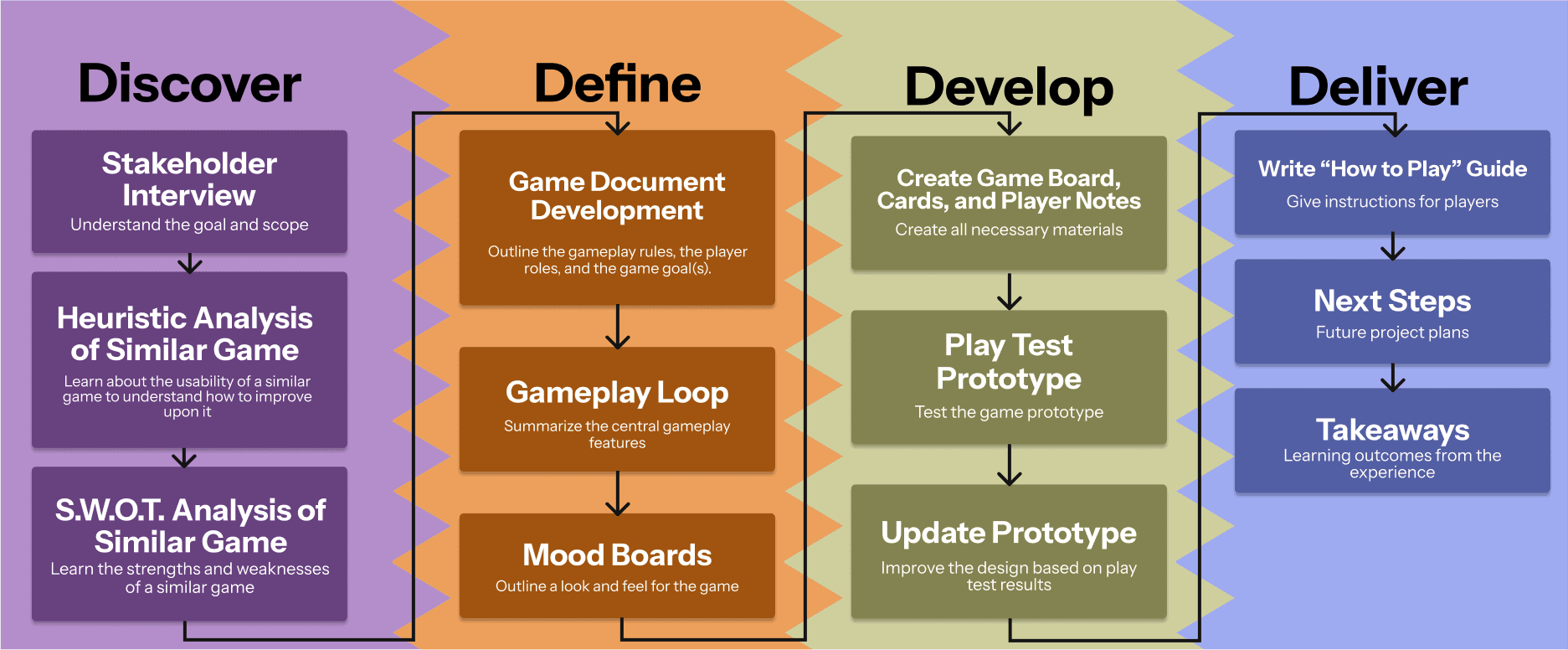
Discover
Stakeholder Interviews
Goal: Understand the stakeholders’ vision for the project and outline project requirements.
Interviewees: Dr. Lisa Martin, Dr. Matt Becker, Dr. Alyssa Abbey
Interview Type: Unstructured
Notes
Gameplay
Similar to Maracondo Fever, where the goal is to make a hypothesis explaining what is occurring based on evidence gathered
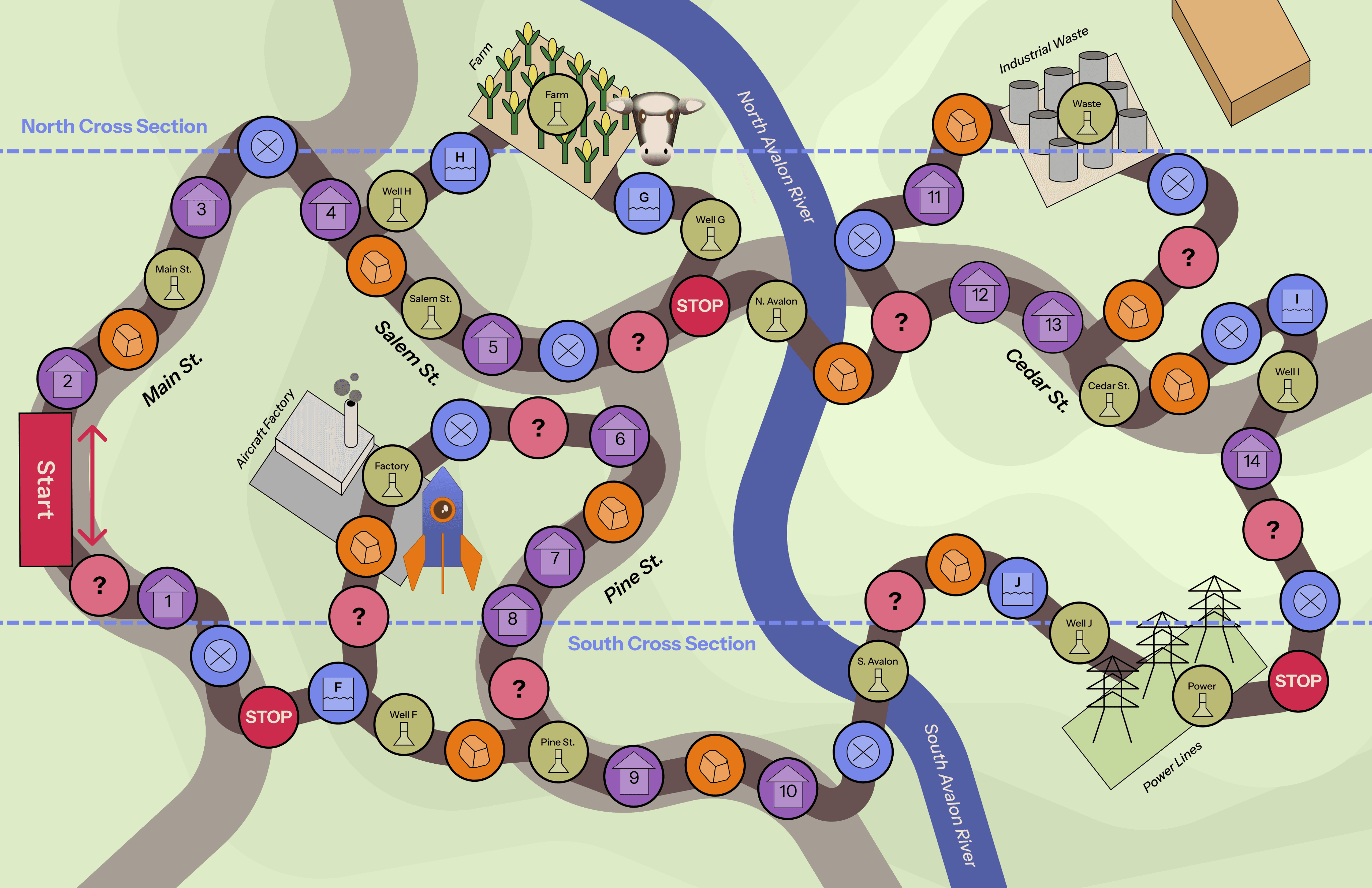
Players travel on a board with “roads”
Take 4 different types of notes, for 4 different player roles
Include 4 different card types, drawn form their respective piles whenever a player lands on a matching tile
Education
Showcase different career paths related to studying Earth Science
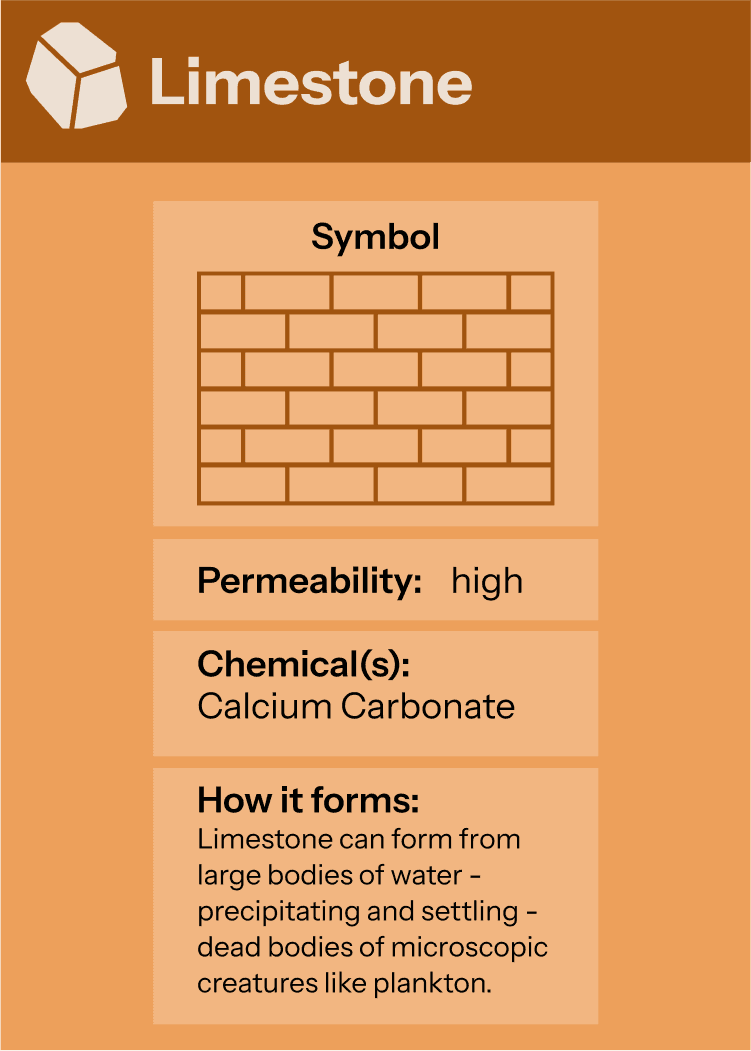
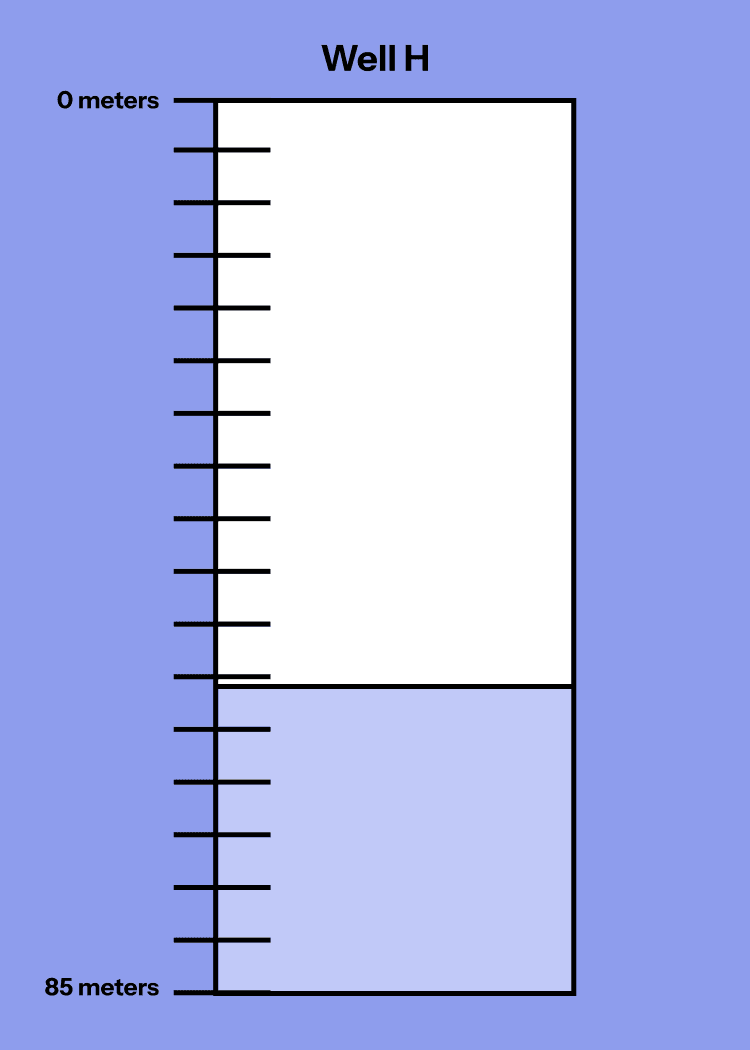
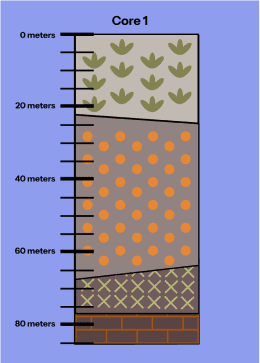
Showcase sediment layers underground, along with the water table
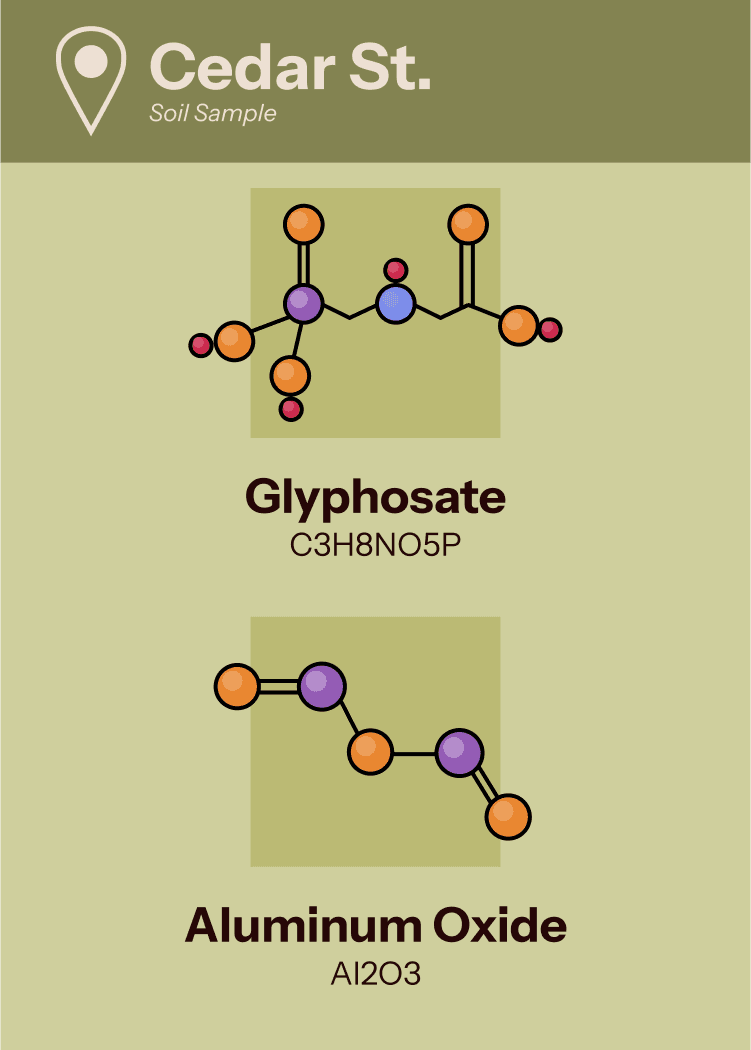
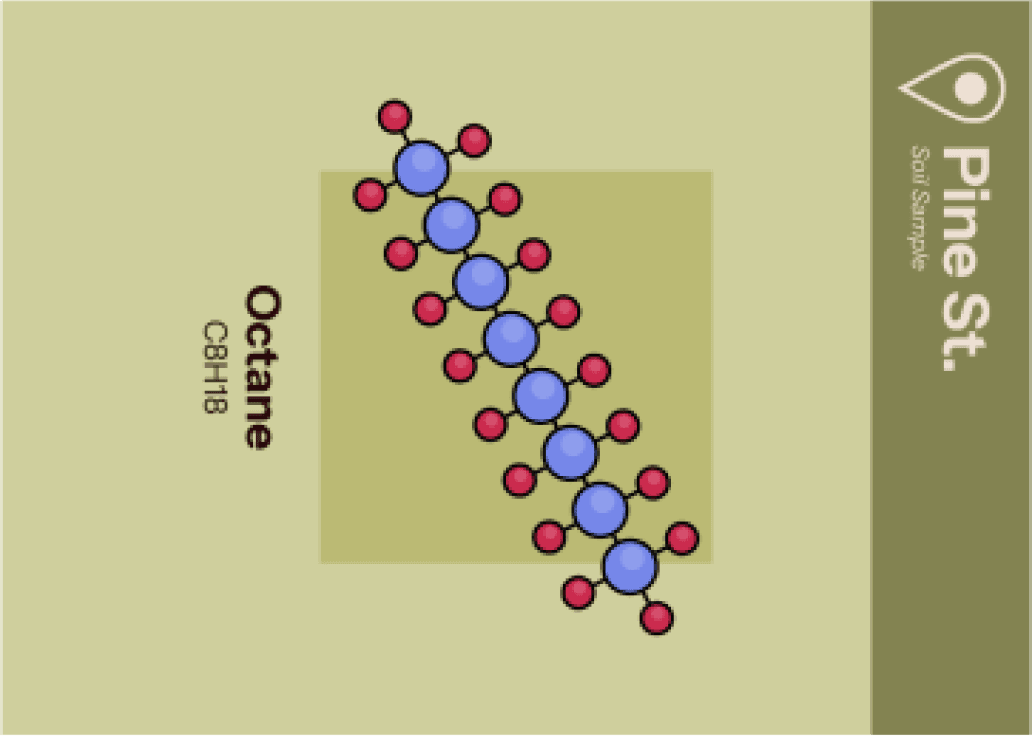
Introduce them to different chemicals making up rocks and toxins
Utility
4 Players
Easy to make and distribute (low cost)
Easy to learn
Easy to set up
Easy to store
Analyzing Maracondo Fever
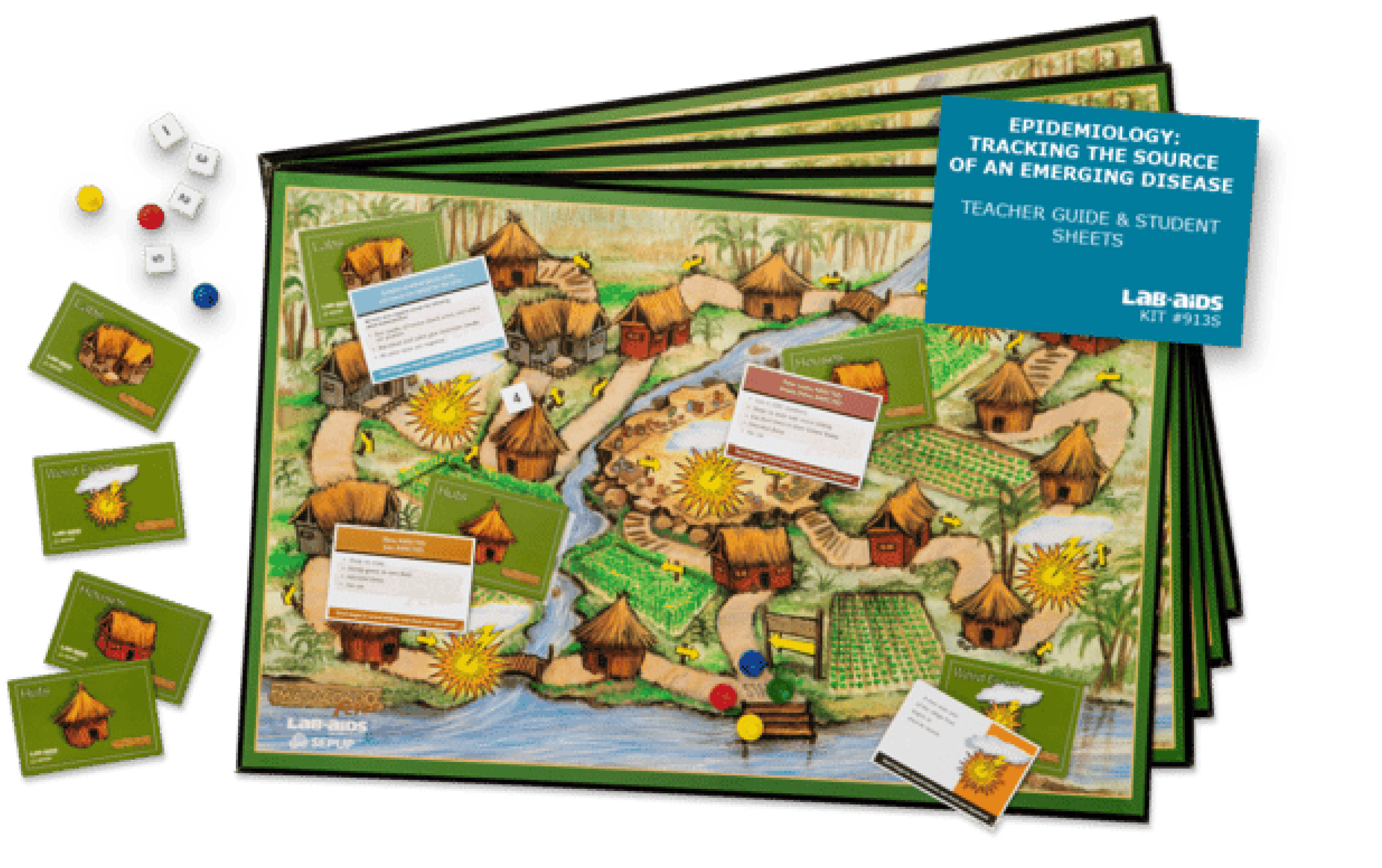
During Stakeholder Interviews, I learned the professors wanted to model the structure of their game after an already existing educational board game called “Maracondo Fever.” Thus, I decided to conduct a Heuristic Analysis to study the ease of play of such a game - and a S.W.O.T. analysis to study the games strengths and weaknesses. These analysis methods would help me understand the aspects of Maracondo Fever we should replicate in our game, along with the aspects we should improve upon.
In Maracondo Fever, four students work together to figure out the source of a disease and how it is transmitted. Students draw different card types representing potential “evidence.” Each student records a different type of information, and they must form hypotheses to reflect their guess as to what is happening in Maracondo.
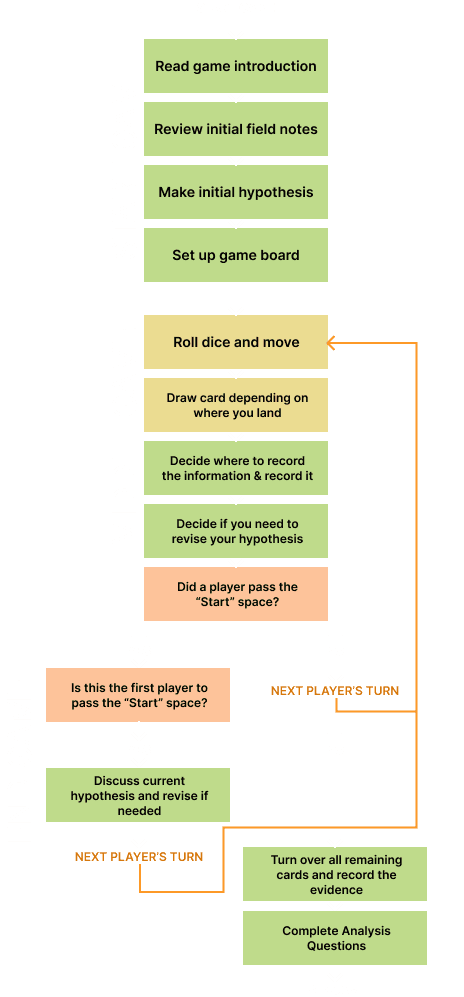
Maracondo Fever Game Loop
A Game Loop summarizes the main game mechanics, and outlines all possible paths a player can take at each step of the game. By examining Maracondo Fever, this is what I believe its Game Loop would be.

Heuristic Evaluation Checklist
Heuristic evaluation (Nielsen and Molich, 1990; Nielsen 1994) is a usability engineering method for finding the usability problems in a user interface design so that they can be attended to as part of an iterative design process. Heuristic evaluation involves having a small set of evaluators examine the interface and judge its compliance with recognized usability principles (the "heuristics").
Evaluator: Lindsay Harrison
Details
Interface Type: Board Game (Analog)
Interface Name: Maracondo Fever
Date: 10/18/2024
No violations found
Cosmetic problems only
Minor usability problems
Major usability problems
Product cannot release until fixed
Severity Ratings
0
1
2
3
4
Visibility of system status
Keep users informed about what is going on, through feedback within a reasonable amount of time.
Severity Rating
Reasoning
Player pieces mark where players are on the board.
Player writing on the data documents indicates data and hypothesis statuses.
Different parts of the system (e.g., cards, notes, hypotheses, etc.) are labeled appropriately.
0
Match between system and the real world
Speak the users' language and follow real-world conventions, making information appear in a natural and logical order.
Severity Rating
Reasoning
Icons are intuitive; it’s easy to understand which are “hut” cards.
There could be more distinction between “houses” and “huts”.
No complex jargon is used.
Game is organized enough; a player can easily find different pieces.
1
User control and freedom
Users should have "emergency exit" to leave the unwanted action in case of a mistake
Severity Rating
Reasoning
If students make mistakes, it is easy to go back and fix it (e.g., if they write evidence in the wrong area they can go back and move it).
Player actions move the game forward.
It is easy to “cancel” actions - players can simply stop whatever they are doing and return to the previous step.
0
Consistency and Standards
Users should not have to wonder whether different words, situations, or actions mean the same thing.
Severity Rating
Reasoning
Icons for huts, weird events, etc. are consistent across the game.
Some typography could stand out more - like the “House Cards” space on the board.
The board game standard for creating a path for users to follow is present but difficult to follow.
2
Help Users Recognize, Diagnose, and Recover From Errors
Error messages should be expressed in plain language
Severity Rating
Reasoning
Board arrows allow students to check if they are moving their pieces on the board correctly, but they can be unclear graphically.
Hard to tell what/where the board “spots” (landing places for pieces) are.
Uncertain if the game anticipates students writing evidence in the wrong areas, if that is OK, and how it might account for that.
3
Error Prevention
Even better than good error messages is a careful design which prevents a problem from occurring in the first place.
Severity Rating
Reasoning
Icons for different game components are intuitive.
Cards have relevant captions.
Iconography and captions on the board itself could be improved.
Because the steps are written out in paragraphs, it might cause errors if students do not ready carefully enough.
1
Recognition Rather Than Recall
The user should not have to remember information from one part of the dialogue to another. Instructions for use of the system should be easily visible.
Severity Rating
Reasoning
Completing actions is relatively easy; the game follows a structure similar to many board games.
While the instructions are accessible at all times, there is no short set of rules clear to all users at all times.
Board itself could be more easy to interpret.
1
Fexibility and Minimalist Design
Shortcuts-unseen by the novice user-may often speed up the interaction for the expert user such that the system can cater to both inexperienced and experienced users.
Severity Rating
Reasoning
Game could benefit from a gameplay summary info-graphic.
Although students have their own roles, how they go about determining their hypotheses and if they are supported is flexible.
Note: this system does not scale for more experienced players because the game can only really be played once.
1
Aesthetic and Minimalist Design
Every extra unit of information in a dialogue competes with the relevant units of information and diminishes their relative visibility.
Severity Rating
Reasoning
Game board is confusing; it’s difficult to tell where players must move, and what areas they should stop at.
Cards present information clearly, though there is potential for them to showcase data more visually.
Player note sheets are minimalistic.
3
Help and Documentation
Even though it is better if the system can be used without documentation, it may be necessary to provide help and documentation.
Severity Rating
Reasoning
Players can easily access help via the teacher, or the instructions on their student sheets.
Instructions are outlined in a step-by-step fashion.
Learning how to play requires a lot of reading, and there is no summary of gameplay.
2
SWOT Analysis
A Strengths Weaknesses Opportunities and Threats (SWOT) Analysis of Maracondo Fever can illustrate what the game does well and what could be improved upon. The strengths and weaknesses showcase the current “pros” and “cons” of playing the game. The opportunities and threats highlight what we can improve upon and what we should be careful to avoid when making our game.
Maracondo Fever
HELPFUL
Strengths (“Pros”)
Students get to take on different roles.
Students have to work together.
Feels like solving a mystery.
Players get to move through an intriguing environment.
Weaknesses (“Cons”)
Difficult to tell when a group should revise their hypothesis.
One student could dominate the group.
Requires students to read through detailed instructions as they play.
Opportunities (“Do’s”)
Offer students different roles to play as.
Frame the game around a mystery or question.
Include themed game pieces (cards, board, etc.) to better immerse the players.
Threats (“Don’t-s”)
Unclear board paths and indicators; include better graphic design with a clearer board path and typography.
Roles that are too similar; add more distinguished roles via different methods of collecting data.
Long instructions; add shorter instructions (a “how to play” summary) with visuals.
FOR PLAYERS
FOR GAME MAKERS
HARMFUL
Totally Gross: The Game of Science
HELPFUL
Strengths (“Pros”)
Using slime to mark progress is fun
Basic game structure is easy to understand
Dare cards are fun and meet the players at their age level
Weaknesses (“Cons”)
Cards are complex; they have multiple sections that students must choose from
Completing the lab may be time consuming and require too many different materials
Opportunities (“Do’s”)
Be silly; incorporate fun facts and keep the mood lighthearted
Encourage taking risks; make taking risks seem fun and reward players for it
Mark board spaces similarly to the cards they match with
Threats (“Don’t-s”)
Make any individual component overly complex; game pieces should be intuitive
Require steps with extra resources not included in the game setup
FOR PLAYERS
FOR GAME MAKERS
HARMFUL
Define
Initial Gameplay Document
After analyzing the strengths and weaknesses of Maracondo Fever, I wrote up a proposition of gameplay rules for our game - which we decided to call “Trouble in Weaver.” I included a summary of gameplay, player roles, card types, note types, and game board requirements. Unlike Maracondo fever, each player in our game would have a more specialized role to highlight the variety of roles in geology.
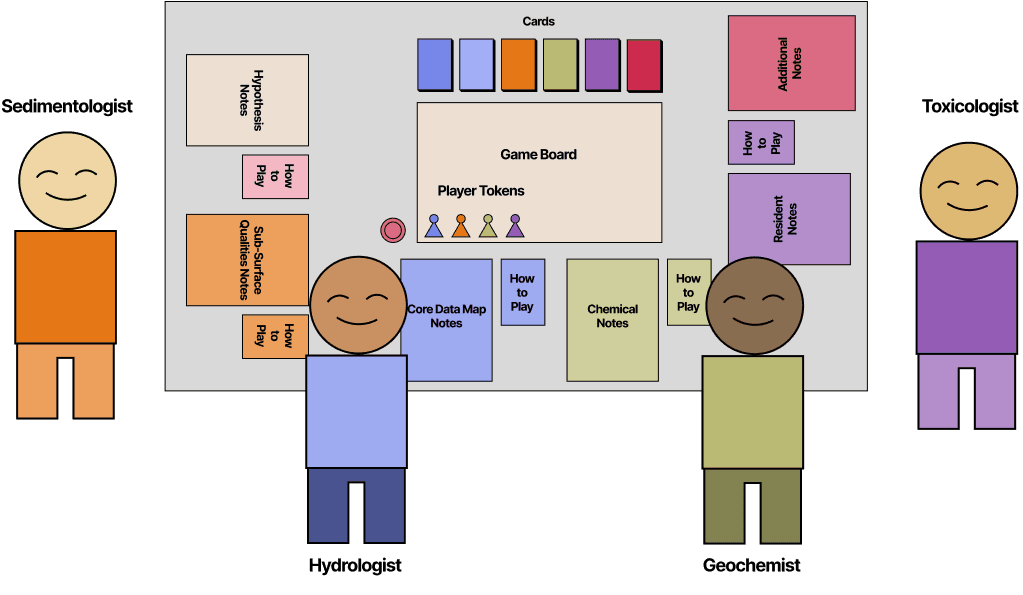
Gameplay Summary
In a team of four, players must determine why and how residents in Woburn, Massachusetts are getting sick (diagnosed with Leukemia) by making hypotheses and looking for evidence that supports or rejects them. Players are given an introduction to the game and an initial clue before they explore the town and gather clues for themselves.
In a clockwise fashion, each player takes a turn, and during their turn, they will roll dice and move their piece on the board according to their roll. The board consists of spaces players can travel on, and the space they land on will determine what card a player will turn over (and what clue(s) they will find). Players read cards out-loud, so players can collect clues that are not associated with their chosen role and “give” them to the relevant player.
Each player has a role that corresponds to the clues they will look for (record in their notes). When students reach a game “Checkpoint,” they will review all the evidence they have gathered and decide if they want to make a new hypothesis about what is going on in Woburn. The game ends when all pieces of evidence have been collected (all cards looked at). When the game ends, students may revise their hypothesis one last time before answering some follow-up analysis questions about the Woburn case.
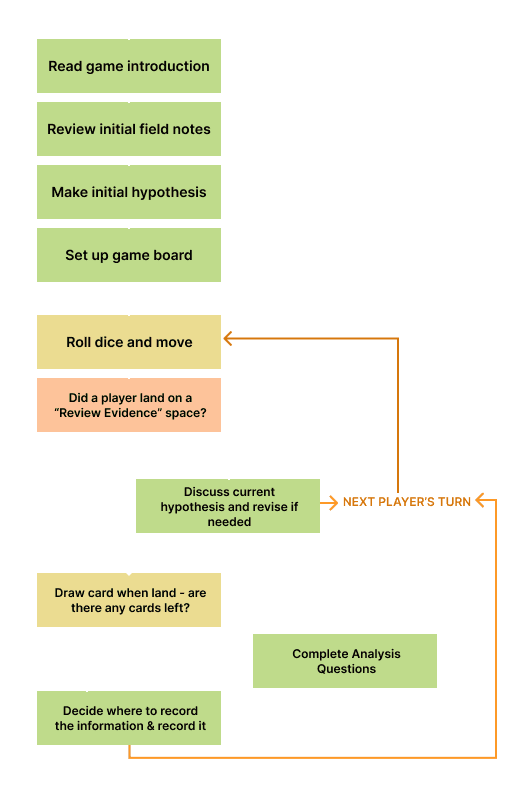
Proposed Gameplay Loop
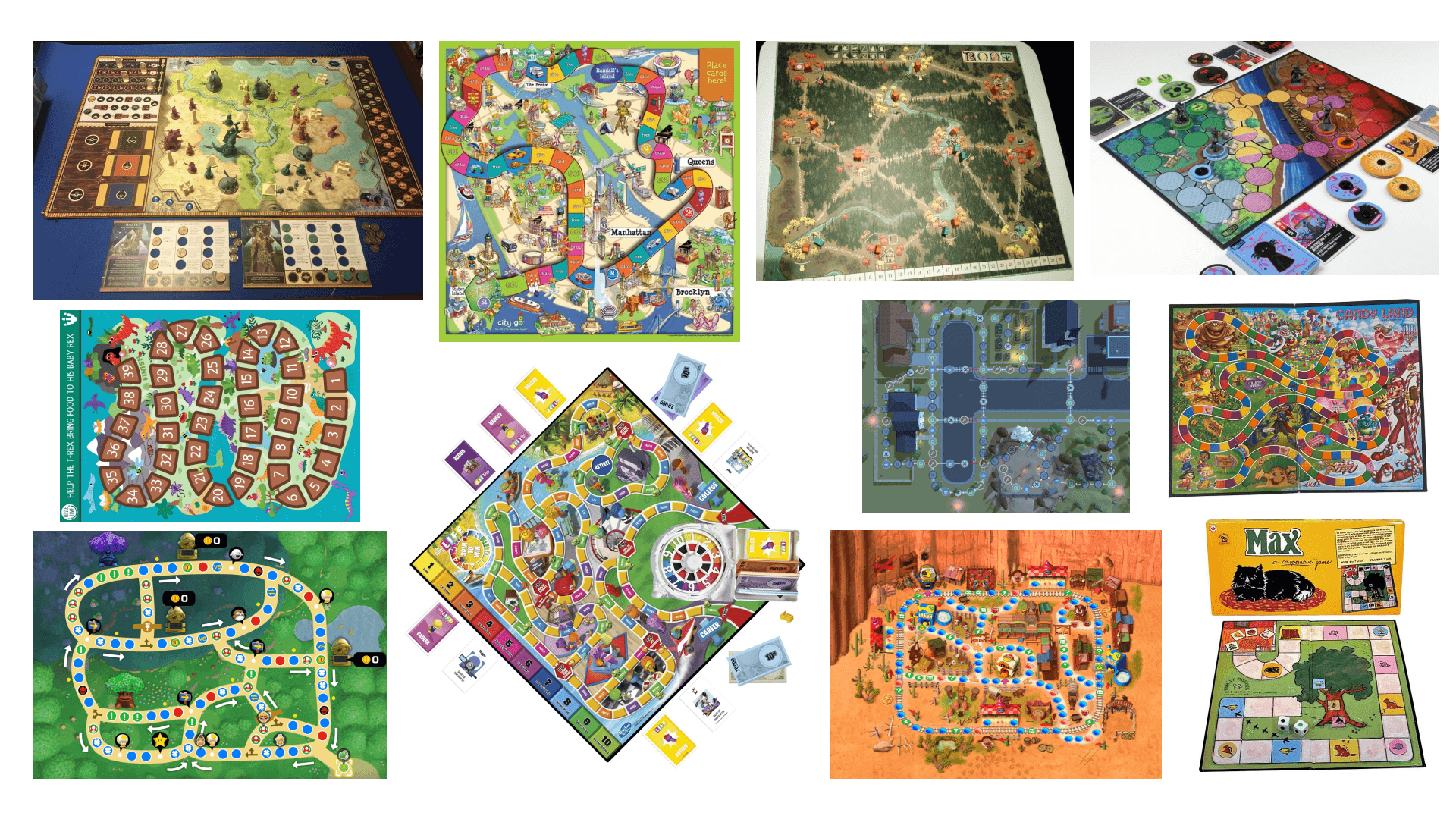
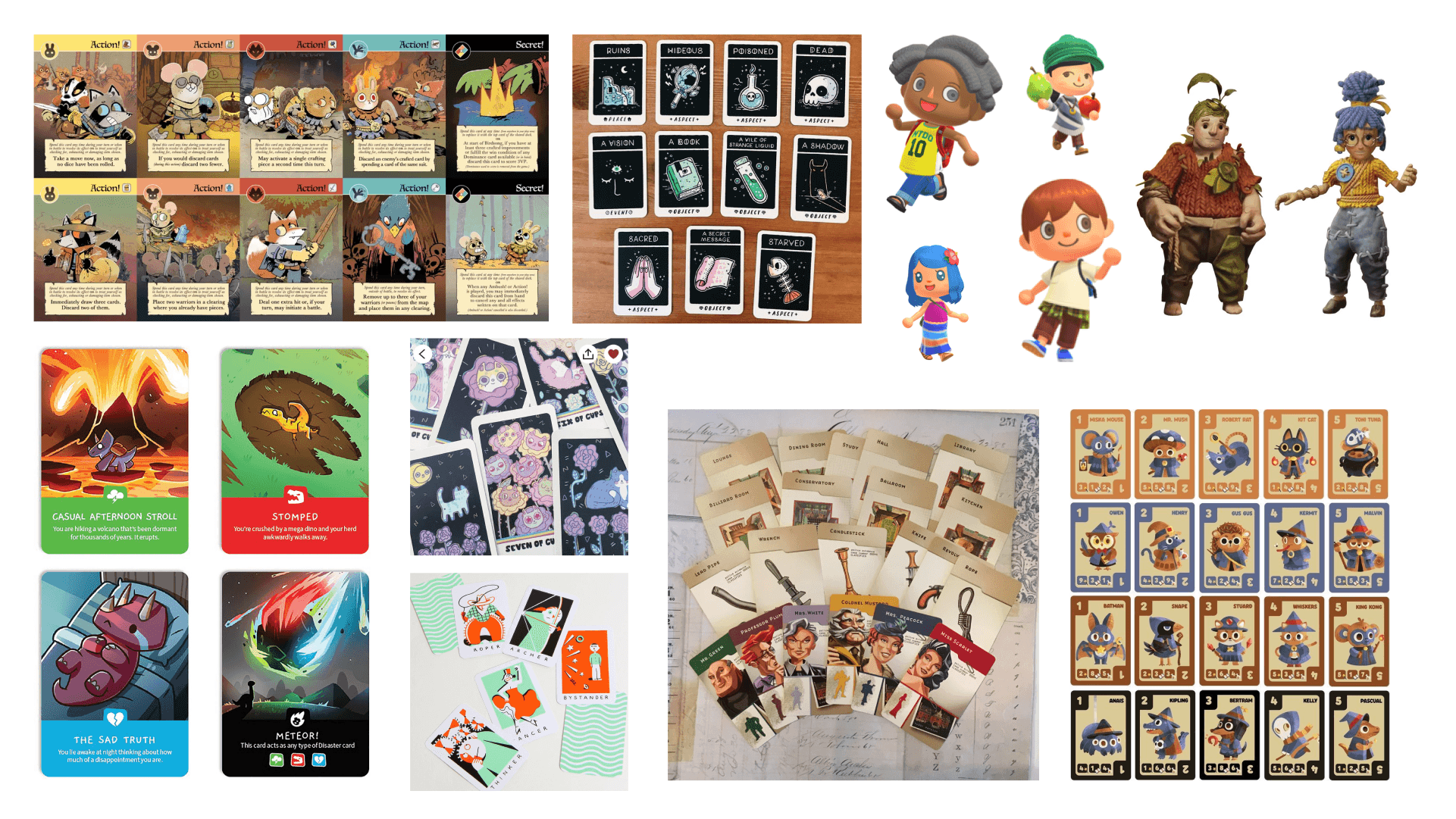
Mood Boards
After outlining the basics of gameplay, I created several mood boards to begin putting together a look and feel for the game.
Game Board Mood Board
Cards Mood Board
Develop
Style Proposals
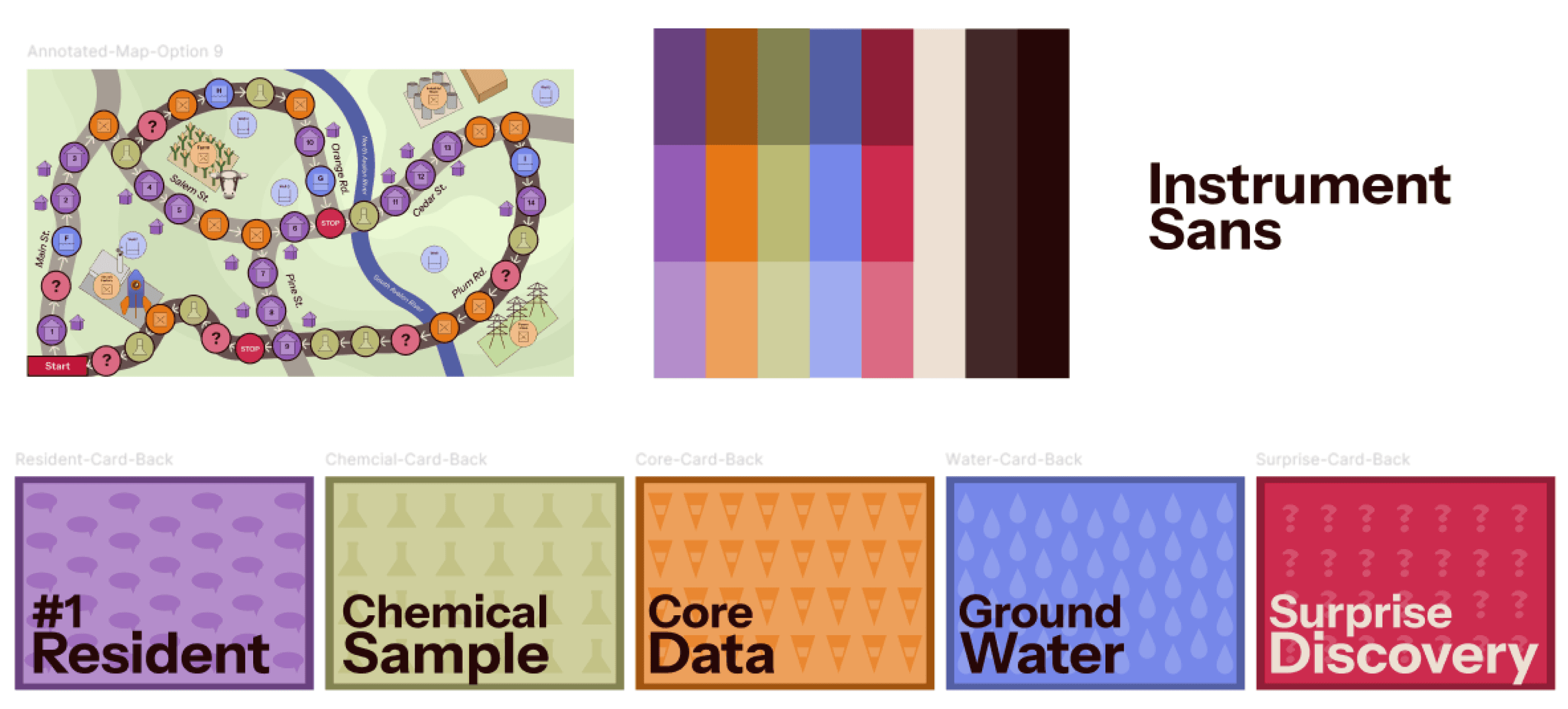
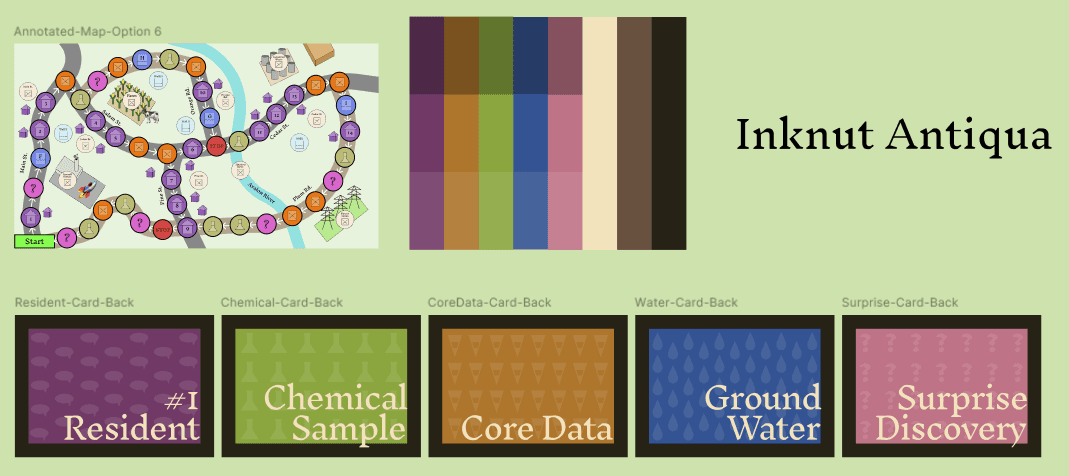
For the game, I developed and presented two different graphic design styles:
Minimalist & Bright - inspired by modern games and cartoons.
Antique & Fantastical - inspired by fantasy media and mid-twentieth century style.
The professors preferred the Minimalist & Bright aesthetic.
Option 1
Option 2
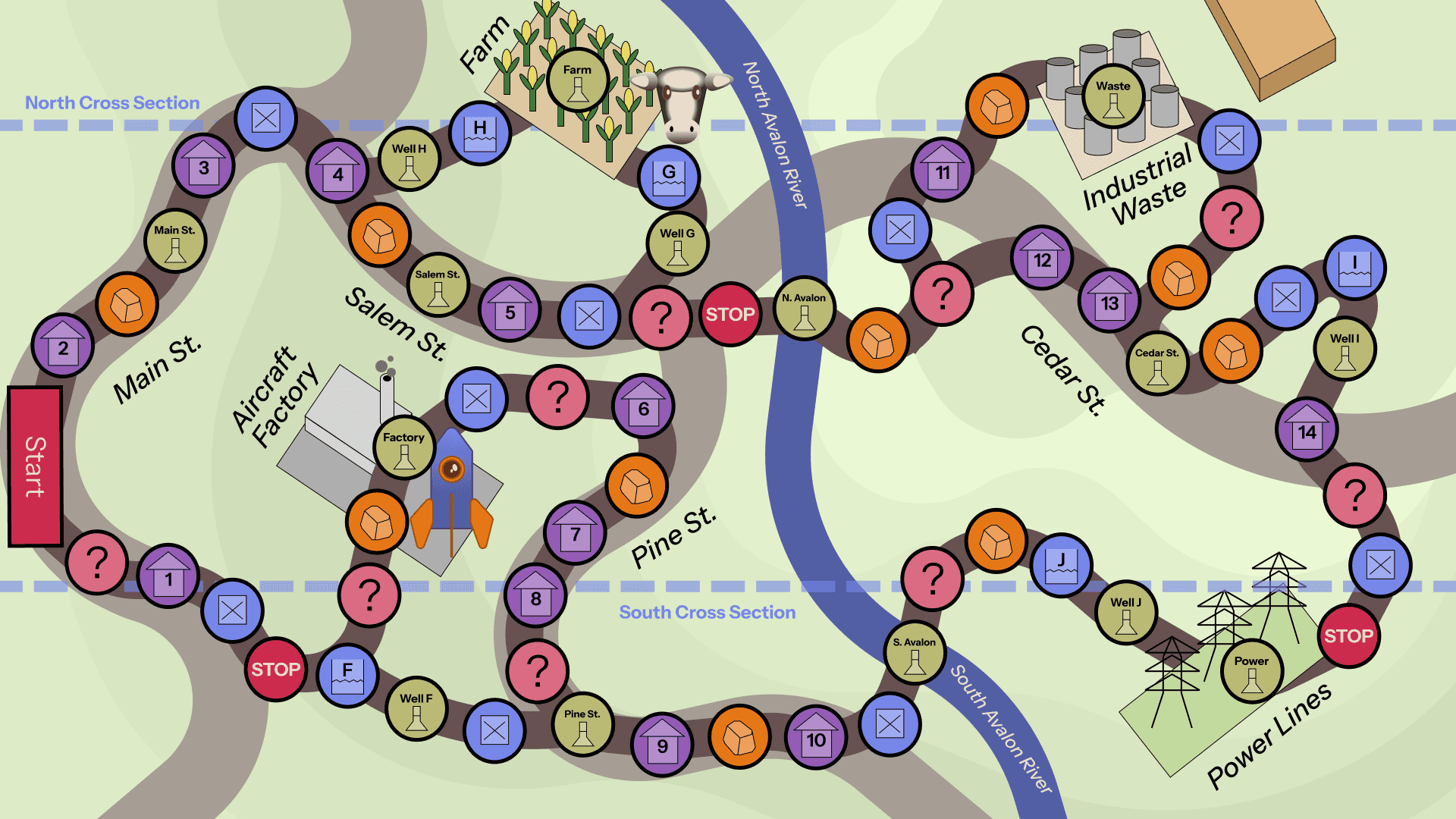
Prototype Game Materials





?
other
PROBLEM 10: No “Surprise Discovery” cards - I had designed them but forgot to put them in the packet of print-out materials.
SOLUTION 10: Add the necessary cards to the materials.
PROBLEM 11: Directing the discussion for forming a hypothesis can easily become disorganized.
SOLUTION 11: Add a special secondary role - “Project Manager” that is in charge of writing the hypothesis and managing the discussion. By default, this will be the responsibility of the Geochemist UNLESS the teacher specifies otherwise.
PROBLEM 12: The “How to Play” segment could better clarify certain game elements and help with flow between players.
SOLUTION 12: Give players examples of all note types filled out, tell players to explicitly wait for each player to write their notes before moving on to the next player, and specify in the “How to Play Description” that they will make their first hypothesis directly after reading the introduction.
Play Testing
Date: 12/03/2024
Time: 4:00pm - 6:00pm PST
Players: Stakeholders & myself
Goal: To understand the game experience and to identify any weaknesses in the design.
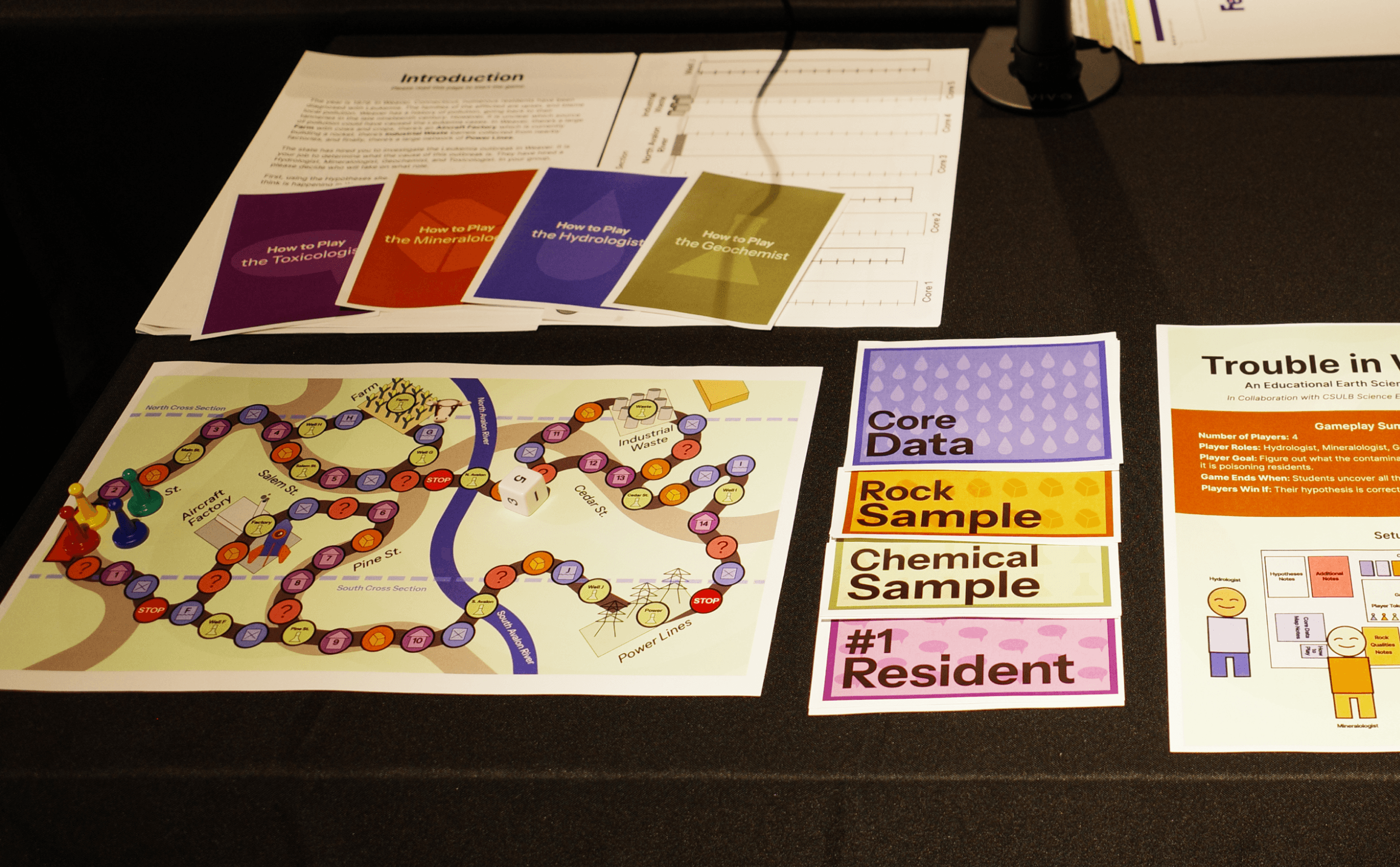
Problems Identified & Proposed Solutions
geochemist role / chemical cards
PROBLEM 1: The back of the chemical cards did not correspond to the name of the site players would land on, so we had to dig through them more than necessary.
SOLUTION 1: Add the site name to the back of the cards so they are only flipped over when necessary.
PROBLEM 2: There is no place on the chemical samples table for players to record how dangerous the chemicals they found were; there’s a place to indicate if it’s a potential contamination source, but there are different levels of contamination danger.
SOLUTION 2: The “other notes” section should be changed to a “danger level” column.
sedimentologist / rock cards
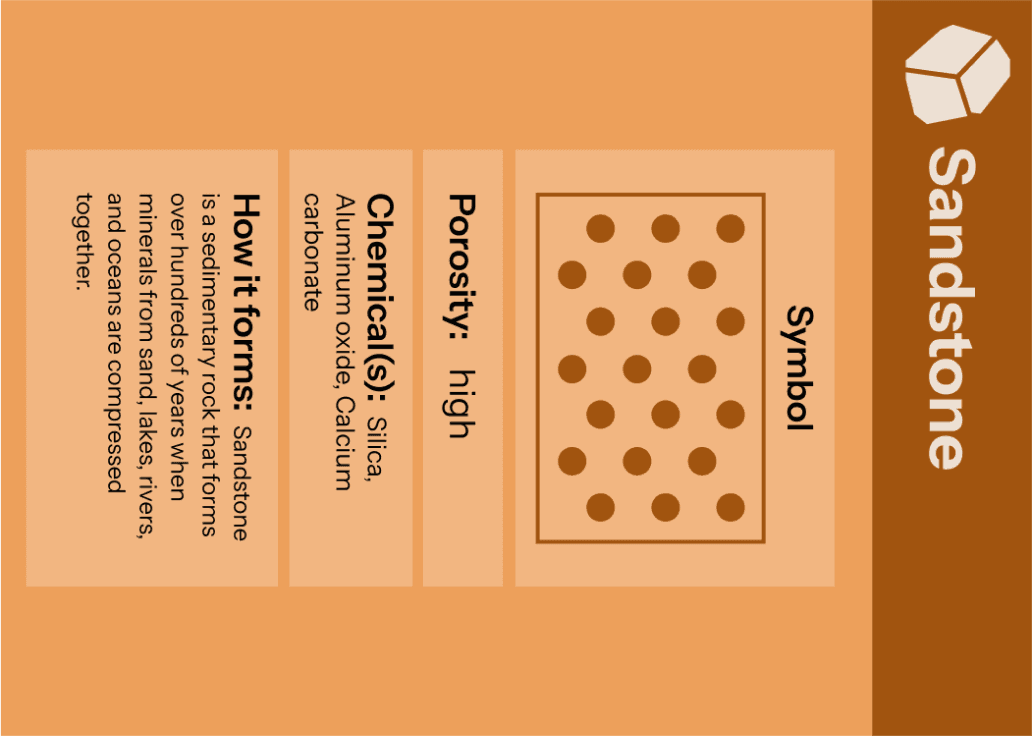
PROBLEM 3: Card descriptions of certain rock types were not entirely scientifically accurate.
SOLUTION 3: Send the draft materials to the geology professors to get their feedback and proper wording.
PROBLEM 4: The “How Far Can Pollutants Sink?” page does not fit with the overall role of the Sedimentologist.
SOLUTION 4: Give this page to the Geochemist, or consider putting it with the “hypothesis” sheet for a secondary role of Project Manager that one player can have.
hydrologist / core data / wells
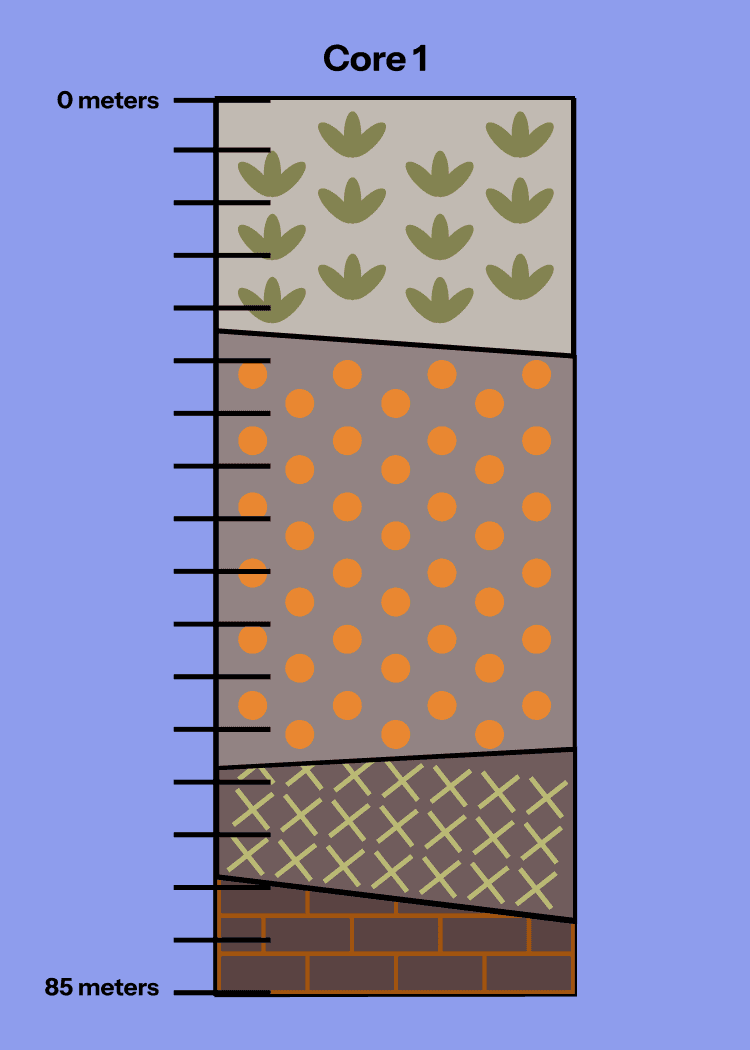
PROBLEM 5: Hydrologist took awhile to figure out how card tick marks lined up with tick marks on the map (marking ground depth).
SOLUTION 5: Add more numeric data next to the tick marks, so players have more reference points when drawing.
PROBLEM 6: Hydrologists’ role took the most amount of time by far - likely due to the fact they had to draw 10 core samples and 5 wells.
SOLUTION 6: Reduce the number of cores they need to find and draw.
PROBLEM 7: A key point in the game is associating chemicals with how they reach the water table and which way they flow. This should be better emphasized with the hydrologist’s materials.
SOLUTION 7: Add a space above the well labels on the core data map for the player to fill in with the data from the chemical samples found from that well.
toxicologist / resident cards
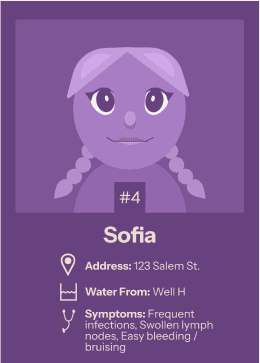
PROBLEM 8: There is no place in the notes table to record what a resident’s number is (this is how players would quickly find them on the map).
SOLUTION 8: Add a column for resident number.
PROBLEM 9: The toxicologist spends a lot of time determining various resident sicknesses.
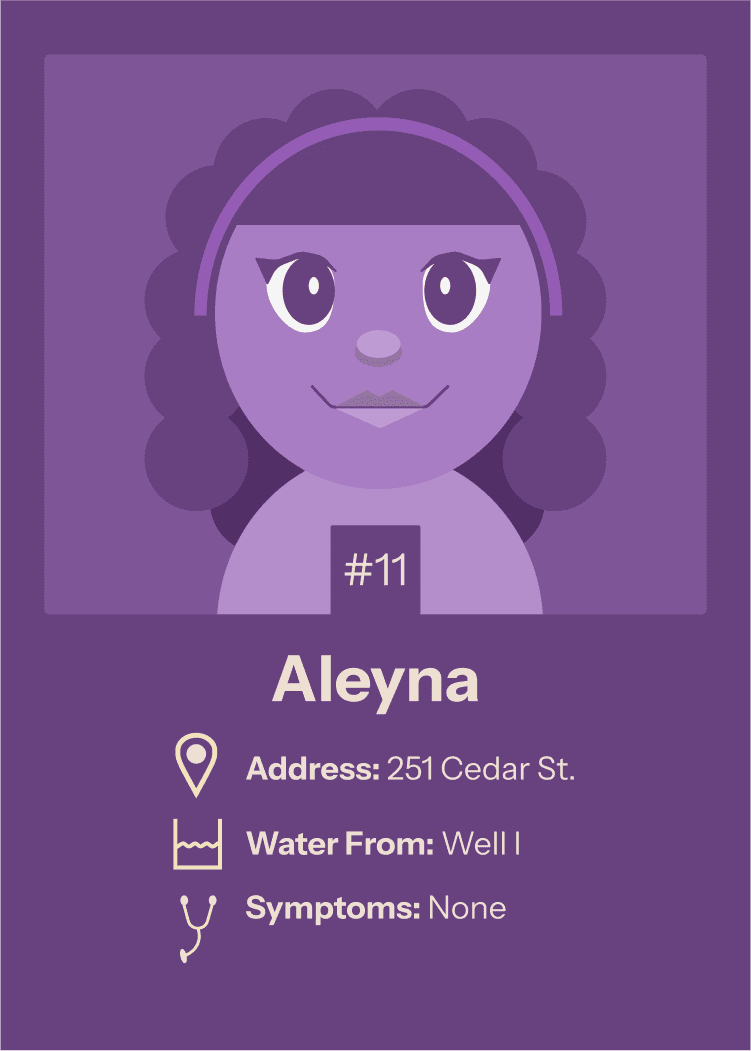
SOLUTION 9: Change a few more resident cards such that they have no symptoms (and thus no health issues).
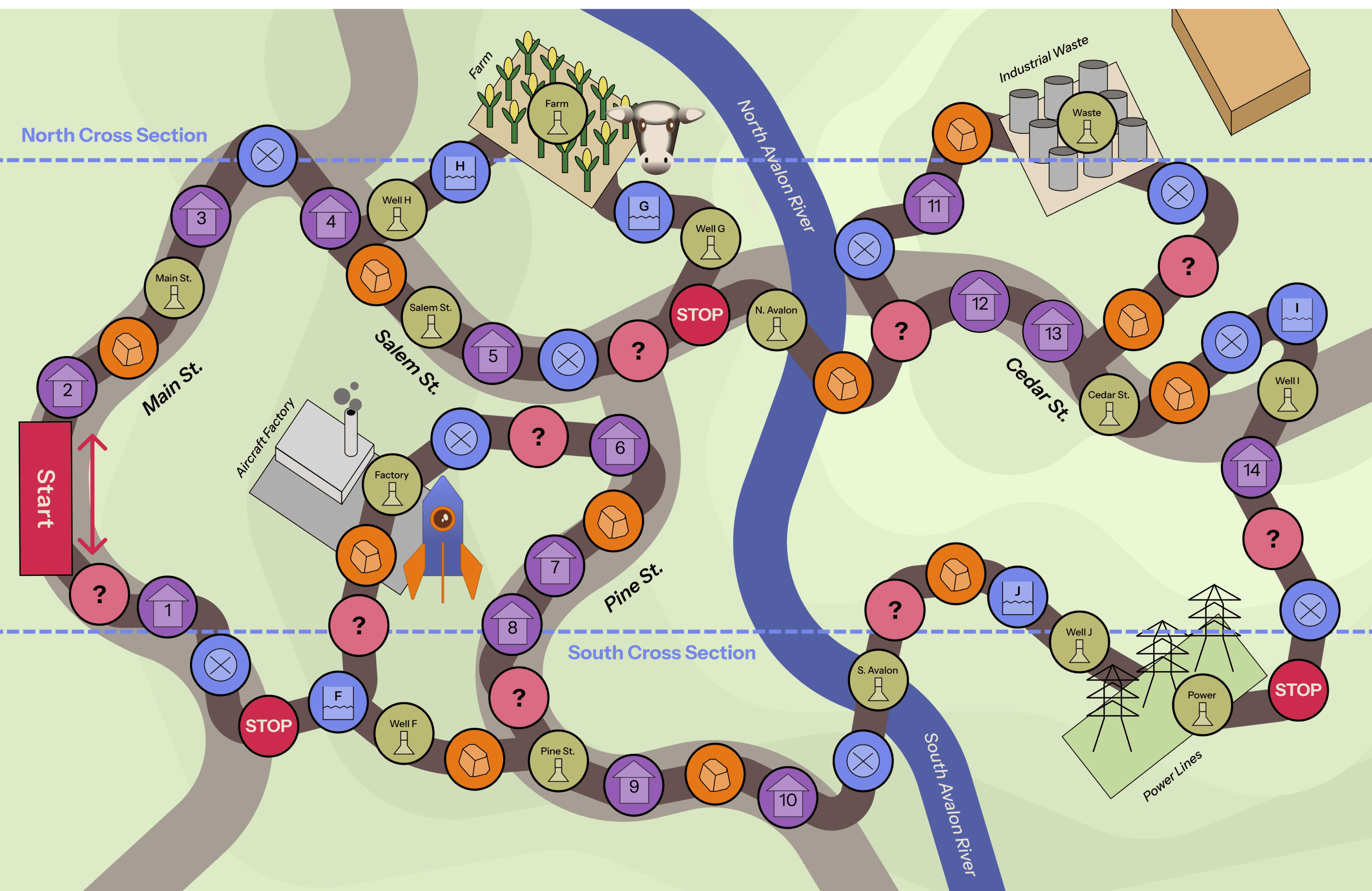
Prototype II Game Materials

Deliver
Creating Downloadable Materials
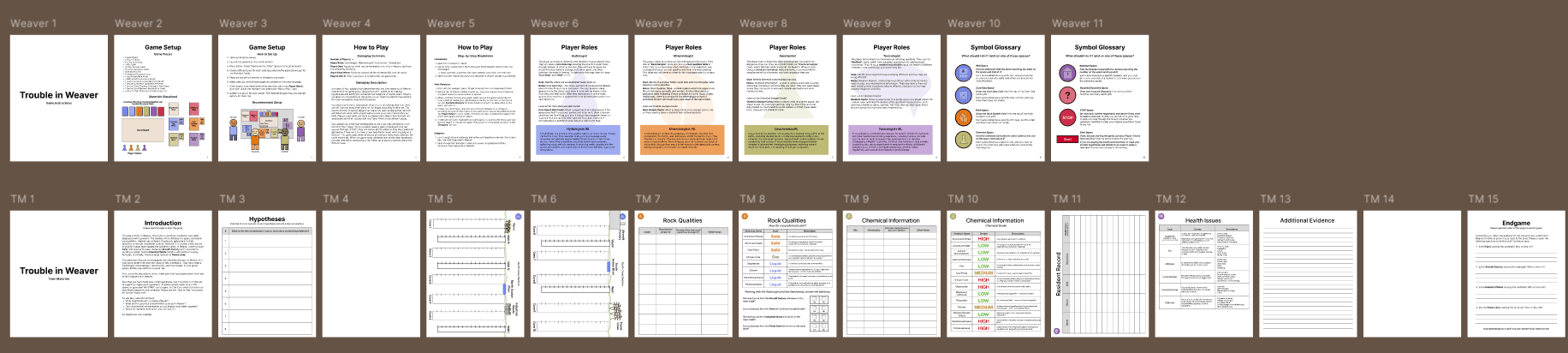
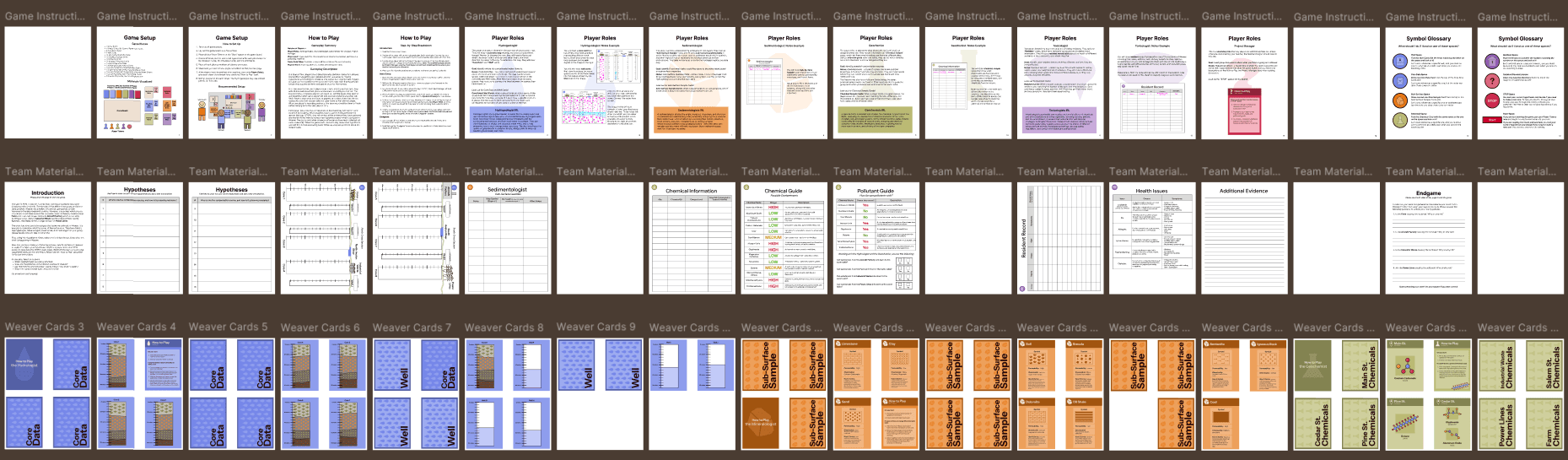
To ensure the game can be easily accessible, all game materials were transformed into a printable PDF format. This format includes a description of all in-game elements, such as a “how to play” section and set-up instructions.

Next Steps
Further Play Testing & Polishing
Ideally, a few more rounds of play testing and polishing the game up would occur before distributing the game - especially with the target audience. Learning how middle school students experience the game would help us more accurately understand the time commitment and level of difficulty of the game.
Distribution
Currently, we are discussing how to distribute the game in the most accessible manner. An education company out of Berkeley, California has been open to the discussion of including our game in an educational games package they offer.
lindsay
HArrison
(C) 2024 by Lindsay Harrison. Created with Figma & Framer.